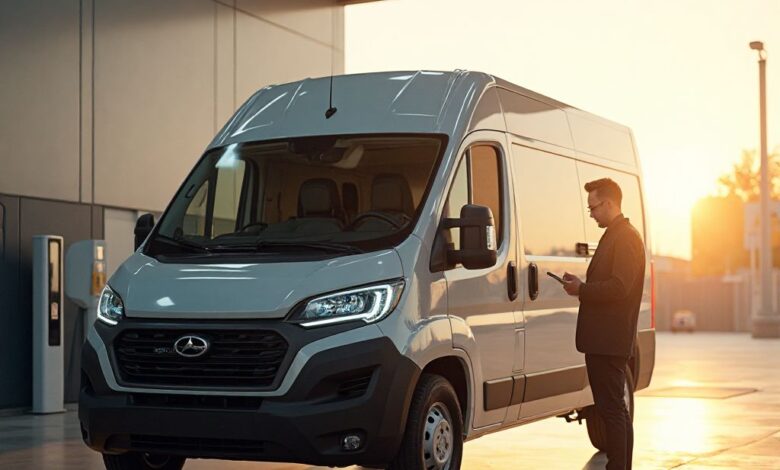
Why Fleet Companies Are Switching to Electric Vehicles to Save Money
Imagine slashing your annual fuel budget by 30%, 50%, or even more. Picture a future where your maintenance costs plummet, and your vehicles spend less time in the shop and more time on the road. This isn’t a pipe dream; it’s the tangible reality rapidly unfolding across the global automotive landscape, as fleet companies, from last-mile delivery giants to corporate car pools, are making a decisive, financially driven pivot to electric vehicles (EVs). The switch isn’t merely about going green; it’s about smart economics, and the numbers are so compelling they’re reshaping the very foundation of commercial transportation.
The Electrification Revolution: A Financial Imperative for Fleets
For decades, internal combustion engine (ICE) vehicles have been the undisputed workhorses of commercial fleets. But a confluence of factors – volatile fuel prices, escalating maintenance demands, stricter emissions regulations, and a growing emphasis on corporate sustainability – has created a perfect storm, propelling electric vehicles into the spotlight as a superior, cost-effective alternative. This isn’t just a niche trend; it’s a mainstream movement that matters profoundly to every car buyer and enthusiast. Why? Because the massive investment and infrastructure development driven by fleet adoption will inevitably trickle down, enhancing the EV ecosystem for us all, from more ubiquitous charging stations to a robust secondary market for used EVs.
Fleet managers, notorious for their razor-sharp focus on the bottom line, are performing intensive Total Cost of Ownership (TCO) analyses, and the results are consistently pointing towards electrification. What was once viewed as a futuristic, expensive gamble is now a shrewd business decision, promising significant long-term savings and operational efficiencies. Let’s dive into the core financial advantages that are driving this seismic shift.
The Pillars of Savings: Where EVs Outperform ICE Vehicles
Fuel Costs: The Most Obvious and Impactful Saving
The most immediate and dramatic cost reduction for fleet operators comes from “refueling” their vehicles. Electricity, on average, is significantly cheaper per mile than gasoline or diesel. While fuel prices fluctuate wildly, electricity costs are generally more stable and predictable. Fleet depots can often negotiate bulk electricity rates, and critically, they can strategically charge vehicles during off-peak hours when electricity is cheapest, typically overnight. This practice alone can yield savings of 60-70% compared to traditional fuel. For a fleet of hundreds, or even thousands, of vehicles covering significant daily mileage, these savings translate into millions of dollars annually. Consider a Ford E-Transit van, a popular choice for delivery fleets: operating on electricity can cost a fraction of what a comparable gasoline-powered Transit would, dramatically improving per-delivery profitability.
Maintenance: Fewer Moving Parts, Fewer Headaches, Lower Bills
This is where the engineering simplicity of EVs truly shines. An electric powertrain has dramatically fewer moving parts than a complex internal combustion engine. There’s no oil to change, no spark plugs to replace, no fuel filters, no exhaust systems, no timing belts, and no complex transmissions. Regenerative braking, a feature common in EVs like the Tesla Model 3 or Hyundai Ioniq 5, also significantly extends the life of brake pads and rotors, as the electric motor does much of the deceleration work. This translates directly into:
- Fewer scheduled maintenance visits.
- Reduced labor costs for mechanics.
- Lower parts inventory requirements.
- Less vehicle downtime, meaning vehicles are earning revenue more consistently.
For fleets, where vehicle uptime is paramount, these maintenance advantages are a game-changer, reducing operational friction and improving overall efficiency.
Government Incentives and Tax Breaks: A Sweetener for the Switch
Governments worldwide are actively promoting EV adoption to meet climate goals, and they’re putting their money where their mouth is. Fleet companies often qualify for substantial federal, state, and local incentives, which can significantly offset the higher upfront purchase price of EVs. These incentives can take various forms:
- **Direct Purchase Credits:** For example, in the US, commercial clean vehicle tax credits can offer up to $7,500 for eligible vehicles.
- **Charging Infrastructure Grants:** Programs designed to help businesses install charging stations at their depots or workplaces.
- **Tax Deductions:** Accelerated depreciation schedules or other tax benefits for zero-emission vehicles.
These incentives can make the initial capital expenditure for a fleet of Chevrolet Bolts or Volkswagen ID.4s much more palatable, accelerating the payback period on the investment.
Total Cost of Ownership (TCO): The Holistic Financial View
While the sticker price of an EV might still be higher than a comparable ICE vehicle, fleet managers are looking beyond that initial cost to the TCO. When you factor in the massive savings on fuel and maintenance, coupled with government incentives, the TCO for EVs often becomes lower than that of ICE vehicles within a few years, sometimes even sooner for high-mileage applications. This long-term financial advantage is the primary driver behind the mass adoption we’re witnessing. Brands like Rivian, with their dedicated Electric Delivery Van (EDV) for Amazon, and BrightDrop (GM’s EV commercial brand) are building their entire business models around this TCO advantage.
Environmental and Brand Image Benefits: Indirect but Valuable Returns
While not direct monetary savings, the environmental benefits of EVs translate into significant value for fleet companies. Meeting Environmental, Social, and Governance (ESG) goals is increasingly important for investors and consumers alike. Operating a fleet of zero-emission vehicles like the Mercedes-Benz EQV or a fleet of Kia EV6s for corporate travel enhances a company’s brand image, attracts environmentally conscious customers, and can even aid in employee recruitment and retention, especially among younger generations who prioritize sustainable employers. This improved public perception can lead to increased business and customer loyalty, providing an indirect but powerful return on investment.
Expert Analysis: Beyond the Obvious Savings
1. The “Trickle-Down” Effect on the Consumer Market:
Fleet electrification isn’t just for businesses; it’s a boon for everyday drivers too. As fleets deploy thousands of EVs, they drive demand for more robust public charging infrastructure, pushing utility companies and private enterprises to expand networks. Furthermore, the sheer volume of fleet EVs will eventually enter the used car market, providing a much-needed supply of affordable, second-hand electric vehicles, making EV ownership more accessible to a wider demographic. We’re already seeing used Tesla Model 3s and Chevrolet Bolts becoming more common, and this trend will accelerate as Ford E-Transits and Rivian EDVs eventually retire from their first lives.
2. Telematics and Fleet Management Software: The Unsung Heroes of EV Savings:
Maximizing EV savings in a fleet context isn’t just about the vehicles; it’s about the intelligence behind them. Advanced telematics systems and specialized EV fleet management software are crucial. These platforms optimize charging schedules to leverage off-peak rates, monitor battery health, track vehicle locations, and even suggest the most energy-efficient routes. This data-driven approach ensures that every kilowatt-hour is used judiciously and that vehicles like the Audi e-tron or Porsche Taycan (in premium corporate fleets) are always ready for their next assignment, minimizing wasted energy and maximizing uptime.
3. The Future of Vehicle-to-Grid (V2G) Technology for Fleets:
This is a game-changer on the horizon. V2G technology allows EVs to not only draw power from the grid but also to feed excess energy back into it during peak demand periods, effectively turning a parked fleet into a giant distributed energy storage system. Imagine a depot full of Ford E-Transits charging overnight, then selling power back to the grid for a profit during the afternoon peak when electricity prices are highest. While still in its nascent stages, V2G promises to transform fleet vehicles from mere cost centers into active revenue generators, adding another compelling layer to the financial argument for EVs.
4. Navigating the Upfront Capital Expenditure Challenge:
Despite the compelling TCO, the higher initial purchase price of EVs remains a hurdle for some fleets. However, innovative financing solutions are rapidly emerging. These include specialized EV leasing programs, power purchase agreements for charging infrastructure, and even “battery-as-a-service” models where the battery is leased separately, reducing the upfront vehicle cost. These creative financial instruments are making the transition to electric fleets more accessible, even for companies with tighter capital budgets.
5. Battery Health and Residual Value: A Long-Term Consideration:
While maintenance is generally lower, battery degradation over time is a legitimate concern for fleet managers planning for a vehicle’s multi-year service life. Most modern EV batteries are warrantied for 8 years or 100,000-160,000 miles, but for fleets that rack up hundreds of thousands of miles, understanding long-term battery performance and potential replacement costs is crucial. However, advancements in battery technology mean degradation is often less severe than initially feared, and the development of robust second-life applications for used EV batteries (e.g., stationary energy storage) is helping to bolster their residual value.
Pros and Cons of EV Adoption for Fleets
Pros:
- Significantly lower fuel costs (electricity vs. gasoline/diesel).
- Reduced maintenance expenses due to fewer moving parts.
- Government incentives and tax credits offset initial purchase price.
- Lower Total Cost of Ownership (TCO) over the vehicle’s lifespan.
- Enhanced brand image and corporate sustainability profile.
- Quieter operation, beneficial for urban deliveries and driver comfort.
- Reduced emissions, contributing to cleaner air and environmental goals.
- Potential for future V2G revenue generation.
Cons:
- Higher upfront purchase price compared to equivalent ICE vehicles (though decreasing).
- Initial investment in charging infrastructure can be substantial.
- Range anxiety for unpredictable long-haul routes (less of an issue for predictable urban fleets).
- Longer “refueling” times compared to gasoline (though depot charging mitigates this for fleets).
- Battery degradation over extreme mileage and time (though warranties and technology improve).
- Limited heavy-duty EV options currently available (though expanding rapidly).
- Grid capacity and power management challenges for very large depots.
Final Verdict: The Irreversible Shift Towards Electrified Fleets
The financial case for fleet companies switching to electric vehicles is no longer a theoretical exercise; it’s a proven reality. The convergence of drastically lower running costs, robust government support, and evolving technology has made EVs not just an environmentally conscious choice, but a financially savvy one. From the efficiency of a Hyundai Kona Electric in a ride-share fleet to the sheer workhorse capabilities of a Ford E-Transit in last-mile delivery, the benefits are clear and compelling.
For fleet managers still on the fence, the time for serious evaluation, pilot programs, and strategic planning is now. The early adopters, like Amazon with Rivian and UPS with Arrival, are already reaping the rewards. The transition requires careful planning, particularly around charging infrastructure and route optimization, but the long-term savings and operational advantages are too significant to ignore. The electrification of fleets is not just a trend; it’s the inevitable, financially driven future of commercial transportation. Don’t be left in the exhaust fumes of progress.
Call to Action: Are you a fleet manager or business owner considering the switch? Start by conducting a detailed TCO analysis for your specific operational needs. Explore available government incentives and consult with EV infrastructure providers. The journey to an electrified, more profitable fleet begins today!