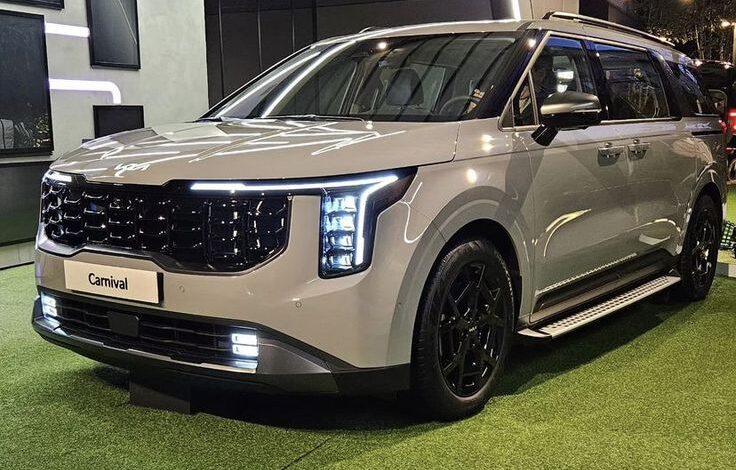
The year 2025 marks a crucial turning point for the electric vehicle (EV) market. This is the year when the transition from early adoption to mainstream acceptance truly begins, driven by a wave of new models that focus heavily on affordability, practicality, and solving the biggest worries of everyday drivers. No longer are new EVs restricted to a few luxury brands or niche startups; instead, nearly every major car company is launching vehicles built on dedicated electric platforms. This wave of new models brings better charging speeds, greater battery efficiency, and designs that appeal to the mass market. If you have been waiting for the right moment to switch from a gasoline car to an electric one, the releases of 2025 offer the most compelling arguments yet.
The new launches cover every segment, from compact city cars that start at incredibly low prices to massive luxury SUVs and work-ready pickup trucks. This article will take a deep dive into the most important and exciting EV models hitting showrooms in 2025, explaining what they offer and how they are changing the landscape. The common theme across all these new vehicles is not just raw power, but increased efficiency and the widespread adoption of faster charging technology. This is the year of choice, value, and practicality in the electric car world.
Section 1: The Affordable Contenders for the Mass Market
The biggest story of 2025 is the arrival of genuinely affordable electric vehicles that meet the needs of the average family budget. For many years, the high cost of the battery made EVs out of reach for many buyers. Now, established brands are launching models that directly compete with their own best-selling gasoline cars on price, making the switch much easier.
Chevrolet Equinox EV
The 2025 Chevrolet Equinox EV is arguably the most important launch of the year for the mass market. It is a compact SUV, the type of vehicle most Americans buy, and it comes with an extremely aggressive starting price, often around the mid-$30,000 range.1 What sets it apart is that it does not skimp on range or features to hit that low price. The Equinox EV offers a driving range of over 300 miles on a full charge, which is a fantastic range that eliminates range anxiety for nearly all drivers.2 Built on General Motors’ flexible Ultium platform, it promises a smooth ride, a spacious interior, and modern technology. For the first time, a major American brand is offering a practical, long-range EV that directly targets the mainstream car buyer who needs practicality and value. Its success is key to the entire industry’s move toward mass adoption.
Hyundai Kona Electric and Kia EV3
Hyundai and Kia continue to push the boundaries of what is possible in the affordable segment. The 2025 Hyundai Kona Electric receives updates that keep it highly competitive, offering great efficiency, a long-range battery, and a comprehensive warranty at a price that is hard to beat. Its smaller size makes it perfect for urban drivers who need to park in tight spaces but still want the slightly elevated driving position of an SUV. Looking slightly ahead, the Kia EV3, expected to begin hitting showrooms in late 2025 as an early 2026 model, is a small, smart electric SUV designed to be even more affordable than the Kona Electric.3 The EV3 will bring Kia’s striking design and excellent battery technology down to a price point that will compete directly with budget gasoline cars, making it one of the most exciting future entries for buyers on a tight budget.
Section 2: The Mainstream Crossover and Sedan Boom
Beyond the lowest-priced vehicles, the mid-range market, where most competition takes place, is flooded with new, highly capable models in 2025. These vehicles balance style, speed, and long-distance comfort, and they come from brands famous for reliability.
Honda Prologue EV
The 2025 Honda Prologue EV is a huge step for Honda, marking their first major entry into the mass-market electric SUV segment. Built in partnership with General Motors, the Prologue is a spacious, family-friendly SUV that brings Honda’s reputation for reliability and thoughtful design to the electric world. It is positioned as a comfortable, quiet, and user-friendly crossover that is designed to feel familiar to loyal Honda drivers. Its main strengths are its generous interior space, high-quality cabin materials, and an expected range that will comfortably exceed 300 miles.4 For the massive number of drivers who have always trusted Honda or Toyota for their dependability, the Prologue offers a crucial entry point into electric ownership backed by a trusted name.
Audi Q6 e-tron and Porsche Macan EV
This year also sees the launch of two crucial electric SUVs built on a brand-new, shared platform called the Premium Platform Electric (PPE), which was jointly developed by Porsche and Audi. The Audi Q6 e-tron and the Porsche Macan EV represent the next generation of mid-size luxury electric SUVs. The Q6 e-tron focuses on luxury, technology, and interior comfort, bringing Audi’s trademark high-tech cabin design and comfortable ride. The Macan EV, while sharing the same underlying battery technology, focuses entirely on performance and handling, offering a driving experience that rivals its gasoline-powered siblings.5 Both of these launches are important because they introduce 800-volt charging architecture to the mainstream premium segment. This high-voltage system allows the cars to charge incredibly quickly, often adding hundreds of miles of range in under 20 minutes at a suitable fast charger, significantly cutting down on road trip time.6
Hyundai Ioniq 5 N
While the Ioniq 5 has been around for a few years, the 2025 Hyundai Ioniq 5 N is a completely new version focused entirely on high performance.7 This is Hyundai’s first electric car from its sporty ‘N’ division, and it is a technical marvel. It delivers over 600 horsepower, giving it truly stunning acceleration, but it also includes features designed to make electric driving fun, such as simulated gear shifts and artificial engine sounds. This car is vital because it proves that electric vehicles can be just as engaging and exciting to drive as any traditional sports car, helping to change the minds of car enthusiasts who previously doubted electric performance.
Section 3: Luxury Flagships and High-End Performance
The top end of the EV market continues to be a battleground for range, technology, and sheer speed. The 2025 launches in this segment are about pushing the boundaries of what is possible in electric luxury and performance.
Lucid Gravity SUV
Following the success of the ultra-long-range Lucid Air sedan, the 2025 Lucid Gravity is the brand’s first electric SUV. The Gravity is set to be a game-changer in the luxury utility segment. Lucid is famous for its exceptional battery efficiency, and the Gravity is expected to offer a driving range that is higher than any other luxury SUV on the market, potentially exceeding 400 miles on a charge. It features a stunning, spacious interior with three rows of seating and a huge panoramic glass roof. The Gravity is aimed directly at high-end buyers who need the practicality of an SUV but demand the technology, range, and speed of a top-tier electric flagship.
BMW iX3 and Mercedes-Benz EQG
The German luxury giants are also introducing crucial new models. The 2025 BMW iX3 is the electric version of the highly popular X3 SUV, designed to look and feel much more like its gasoline counterpart than BMW’s previous electric designs.8 It is built on a new platform that focuses on 800-volt charging and long range, promising the classic BMW driving dynamics that customers expect.9 On the extreme end of luxury, the Mercedes-Benz EQG is the electric version of the legendary G-Wagon.10 The EQG retains the G-Wagon’s iconic boxy shape and extreme off-road capability, but adds electric power. A key feature rumored for the EQG is the ability to perform a “tank turn,” where the car can spin in place, thanks to its four independent electric motors.11 This unique vehicle combines rugged off-road history with the silent, powerful future of electric mobility.
Section 4: The Truck and Utility Segment Expands
The segment for electric pickup trucks and large SUVs is growing quickly, with major brands launching models designed for heavy work and large families.12 These vehicles are essential for bringing electrification to rural areas and the commercial sector.
Chevrolet Silverado EV and Ram 1500 REV
The competition in the electric truck space intensifies in 2025 with the wide availability of the Chevrolet Silverado EV and the launch of the Ram 1500 REV. The Silverado EV, built on the Ultium platform, offers impressive statistics, including a driving range of nearly 500 miles on the largest battery pack and a high towing capacity.13 It features a unique “Midgate” that opens up the cabin to the bed, allowing for extra-long cargo—a feature that is highly valued by truck users. The Ram 1500 REV enters the market with the goal of combining Ram’s reputation for comfort and ride quality with powerful electric performance. The Ram offers a massive battery option that boasts one of the longest ranges for any pickup truck, making it a powerful contender for work and long road trips. These two launches give commercial buyers and truck enthusiasts a true choice in the electric pickup segment, moving past the early models from startup companies.
Hyundai Ioniq 9
For large families, the 2026 Hyundai Ioniq 9 (with production starting in 2025) is a major new option.14 It is a large, three-row electric SUV, similar in size to a traditional family SUV like the Hyundai Palisade or Kia Telluride, but built from the ground up as an EV. It offers spacious seating for seven people, excellent comfort, and fast 800-volt charging. The Ioniq 9’s boxy, futuristic design and focus on maximizing interior space and safety make it a prime choice for large families who need the utmost in utility and electric range.15 Its launch proves that electric mobility can fully serve the three-row family market without compromise.16
Section 5: Key Trends Driving the 2025 EV Market
Beyond the specific models, the 2025 launches are unified by several crucial trends that are transforming the entire electric vehicle landscape for the better. These trends make all new EVs easier and more practical to own.
The first major trend is the Universal Charging Standard. Almost all new 2025 model-year vehicles, regardless of the manufacturer, are now either equipped with or announced to be compatible with the North American Charging Standard (NACS), which is the plug used by Tesla’s Supercharger network. This massive shift means that soon, nearly every new EV will have easy access to the largest and most reliable fast-charging network in the world, instantly solving the biggest complaint about public charging infrastructure.
The second trend is Battery Efficiency and Chemistry. Manufacturers are heavily investing in new battery chemistries, such as new forms of lithium-ion and even cheaper, more stable Lithium Iron Phosphate (LFP) batteries for base models. This means new EVs are getting higher driving ranges from smaller, lighter battery packs, which improves the car’s handling and energy use. Furthermore, the push for 800-Volt Architecture, seen in the new Audis and Porsches, is becoming more common, which will continue to drive charging times down to the length of a short coffee break.
Finally, Software and Digital Ecosystems are getting much better. The new EVs of 2025 are designed with better over-the-air update capabilities, meaning the car’s software, navigation, and even performance can be improved remotely while you sleep.17 Better integration with smartphone apps allows for pre-heating the cabin, smart charging schedules, and easier route planning, making the ownership experience smoother and more integrated into the driver’s digital life.18 The 2025 models are smarter, more connected, and more self-aware than any previous generation.
Conclusion: A Defining Year for Electric Mobility
The year 2025 is not just another year for electric car releases; it is a defining moment where the industry’s promises of affordability and practicality are finally realized in the showroom. The launches of vehicles like the Chevrolet Equinox EV and the Kia EV3 prove that low-cost, long-range electric cars are here, competing directly with gasoline models on value.19 Simultaneously, the introduction of high-end vehicles like the Lucid Gravity and the electric G-Wagon, backed by powerful 800-volt charging and superior efficiency, raises the ceiling for what is possible in luxury and performance. The widespread adoption of NACS charging and continuous software improvements tie this entire new market together, making the electric vehicle the most convenient and practical choice for more drivers than ever before. If you have been waiting for the market to mature, the diverse, capable, and efficient EV models of 2025 signal that your wait is officially over. The time to go electric is now.