The Silent Revolution: How Vehicle-to-Grid Technology is Rewiring Our Automotive Future
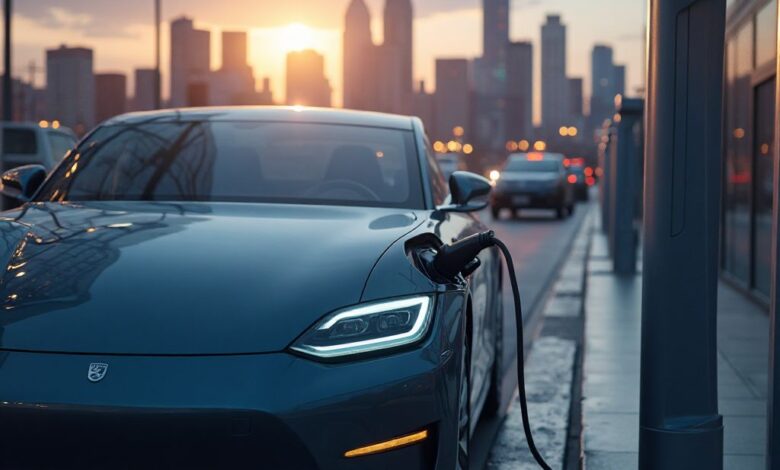
Imagine this: You plug in your electric vehicle after a long day, not just to charge it, but for it to actively earn you money. While you sleep, your car intelligently sells excess energy back to the grid during peak demand, then recharges when electricity is cheapest. This isn’t a futuristic fantasy; it’s the rapidly evolving reality of Vehicle-to-Grid (V2G) technology, and it’s poised to fundamentally transform not just how we drive, but how we power our homes and cities.
Beyond Transportation: Why V2G Matters to Every Car Owner and Energy Consumer
For years, electric vehicles (EVs) have been hailed as a solution to reduce emissions and dependence on fossil fuels. But what if they could do more than just move us from A to B? What if the burgeoning fleet of EVs could become a giant, mobile battery pack, stabilizing our increasingly strained power grids and accelerating the transition to renewable energy?
This is the core promise of V2G. As EV adoption skyrockets – with millions more hitting the roads annually – so does the potential demand on our existing electrical infrastructure. V2G flips this potential challenge into an immense opportunity. It allows your EV to communicate bidirectionally with the grid, drawing power when needed, but also feeding power back when beneficial. For car buyers and enthusiasts today, this means not only a greener commute but also a potential new revenue stream, enhanced home energy resilience, and a direct contribution to a more sustainable and robust energy ecosystem. It’s about empowering the “prosumer” – a consumer who also produces energy – and that’s a game-changer.
The Latest Developments: From Pilot Programs to Mainstream Adoption
V2G technology, while conceptually simple, involves complex interplay between vehicles, charging infrastructure, and grid operators. The good news is that significant progress is being made on all fronts, pushing V2G from niche pilot projects to the cusp of widespread commercial rollout.
Standardization and Hardware Advancements
One of the biggest hurdles for V2G has been the lack of universal standards. Historically, different manufacturers used proprietary systems, making interoperability a nightmare. However, the introduction of the
ISO 15118-20 standard
is a monumental leap forward. This new communication protocol, often referred to as “Plug & Charge 2.0,” enables not only bidirectional power flow but also advanced energy management, secure communication, and seamless authentication. This standardization is critical, allowing different brands of EVs to communicate with various charging stations and grid systems without compatibility issues.
Hardware development has also accelerated. Bidirectional chargers, once rare and expensive, are becoming more compact, efficient, and affordable. Companies like Wallbox, Enel X, and DCBEL are leading the charge (pun intended) with home V2G solutions that are easier to install and integrate with existing smart home systems.
Automakers Stepping Up
Major automakers are no longer just talking about V2G; they’re building it into their vehicles. Ford has been a trailblazer with its
F-150 Lightning
, which, when paired with the Ford Charge Station Pro and Home Integration System, offers robust Vehicle-to-Home (V2H) capabilities, essentially turning the truck into a massive backup generator for your house. This V2H capability is a direct precursor to full V2G, allowing owners to power their homes during outages and potentially sell power back to the grid.
Hyundai and Kia are also at the forefront with their E-GMP platform vehicles, including the
Hyundai IONIQ 5 and IONIQ 6
, and the
Kia EV6
. These models feature Vehicle-to-Load (V2L) as standard, allowing them to power external appliances, and are designed with V2G capabilities in mind. Many are already participating in V2G pilot programs in Europe and the US, demonstrating their potential.
Volkswagen, through its ID. family, has announced plans for V2G readiness, aiming to integrate their EVs into a broader energy ecosystem.
Audi
and
Porsche
, under the VW Group umbrella, are also exploring premium V2G solutions, leveraging their high-capacity batteries. Even
Chevrolet
has hinted at V2G potential for its upcoming Silverado EV and other Ultium platform vehicles.
While
Tesla
has focused heavily on its Powerwall home battery storage, their vehicles currently lack native V2G functionality. However, given their pioneering spirit and integration with energy products, it’s widely anticipated they will eventually enter the V2G space, potentially through software updates or new hardware.
Real-World Pilot Programs and Policy Support
Across the globe, pilot programs are demonstrating V2G’s viability. From California’s efforts to integrate EVs into grid stability initiatives to comprehensive projects in the Netherlands, Denmark, and the UK, these trials are refining the technology, assessing financial models, and addressing regulatory challenges. Governments and utilities are increasingly recognizing V2G as a crucial tool for grid resilience, especially with the growing penetration of intermittent renewable energy sources like solar and wind. Policy incentives, like those being explored in several European countries, are emerging to encourage V2G adoption, making it financially attractive for consumers.
Expert Analysis: Insider Insights into the V2G Revolution
Having watched the automotive and energy sectors converge for a decade, I can offer a few insights that go beyond the headlines:
-
The “Prosumer” Power Play is Real: This isn’t just about utilities benefiting; it’s about empowering the individual. V2G turns your car into a tangible asset that can generate income or provide essential backup power. This shift from passive consumer to active participant in the energy market is profound and will drive adoption faster than many anticipate, especially as energy prices fluctuate.
-
Battery Health Concerns are Overblown (Mostly): A common worry is that V2G will degrade EV batteries faster. While any battery cycling contributes to wear, modern battery management systems (BMS) are incredibly sophisticated. V2G systems are designed to operate within optimal battery health parameters, often only using a small percentage of the battery’s capacity for grid services and avoiding deep discharges or charges. The financial benefits and grid contributions will likely outweigh any marginal, well-managed impact on battery longevity for most users.
-
The Regulatory Labyrinth is the Toughest Nut to Crack: While technology and consumer interest are surging, the slowest element remains regulatory frameworks and utility buy-in. How do you fairly compensate EV owners? What are the tariffs? How do you ensure grid stability while allowing millions of individual batteries to connect? These are complex questions that require significant collaboration between automakers, energy companies, and policymakers. Progress here is crucial for V2G to scale.
-
V2G is the Ultimate Renewable Energy Enabler: Intermittent renewables like solar and wind are fantastic, but their output isn’t constant. V2G-enabled EVs act as distributed energy storage, soaking up excess renewable energy when it’s abundant (and cheap) and releasing it when the sun isn’t shining or the wind isn’t blowing. This synergy is critical for achieving a truly green grid and will be a major driver for V2G investment.
-
Cybersecurity is the Silent Battleground: Connecting millions of vehicles to the national grid creates a massive new attack surface. Robust cybersecurity protocols, secure communication, and resilient infrastructure are paramount to prevent malicious actors from exploiting V2G systems. This aspect is receiving intense focus behind the scenes and will be critical for public trust and widespread deployment.
The Upsides and Downsides of V2G
Pros:
-
Revenue Generation: EV owners can earn money by selling power back to the grid during peak demand.
-
Grid Stability: V2G helps balance the grid, reducing the need for costly peaker plants and preventing blackouts.
-
Renewable Energy Integration: Facilitates the adoption of solar and wind by providing flexible storage.
-
Emergency Power: V2H (Vehicle-to-Home) provides critical backup power during outages, as demonstrated by the Ford F-150 Lightning.
-
Reduced Energy Costs: EVs can charge when electricity is cheapest and discharge when it’s most expensive, optimizing energy bills.
-
Environmental Benefits: Supports a cleaner energy infrastructure and reduces reliance on fossil fuels.
Cons:
-
Initial Investment: Bidirectional chargers and necessary home integration systems can be more expensive than standard chargers.
-
Battery Degradation Concerns: While often overblown, some users worry about V2G impacting battery life, despite advanced BMS.
-
Complexity: Integrating V2G requires coordination between vehicle, charger, utility, and potentially a home energy management system.
-
Regulatory Hurdles: Lack of clear, standardized compensation models and tariffs across all regions can hinder adoption.
-
Limited Availability: While growing, V2G-ready vehicles and compatible infrastructure are not yet universally available.
-
Cybersecurity Risks: Connecting vehicles to the grid introduces potential vulnerabilities that need robust protection.
Final Verdict: Your Car, Your Power, Our Future
Vehicle-to-Grid technology is no longer a niche concept for energy nerds; it’s rapidly becoming a tangible, beneficial feature for everyday EV owners and a critical component of our future energy landscape. The latest developments in standardization, hardware, and automaker commitment signal a clear trajectory towards widespread adoption. While challenges remain, particularly on the regulatory front, the momentum is undeniable.
For first-time EV buyers, looking for V2G or V2H compatibility should increasingly be a key consideration, offering future-proofing and potential financial benefits. For experienced car owners, especially those with home solar, V2G represents the missing link to truly maximize their energy independence and contributions to a sustainable grid.
My recommendation? Keep a very close eye on this space. Ask your dealer about V2G capabilities when considering an EV. Engage with your local utility about their plans. The car in your driveway is no longer just a mode of transport; it’s a powerful, intelligent energy asset waiting to be unleashed. The silent revolution is here, and it’s time to plug in and power up.