Why Your Next Car Should Absolutely Be an Electric Vehicle
Forget everything you thought you knew about electric cars being glorified golf carts or niche curiosities. The automotive world is undergoing a seismic shift, and the internal combustion engine, a marvel of engineering for over a century, is quickly becoming a relic of the past. In fact, a recent analysis suggests that by 2030, over 50% of new car sales globally could be electric. That’s not a future prediction; that’s an imminent reality. The question is no longer “if” you’ll drive an EV, but “when.” And I’m here to tell you, as someone who has test-driven hundreds of vehicles over the past decade, that “when” should be “now.”
The Tipping Point: Why EVs Matter More Than Ever
For years, the conversation around electric vehicles felt abstract, confined to early adopters and environmental crusaders. Today, it’s a mainstream discussion driven by tangible realities: soaring gasoline prices, growing climate consciousness, and perhaps most crucially, a technological revolution that has transformed EVs from quirky experiments into compelling, high-performance machines. We’re at a critical juncture where the benefits of electrification are no longer theoretical; they are practical, financial, and undeniably thrilling. From the daily commute to cross-country road trips, EVs are proving their mettle, offering a superior driving experience while simultaneously reducing your carbon footprint and your wallet’s burden at the pump. This isn’t just about saving the planet; it’s about upgrading your drive.
The Unassailable Case for Electric: Performance, Practicality, and Pockets
Let’s dive into the core reasons why an EV isn’t just a viable alternative, but a superior choice for your next set of wheels.
Electrifying Performance and Driving Dynamics
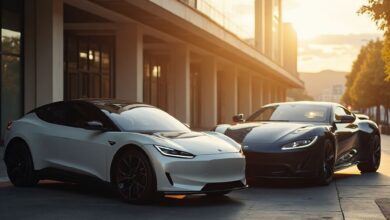
If you still associate EVs with sluggish acceleration, prepare to have your mind blown. The defining characteristic of an electric motor is instant torque, available from 0 RPM. This translates to breathtaking acceleration that can pin you to your seat, often outperforming many gasoline-powered sports cars. Even mainstream models like the Ford Mustang Mach-E or the Hyundai Ioniq 5 offer a surprising punch. For the true enthusiasts, vehicles like the Porsche Taycan and Tesla Model S Plaid redefine what’s possible, delivering supercar-level performance in a silent, seamless surge. Beyond raw speed, the heavy battery pack mounted low in the chassis gives EVs an incredibly low center of gravity, enhancing handling and stability. The quiet, vibration-free operation also contributes to a remarkably serene and refined driving experience, reducing fatigue on long journeys.
Range Anxiety? A Relic of the Past
One of the biggest hurdles for potential EV buyers has always been “range anxiety.” While understandable a few years ago, modern EVs have largely put this concern to rest. Today, a typical new EV offers a real-world range of 250 to 350 miles on a single charge. Premium models like the Lucid Air can exceed 500 miles, pushing boundaries once thought impossible. This is more than enough for most daily commutes and even substantial road trips. Brands like Kia with the EV6 and Audi with the e-tron GT are consistently delivering impressive ranges, making long-distance travel increasingly feasible and convenient.
Charging Up: Simpler Than You Think
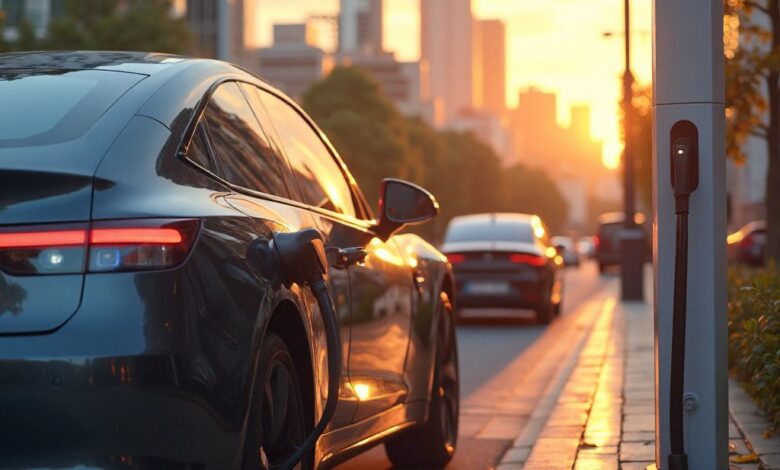
The concept of “refueling” an EV is different, but not more difficult. In fact, for most owners, it’s far more convenient. The vast majority of EV charging happens at home, overnight, while you sleep. A Level 2 charger (240V, similar to a dryer outlet) can fully replenish most EV batteries in 6-10 hours, providing a “full tank” every morning. For public charging, the infrastructure is rapidly expanding. DC Fast Chargers, capable of adding hundreds of miles of range in under 30 minutes, are popping up everywhere – from major highways to grocery store parking lots. Networks like Electrify America, EVgo, and the ubiquitous Tesla Supercharger network (now increasingly open to non-Tesla vehicles) are making long-distance EV travel a breeze. Companies like Rivian are also building out their own adventure-focused charging networks, catering to specific user needs.
The Real Savings: Lower Running Costs and Maintenance
This is where the EV truly shines financially. Electricity is significantly cheaper per mile than gasoline, especially when charging at home. Depending on your electricity rates, you could be paying the equivalent of $1-$2 per gallon. Beyond “fuel” savings, EVs have drastically fewer moving parts than internal combustion engine vehicles. No oil changes, no spark plugs, no fuel filters, no complex transmissions, and significantly less wear on brake pads thanks to regenerative braking. This translates to dramatically lower maintenance costs over the lifespan of the vehicle. While the initial purchase price of an EV can sometimes be higher, federal tax credits (up to $7,500 in the US for eligible vehicles and buyers) and various state incentives often help offset this. When you factor in the total cost of ownership (TCO) over 5-10 years, an EV almost invariably comes out ahead.
A Tech Powerhouse on Wheels
EVs are inherently more technologically advanced. They are often “computers on wheels,” capable of over-the-air (OTA) updates that improve features, performance, and even range over time – something unheard of in traditional cars. Advanced driver-assistance systems (ADAS) are standard or widely available, offering features like adaptive cruise control, lane-keeping assist, and automated parking. Infotainment systems are typically cutting-edge, with large touchscreens and seamless smartphone integration. Think of the innovation found in a Tesla, a BMW iX, or a Mercedes-Benz EQS – these aren’t just cars; they’re intelligent mobility platforms.
Expert Analysis: Beyond the Brochure
Having spent a decade immersed in the automotive world, here are a few insights you might not find in every marketing pamphlet:
-
The “Software-Defined Car” Revolution: EVs are paving the way for cars that are less about hardware and more about software. This means your car can genuinely get better over time, not just with bug fixes, but with new features, increased efficiency, and even performance upgrades downloaded directly to your vehicle. This paradigm shift fundamentally changes vehicle ownership.
-
Battery Longevity is Better Than You Think: Many fear battery degradation, but modern EV batteries are designed to last the life of the vehicle, often 8-10 years and 100,000-150,000 miles, with minimal loss of capacity (typically 10-20% over a decade). Warranties are also robust, often covering the battery for 8 years/100,000 miles. Don’t let old fears about laptop batteries dictate your perception of cutting-edge automotive battery tech.
-
The Used EV Market is Maturing: As more EVs hit the road, the used market is growing, offering excellent value. A used Chevrolet Bolt EUV or a Volkswagen ID.4 can be a fantastic entry point into EV ownership, providing all the benefits at a significantly lower upfront cost. This will only expand, making EVs accessible to an even wider audience.
-
Charging Habits Matter: While “range anxiety” is diminishing, “charging anxiety” (the fear of not finding a charger or it being occupied) can still exist. Smart planning and understanding your charging options (home, work, public Level 2, DC Fast) are key. Also, “topping off” at public chargers when convenient is often more efficient than waiting for near-empty, much like you might grab a coffee when your phone is at 70%.
-
The Quiet Revolution: It’s not just about performance; it’s about the experience. The absence of engine noise and vibration creates a remarkably peaceful cabin, reducing driver fatigue and making conversations easier. Once you experience the quiet serenity of an EV, returning to the rumble of a gasoline engine can feel surprisingly jarring.
The Good, The Bad, and The Electric Future
Pros of Electric Vehicles:
- Zero tailpipe emissions, contributing to cleaner air.
- Significantly lower “fuel” costs (electricity vs. gasoline).
- Dramatically reduced maintenance expenses.
- Instant torque and exhilarating acceleration.
- Quiet, smooth, and refined driving experience.
- Access to advanced technology and OTA updates.
- Federal and state incentives can reduce purchase price.
- Convenience of “refueling” at home overnight.
- Reduced reliance on fossil fuels.
Cons of Electric Vehicles:
- Higher upfront purchase price (though TCO is often lower).
- Longer “refueling” times compared to gasoline (though typically done overnight).
- Charging infrastructure, while growing, can still be a concern in some rural areas.
- Battery replacement, while rare, can be costly out of warranty (though warranties are extensive).
- Weight of the battery can sometimes impact ultimate handling in extreme scenarios (though often offset by low center of gravity).
The Verdict: Embrace the Electric Revolution
The automotive landscape is evolving at an unprecedented pace, and electric vehicles are at the forefront of this transformation. They are no longer a compromise or a niche choice; they are a superior mode of transportation, offering a compelling blend of thrilling performance, substantial cost savings, advanced technology, and environmental responsibility. From the robust practicality of a Ford F-150 Lightning to the luxurious serenity of a Mercedes-Benz EQS, or the spirited agility of a Hyundai Ioniq 5, there’s an EV for every need and budget.
My recommendation is unequivocal: your next car should absolutely be an electric vehicle. Don’t just take my word for it. Find a local dealership, book a test drive, and experience the future of driving for yourself. The moment you press that accelerator and feel the silent, instantaneous surge of power, you’ll understand why the electric revolution isn’t just coming – it’s already here, and it’s spectacular.