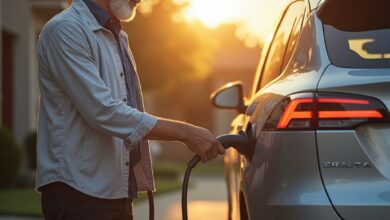
The Environmental Truth About Electric Vehicles Nobody Talks About
For years, the narrative has been clear: Electric Vehicles (EVs) are the clean, green saviors of our planet, whisking us away from the dirty clutches of fossil fuels. And in many ways, that narrative holds true. But what if I told you that the full environmental picture of EVs is far more complex, with nuances and challenges that rarely make it into the glossy brochures or enthusiastic news reports? As someone who’s spent a decade dissecting every cog and circuit of the automotive world, I can tell you there’s an environmental truth about EVs that deserves a spotlight, a truth that goes beyond zero tailpipe emissions and dives deep into the entire lifecycle of these groundbreaking machines.
Background: Why This Topic Matters Now More Than Ever
The automotive industry is undergoing its most profound transformation in a century. Governments worldwide are setting ambitious targets for EV adoption, automakers like Ford, GM, Volkswagen, and Stellantis are pouring billions into electrification, and consumers are increasingly making the switch. Tesla continues to dominate headlines, while established luxury players like BMW, Mercedes-Benz, Audi, and Porsche are rapidly expanding their electric lineups. Even newcomers like Rivian and Lucid are pushing the boundaries of what’s possible. The perception is that by buying an EV, you’re making an unequivocally “green” choice. While the benefits of eliminating tailpipe emissions are undeniable, especially in urban centers, a truly comprehensive understanding requires us to look beyond the tailpipe and consider the entire journey of an EV – from the extraction of raw materials to its eventual end-of-life.
Understanding these often-overlooked environmental factors isn’t about discrediting EVs; it’s about fostering informed decision-making and pushing for even better, more sustainable solutions. For first-time buyers, it offers a deeper perspective on their investment. For experienced car owners, it provides crucial context for the industry’s direction and the real-world impact of this technological shift.
Main Content: Unpacking the Hidden Environmental Costs
The Manufacturing Footprint: From Mine to Assembly Line
The journey of an EV begins long before it rolls off the assembly line. It starts in mines across the globe, extracting critical raw materials like lithium, cobalt, nickel, manganese, and graphite. These materials are essential for the high-performance batteries that power vehicles from a Hyundai Ioniq 5 to a Porsche Taycan.
Mining these materials is resource-intensive. Lithium extraction, for instance, often involves vast evaporation ponds in arid regions, consuming significant amounts of water and potentially impacting local ecosystems. Cobalt, a material notorious for