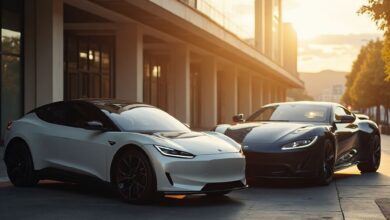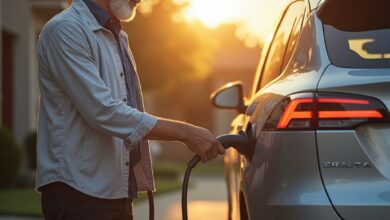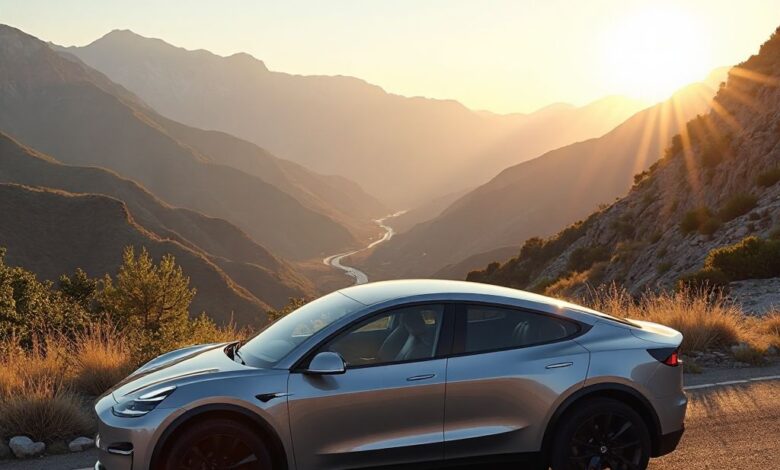
Forget everything you thought you knew about electric cars and long road trips. The era of ‘range anxiety’ dictating your travel plans is officially over, banished to the annals of automotive history alongside manual chokes and drum brakes. Today, an elite class of electric vehicles isn’t just capable of epic cross-country journeys; they make them more enjoyable, more serene, and surprisingly, often more efficient than their gasoline-powered counterparts.
This isn’t just a bold statement; it’s a testament to the monumental leaps in battery technology, charging infrastructure, and vehicle engineering that have occurred in the last five years. We’re talking about EVs that routinely deliver 300, 400, even 500 miles on a single charge, coupled with charging speeds that can add hundreds of miles of range in the time it takes to grab a coffee and stretch your legs. The question is no longer “Can an EV do a road trip?” but rather, “Which EV will make my road trip the best?”
The Open Road, Electrified: Why EV Road Trips Are the New Frontier
The automotive landscape is shifting at an unprecedented pace. Electric vehicles, once niche curiosities, are now mainstream contenders, and for good reason. For many potential buyers and even seasoned car enthusiasts, the last bastion of doubt surrounding EVs has been their viability for long-distance travel. The perception of limited range, slow charging, and a sparse charging network has lingered, despite significant advancements.
But here’s the reality: modern EVs are not only shedding these stereotypes but actively redefining the road trip experience. Imagine cruising for hours in near-silent comfort, experiencing instant torque for effortless overtaking, and knowing that every ‘fuel stop’ offers a moment to relax and recharge, both yourself and your vehicle. The growth of robust charging networks like Tesla’s Supercharger, Electrify America, EVgo, and countless others—now increasingly interoperable—means that finding a fast charger on major interstates is often easier than locating a specific brand of gas station.
This article isn’t about the EVs that *can* make a road trip; it’s about the ones that *excel* at it. The vehicles designed from the ground up to conquer vast distances with comfort, speed, and an absolute minimum of fuss. If you’re considering an EV, or simply curious about the future of long-haul travel, buckle up. We’re about to explore the machines that are putting range anxiety firmly in the rearview mirror.
The Contenders: Best Electric Cars for the Long Haul
When it comes to road-tripping without a shred of range anxiety, a few key metrics stand out: absolute range, charging speed, and overall comfort/technology. Here are the champions:
Lucid Air: The Range King
-
Specs: The Lucid Air Grand Touring boasts an EPA-estimated range of up to 516 miles, powered by a 112 kWh battery. Even the Pure and Touring models offer excellent range. Performance models deliver blistering acceleration.
-
Range: Unparalleled, often exceeding its EPA estimates in real-world driving under favorable conditions.
-
Charging: Features an ultra-fast 900V architecture, allowing it to add up to 300 miles of range in just 20 minutes on a compatible DC fast charger. This is truly game-changing for road trips.
-
Costs: Starts in the low six figures, positioning it firmly in the luxury segment.
-
Pros: Class-leading range, incredibly fast charging, luxurious and spacious interior, impressive performance, sleek design.
-
Cons: Premium price point, relatively new brand means a smaller service network compared to established players.
Tesla Model S & Model 3/Y: The Supercharger Advantage
-
Specs: Model S Long Range offers over 400 miles of EPA range. Model 3 Long Range and Model Y Long Range typically deliver around 330-350 miles. All offer impressive performance, especially the Plaid/Performance variants.
-
Range: Consistently strong, backed by Tesla’s efficiency.
-
Charging: Tesla’s Supercharger network remains the gold standard for reliability, widespread availability, and ease of use. V3 Superchargers can add up to 200 miles in just 15 minutes. Crucially, the network is now opening to non-Tesla EVs in many regions, but Tesla owners still get the best integration.
-
Costs: Model 3 and Y are more accessible, starting in the mid-$40k-$50k range. Model S and X are premium, starting higher.
-
Pros: Unbeatable Supercharger network integration and reliability, excellent range, strong performance, advanced driver-assist features (Autopilot/FSD), spacious interiors (especially S/Y).
-
Cons: Minimalist interior design isn’t for everyone, build quality can be inconsistent on some models, reliance on touchscreen for many controls.
Hyundai Ioniq 5 & Kia EV6: The 800V Revolutionaries
-
Specs: Both share the E-GMP platform, offering up to 303 miles (Ioniq 5) and 310 miles (EV6) of EPA range with their larger battery packs. Available in RWD and AWD configurations.
-
Range: Solid, practical range for most road trips.
-
Charging: Their 800V architecture allows for incredibly fast charging, capable of going from 10% to 80% in as little as 18 minutes on a 350 kW DC fast charger. This effectively means adding 200+ miles in less time than a coffee break.
-
Costs: Start in the mid-$40k range, offering excellent value.
-
Pros: Blazing-fast charging, distinctive and appealing designs, comfortable and spacious interiors, competitive pricing, impressive tech.
-
Cons: Public charging network (non-Tesla) can still be less reliable than Superchargers, range isn’t class-leading but charging speed compensates.
Mercedes-Benz EQS Sedan & SUV: Luxury Long-Haulers
-
Specs: EQS 450+ Sedan offers up to 350 miles of EPA range. The EQS SUV variants also provide excellent range in the low to mid-300s. Luxurious power and smooth delivery.
-
Range: Excellent, making long journeys effortless.
-
Charging: Supports DC fast charging up to 200 kW, adding hundreds of miles in about 30 minutes.
-
Costs: Luxury segment, starting in the six figures.
-
Pros: Unrivaled interior comfort and refinement, advanced MBUX Hyperscreen technology, whisper-quiet cabin, exceptional ride quality, strong range.
-
Cons: High purchase price, exterior styling can be polarizing, not as performance-focused as some rivals.
BMW iX & i7: Bavarian Electric Grand Tourers
-
Specs: The BMW iX xDrive50 boasts an impressive 307-311 miles of EPA range. The executive i7 xDrive60 offers 318 miles. Both deliver classic BMW driving dynamics.
-
Range: Very strong, competitive with the best.
-
Charging: Supports DC fast charging up to 195 kW (iX) and 195 kW (i7), allowing for a 10-80% charge in under 40 minutes.
-
Costs: Premium luxury segment, starting in the high-$80k to low six figures.
-
Pros: Superb driving dynamics, exquisitely crafted interiors, cutting-edge technology, excellent comfort for long drives, strong range.
-
Cons: Divisive exterior styling (iX), high price point.
Rivian R1T & R1S: Adventure-Ready EVs
-
Specs: With the Large pack, expect 328 miles (R1T) and 321 miles (R1S). The Max pack pushes range to 400+ miles. Unmatched off-road capability and strong performance.
-
Range: Excellent for SUVs/trucks, especially with the Max pack.
-
Charging: Supports DC fast charging up to 220 kW, adding up to 140 miles in 20 minutes.
-
Costs: Starts in the mid-$70k to high-$80k range.
-
Pros: Go-anywhere capability, unique and practical storage solutions (gear tunnel), premium interior, strong performance, excellent for active lifestyles.
-
Cons: Still building out their charging network (Adventure Network), high purchase price, large size can be challenging in urban environments.
Ford Mustang Mach-E & F-150 Lightning: Mainstream Muscle
-
Specs: Mach-E California Route 1 offers 310 miles of EPA range. F-150 Lightning Extended Range boasts 320 miles. Both deliver impressive power and a familiar driving experience.
-
Range: Solid and dependable for their respective segments.
-
Charging: Supports DC fast charging up to 150 kW, capable of adding around 60 miles in 10 minutes (Mach-E) or 54 miles in 10 minutes (Lightning).
-
Costs: Mach-E starts in the high-$40k, Lightning in the mid-$50k.
-
Pros: Familiar brand appeal, strong performance, comfortable for road trips, good tech integration, excellent utility (Lightning’s Pro Power Onboard).
-
Cons: Charging speeds are good but not class-leading compared to 800V systems, Mach-E’s interior can feel less premium than some rivals.
Expert Analysis: Beyond the Spec Sheet
1. The Charging Curve is More Important Than Peak kW:
Don’t just look at the maximum DC fast charging rate (e.g., 350 kW). What truly matters for road trips is the *charging curve* – how long the car can sustain high charging speeds. Vehicles like the Porsche Taycan, Audi e-tron GT, and the Hyundai/Kia E-GMP twins might not always hit the highest peak kW as long as a Tesla, but they often sustain a higher average charging rate for longer, especially from 10% to 80%, meaning less time plugged in overall.
2. Pre-conditioning is Your Best Friend:
Modern EVs are smart. Many can pre-condition their battery to an optimal temperature for fast charging if you navigate to a DC fast charger. This ensures the battery is warm enough to accept maximum power, especially in cold weather. Always input your charging stop into the car’s navigation system to take advantage of this feature. It can shave significant minutes off your charging stops.
3. The 80% Rule Isn’t a Myth:
On a road trip