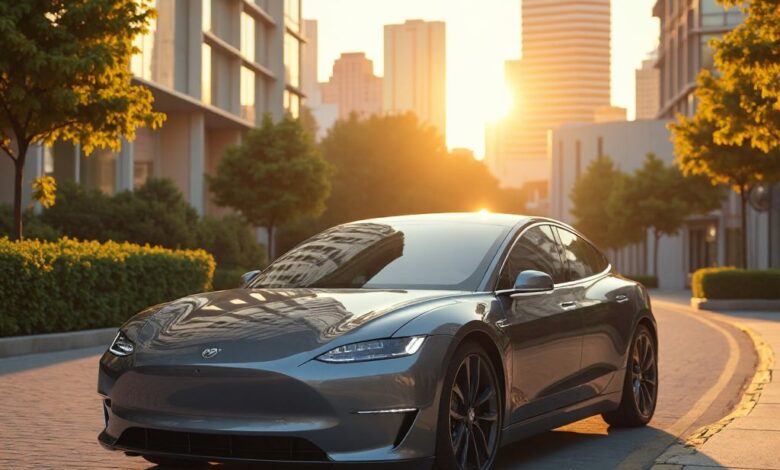
The Electric Revolution is Here: Unlocking the Best EVs Under $40,000 Right Now
Prepare to have your preconceptions shattered. For years, the electric vehicle market has been synonymous with premium price tags, sleek designs from Tesla, or the luxury offerings from BMW and Mercedes. But what if I told you that the most exciting frontier in EV innovation isn’t in the six-figure hypercars, but in the rapidly expanding segment of genuinely affordable, practical electric cars? That’s right: the era of the sub-$40,000 EV isn’t just on the horizon; it’s here, and it’s delivering incredible value, impressive range, and cutting-edge technology to the masses.
Why Affordable EVs Are Changing the Game for Everyone
The conversation around electric vehicles has shifted dramatically. No longer a niche luxury or an environmental statement reserved for the early adopters, EVs are rapidly becoming a mainstream choice for everyday drivers. This seismic shift is largely driven by advancements in battery technology, increased manufacturing efficiency, and fierce competition among automakers. However, one of the biggest hurdles for many prospective buyers has always been the initial cost. With gas prices fluctuating wildly and a growing desire for sustainable transportation, the demand for budget-friendly EVs has never been higher.
Enter the “under $40,000” segment. This price point is critical because it moves EVs from aspirational to attainable for a vast number of consumers. When you factor in potential federal tax credits (currently up to $7,500 for eligible vehicles and buyers), state incentives, and significant savings on fuel and maintenance, these cars aren’t just affordable; they often represent a superior total cost of ownership compared to their gasoline counterparts. This isn’t just about saving money at the pump; it’s about making a smart financial and environmental decision without compromising on the driving experience.
Top Contenders: The Best Electric Cars Under $40,000
Let’s dive into the standout models that are redefining what an affordable EV can be. These vehicles offer a compelling blend of range, features, and everyday usability, all while keeping a keen eye on your wallet.
Chevrolet Bolt EV and Bolt EUV
Chevrolet has been a quiet pioneer in the affordable EV space, and the Bolt lineup is a testament to their commitment. Recently refreshed, both the Bolt EV (a compact hatchback) and the Bolt EUV (a slightly larger, more SUV-like variant) offer incredible value.
- MSRP (Before Incentives): Bolt EV starts around $26,500; Bolt EUV starts around $27,800.
- Range: A fantastic EPA-estimated 259 miles for the Bolt EV and 247 miles for the Bolt EUV. This range effectively eliminates range anxiety for most daily commuters and even many longer trips.
- Charging: Both models come standard with DC fast charging capability, allowing for approximately 95 miles of range in 30 minutes. They also feature an improved 11.5 kW onboard charger for faster Level 2 (240V) home charging.
- Performance: Equipped with a 200-horsepower electric motor, both Bolts offer peppy acceleration (0-60 mph in about 6.5 seconds), making them nimble and fun to drive, especially in urban environments.
- Interior & Tech: The interior received a welcome refresh, featuring an 8-inch digital instrument cluster and a 10.2-inch infotainment touchscreen with wireless Apple CarPlay and Android Auto. The EUV offers slightly more rear legroom and available Super Cruise hands-free driving technology (though this pushes the price slightly above the base model).
- Pros: Excellent range for the price, surprisingly quick, user-friendly tech, good cargo space for their size, highly eligible for federal tax credits.
- Cons: Interior materials, while improved, still lean towards practicality over luxury. DC fast charging speed is good but not class-leading compared to some newer, more expensive EVs from Hyundai or Kia.
Hyundai Kona Electric
The Hyundai Kona Electric has been a long-standing favorite in the affordable EV market, offering a compelling package of range, style, and features in a compact crossover body.
- MSRP (Before Incentives): Starts around $33,550.
- Range: An impressive EPA-estimated 258 miles, putting it nearly on par with the Bolt.
- Charging: Supports up to 100 kW DC fast charging, capable of going from 10-80% charge in about 47 minutes. Level 2 charging maxes out at 7.2 kW.
- Performance: Powered by a 201-horsepower electric motor, the Kona Electric delivers spirited acceleration (0-60 mph in about 6.4 seconds), making it feel lively and responsive.
- Interior & Tech: The Kona Electric boasts a well-appointed interior with an available 10.25-inch digital instrument cluster and a 10.25-inch infotainment screen. Standard features include an 8-inch touchscreen, wireless Apple CarPlay and Android Auto, and a suite of advanced safety features.
- Pros: Excellent range, engaging driving dynamics, stylish design, comprehensive standard features, strong warranty, relatively quick DC fast charging.
- Cons: Rear passenger space can be tight for adults, cargo capacity is adequate but not class-leading, base model’s Level 2 charging is slower than the Bolt.
Nissan Leaf
The Nissan Leaf holds a special place in EV history as one of the pioneers of mass-market electric cars. While it might not have the cutting-edge appeal of some newer rivals, it remains a strong contender for its value proposition and proven reliability.
- MSRP (Before Incentives): Leaf S starts around $28,140; Leaf SV Plus starts around $36,190.
- Range: The base Leaf S offers an EPA-estimated 149 miles. The more capable Leaf SV Plus extends this to a more practical 212 miles.
- Charging: Uses the CHAdeMO DC fast charging standard, which is less common than CCS but still widely available. The SV Plus can charge from 20-80% in about 45 minutes. Level 2 charging is 6.6 kW.
- Performance: The Leaf S produces 147 horsepower, while the SV Plus bumps it up to 214 horsepower, making the latter significantly quicker (0-60 mph in about 6.7 seconds).
- Interior & Tech: The Leaf offers a comfortable, spacious cabin with good visibility. Standard features include an 8-inch touchscreen with Apple CarPlay and Android Auto, and Nissan’s ProPILOT Assist semi-autonomous driving system is available on higher trims.
- Pros: Very affordable entry point, comfortable ride, spacious interior, proven reliability, available ProPILOT Assist.
- Cons: Base model range is limited, CHAdeMO charging standard is less future-proof than CCS, design is somewhat dated compared to newer EVs, not eligible for the full federal tax credit due to battery component sourcing.
Expert Analysis: Beyond the Spec Sheet
As a veteran of the automotive world, I’ve seen countless trends come and go. Here are a few insider insights that aren’t always immediately apparent when looking at the spec sheets:
- The “Effective” Price Tag: When considering these vehicles, always factor in the federal EV tax credit and any state or local incentives. A car with an MSRP of $35,000 could effectively cost you $27,500 after federal incentives, making it an absolute steal. This is where brands like Chevrolet, Hyundai, and Nissan truly shine compared to premium offerings from Tesla, Audi, or Porsche, which often exceed these price caps or have already exhausted their federal tax credit eligibility.
- Total Cost of Ownership (TCO) is Key: Don’t just look at the purchase price. EVs have significantly lower “fuel” costs (electricity is generally cheaper per mile than gasoline, especially when charging at home) and require less maintenance (no oil changes, fewer moving parts). Over 5-7 years, these savings can amount to thousands of dollars, making even a slightly more expensive EV a better long-term investment than a comparable ICE vehicle from Ford or Toyota.
- Charging Infrastructure is Growing, But Home Charging is King: While public charging networks are expanding rapidly (thanks to efforts by Electrify America, ChargePoint, and others), the true convenience of EV ownership comes from charging at home. A Level 2 charger installation is a one-time cost that pays dividends, ensuring you start every day with a “full tank.” For these sub-$40k EVs, the overnight charge is usually more than enough for daily commutes.
- The “Trickle-Down” Effect: While you won’t find the raw performance of a Rivian R1T or the luxury of a Lucid Air in this segment, the underlying battery and motor technologies are constantly improving. Innovations developed for high-end EVs from BMW or Mercedes eventually find their way into more affordable models, ensuring that even budget-friendly options offer a refined and capable driving experience.
- Resale Value is a Wild Card: The EV market is evolving rapidly. While early EVs sometimes struggled with resale, the growing demand and improving technology suggest that modern EVs, especially those with good range, will hold their value well. However, constant innovation means newer models might offer significant upgrades, so consider your ownership timeline.
General Pros and Cons of Sub-$40,000 EVs
Here’s a balanced view of what to expect when stepping into this exciting segment:
Pros:
- Exceptional Value: Unbeatable price-to-range ratio, especially with incentives.
- Lower Running Costs: Significant savings on fuel and maintenance compared to gasoline cars.
- Instant Torque: Zippy acceleration and a fun driving experience.
- Environmental Benefits: Zero tailpipe emissions contribute to cleaner air.
- Quiet & Smooth Ride: The absence of an internal combustion engine makes for a remarkably serene cabin.
- Access to HOV Lanes: In many states, EVs qualify for single-occupant HOV lane access.
Cons:
- Initial Charging Infrastructure Cost: Installing a home Level 2 charger can add $500-$2,000.
- Public Charging Availability/Speed: While improving, public DC fast charging can still be slower or less available than gas stations, especially in rural areas.
- Range Limitations: While good for the price, these vehicles typically offer less range than more expensive EVs (e.g., higher-end Tesla models or the Ford Mustang Mach-E).
- Fewer Luxury Features: Interior materials and advanced tech might not be as premium as pricier EVs.
- Battery Degradation: Over many years, battery capacity can slowly decrease, though modern batteries are designed for longevity.
Final Verdict: The Smart Choice for the Electric Future
The notion that electric cars are only for the wealthy or tech-obsessed is officially outdated. The Chevrolet Bolt EV/EUV, Hyundai Kona Electric, and Nissan Leaf stand as shining examples of how far affordable EVs have come. They offer compelling range, engaging performance, and practical features, all wrapped up in a package that makes financial sense for a vast number of buyers.
For first-time EV buyers, these vehicles are an ideal entry point, demystifying the technology and showcasing the everyday benefits of going electric without breaking the bank. For experienced car owners looking to make the switch, they represent a smart, forward-thinking choice that doesn’t compromise on usability or enjoyment. My recommendation? If you’re considering a new car purchase and want to embrace the future of mobility, you owe it to yourself to test drive one of these under-$40,000 champions. Do your research on local incentives, calculate your potential savings, and prepare to be surprised by just how good an affordable EV can be. The electric revolution isn’t just coming; it’s already here, and it’s more accessible than ever before. Go experience it for yourself!