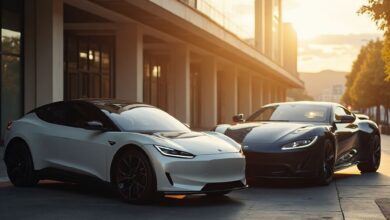
The automotive world, a realm once defined by the roar of internal combustion engines and the scent of gasoline, is undergoing the most profound transformation in its history. If you haven’t noticed, nearly every major car brand, from the venerable German giants to the ambitious Asian powerhouses and the revitalized American stalwarts, is no longer just dipping a toe into the electric vehicle (EV) pool – they are diving in headfirst, with multi-billion-dollar commitments and ambitious timelines for an all-electric future. It’s not just a trend; it’s an industrial revolution on wheels.
This seismic shift isn’t merely about environmental responsibility, though that’s certainly a significant factor. It’s a complex interplay of technological breakthroughs, evolving consumer demands, stringent global regulations, and fierce competition that has compelled even the most traditional automakers to re-evaluate their entire business model. For car buyers and enthusiasts today, understanding this pivot is crucial, as it fundamentally alters everything from vehicle performance and ownership costs to future resale values and the very infrastructure that supports our driving lives. The cars you’ll be buying in five, ten, or fifteen years will be dramatically different, and the choices being made by manufacturers right now will dictate that future.
The Unstoppable Current: Why Brands Are Electrifying Their Futures
The move towards electrification is not a singular phenomenon but a confluence of powerful forces. To truly grasp why every major player is “going all-in,” we need to dissect these drivers.
Regulatory Pressures: The Iron Fist of Emissions Standards
Perhaps the most immediate and undeniable catalyst for the EV surge is the ever-tightening net of global emissions regulations. Governments worldwide, particularly in Europe and China, have set aggressive targets for reducing CO2 emissions, often accompanied by severe penalties for non-compliance. The European Union, for instance, has mandated significant reductions, pushing manufacturers to ensure a certain percentage of their sales are zero-emission vehicles. In the United States, California’s ZEV (Zero Emission Vehicle) mandate, adopted by several other states, dictates that a growing proportion of vehicles sold must be electric or plug-in hybrids.
For brands like Volkswagen, still recovering from the “Dieselgate” scandal, the pivot to EVs isn’t just about compliance; it’s a strategic redemption and a commitment to a sustainable future, exemplified by their massive investment in platforms like the MEB, underpinning models like the ID.4. Mercedes-Benz and BMW are also heavily investing to meet these targets, knowing that the cost of developing EVs is far less than the astronomical fines for failing to meet fleet average emissions.
Technological Tipping Point: Batteries, Motors, and Software
For years, the Achilles’ heel of EVs was battery technology – too expensive, too heavy, too limited in range, and too slow to charge. That era is rapidly fading into the rearview mirror. Advances in lithium-ion battery chemistry have led to significant improvements in energy density, allowing for longer ranges in smaller, lighter packages. Crucially, battery costs have plummeted by over 80% in the last decade, making EVs increasingly competitive on price.
Electric motors themselves are inherently more efficient and simpler than internal combustion engines, offering instant torque and smooth, quiet operation. This has allowed brands like Porsche to unleash the blistering performance of the Taycan and Audi with the e-tron GT, challenging supercars with their acceleration. Charging technology has also evolved, with DC fast charging networks expanding rapidly, allowing many new EVs to regain hundreds of miles of range in under 30 minutes. This technological maturity has given automakers the confidence to commit fully, knowing they can deliver compelling products.
The Tesla Effect and Competitive Awakening
You cannot discuss the EV revolution without acknowledging the elephant in the room: Tesla. For years, legacy automakers dismissed Tesla as a niche player. However, Tesla didn’t just build electric cars; it built desirable, high-performance, technologically advanced vehicles that captured the public imagination and commanded premium prices. Its market capitalization soared, often dwarfing that of established giants, proving that EVs could be profitable and scalable.
This forced a reckoning. Brands like Ford, with its Mustang Mach-E, and Chevrolet, with the Bolt EUV and upcoming Silverado EV, realized they couldn’t afford to cede the future to Tesla. New entrants like Rivian, focusing on electric trucks and SUVs, and Lucid, pushing the boundaries of luxury EV range and performance, further intensified the competitive landscape. The race is now on not just to build EVs, but to build *better* EVs that can out-innovate and out-perform the competition.
Shifting Consumer Sentiments and Economic Logic
While early EV adopters were often driven by environmental concerns, the mainstream consumer is now increasingly swayed by practical benefits. The rising cost of gasoline makes the lower “fuel” cost of electricity incredibly appealing, especially for those who can charge at home. EVs also offer a superior driving experience – instant torque, whisper-quiet operation, and often a lower center of gravity for better handling. Maintenance costs are typically lower due to fewer moving parts and no oil changes.
Furthermore, there’s a growing awareness of an EV’s carbon footprint and a desire for sustainable products. Brands like Hyundai and Kia have capitalized on this with compelling offerings like the Ioniq 5 and EV6, which combine distinctive design with long range and rapid charging, appealing to a broad segment of buyers looking for a modern, efficient, and technologically advanced vehicle.
Brand Image and Future-Proofing
In an era where corporate responsibility and sustainability are increasingly important to consumers, a strong commitment to electrification enhances a brand’s image. Automakers want to be seen as forward-thinking, innovative, and responsible. Being left behind in the EV transition risks being perceived as outdated and irrelevant, a death knell in the fast-paced automotive industry. Every major brand knows that the future is electric, and they are aggressively positioning themselves to be leaders, not laggards, in this new paradigm.
Expert Analysis: Beyond the Headlines
- The Software-Defined Vehicle Revolution: This shift isn’t just about powertrains; it’s about transforming the car into a software platform. EVs, with their simplified mechanicals, allow automakers to focus heavily on software updates, connected services, and even subscription models for features. This opens up entirely new revenue streams that could be far more lucrative than traditional car sales, fundamentally altering how automakers generate profit in the future. Tesla pioneered this, and now everyone from BMW to Ford is racing to catch up.
- Supply Chain Re-engineering: The move to EVs requires a complete overhaul of the automotive supply chain. Instead of solely sourcing engine blocks and transmissions, manufacturers are now focused on securing rare earth minerals, lithium, cobalt, and nickel, along with battery cell production. This creates new geopolitical challenges and opportunities, leading brands like Volkswagen and General Motors to invest directly in battery manufacturing facilities and raw material partnerships to control their destiny.
- The “Compliance Car” vs. “Desirable EV” Dichotomy: Early EVs from legacy brands were often “compliance cars” – built to meet regulations rather than excite buyers. Today, the focus is entirely on creating desirable EVs that consumers *want* to buy, not just ones they *have* to. This marks a critical turning point and explains the rapid improvement in design, performance, and user experience across the board.
- The Internal Combustion Engine’s Sunset Clause: While not explicitly stated, the massive investments in EV platforms and battery factories signal an unspoken commitment to eventually phase out ICE development. Resources are being reallocated, engineering talent is shifting, and the long-term viability of new ICE projects is diminishing, even if they remain on sale for some time.
The Electric Future: Pros and Cons
Pros:
- Environmental Benefits: Zero tailpipe emissions contribute to cleaner air and reduced carbon footprint (depending on electricity source).
- Superior Driving Dynamics: Instant torque, quiet operation, smooth acceleration, and often a lower center of gravity for improved handling.
- Lower Running Costs: Cheaper “fuel” (electricity) compared to gasoline, especially when charging at home; reduced maintenance needs.
- Technological Innovation: Over-the-air updates, advanced driver-assistance systems, and seamless connectivity.
- Government Incentives: Tax credits, rebates, and other perks often make initial purchase more affordable.
Cons:
- Higher Upfront Cost: While decreasing, EVs often still carry a premium over comparable ICE vehicles.
- Charging Infrastructure: While improving, public charging can still be less convenient than gas stations in some areas, and home charging installation can be an added expense.
- Range Anxiety: Although ranges are increasing, long road trips still require planning for charging stops.
- Battery Production & Disposal: Ethical sourcing of raw materials and eventual battery recycling remain environmental challenges.
- Charging Time: Even fast charging takes longer than a typical gas stop.
Final Verdict and Recommendation
The writing is on the wall, etched in the multi-billion-dollar investments and ambitious product roadmaps of every major automotive brand. The decision to go “all-in” on electric vehicles isn’t just a fleeting trend; it’s a strategic imperative driven by a perfect storm of regulation, technology, competition, and consumer demand. We are witnessing the dawn of a new era in mobility, one that promises cleaner air, exhilarating performance, and a fundamentally different relationship with our vehicles.
For first-time buyers, now is an incredibly exciting time to consider an EV. The variety of models, price points, and capabilities has never been greater. For experienced car owners, the transition might feel significant, but the benefits in terms of driving experience and ownership costs are compelling enough to warrant a serious look. My recommendation is clear: don’t just read about the electric revolution – experience it. Visit a dealership, take a test drive in a Ford F-150 Lightning, a Hyundai Ioniq 5, or a BMW i4. Feel the instant torque, appreciate the quiet cabin, and imagine a future free from gas stations. The automotive landscape is changing at warp speed, and the best way to understand it is to get behind the wheel and be part of the charge.