The Great EV Divide: How Subaru and Toyota Are Approaching Electric Vehicles Differently
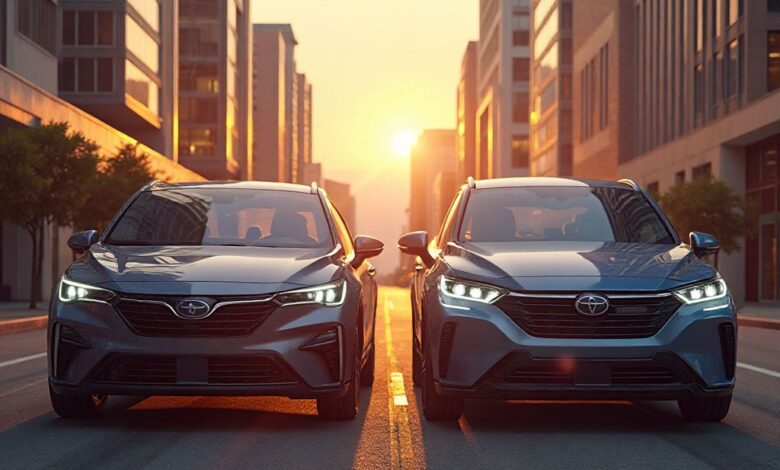
In a world rapidly accelerating towards an all-electric future, two automotive giants, long-time partners, find themselves at a fascinating crossroads. While Toyota and Subaru famously collaborated on the acclaimed GR86/BRZ sports cars and more recently on their inaugural mass-market EVs, the bZ4X and Solterra, their overarching strategies for electrification couldn’t be more divergent. Forget what you think you know about their shared platforms; underneath the sheet metal, a philosophical chasm separates these two titans, one that will profoundly shape their destinies and, more importantly, the choices available to you, the consumer, in the coming decade.
Why Their EV Paths Matter Now More Than Ever
The automotive landscape is undergoing its most radical transformation since the internal combustion engine replaced the horse and buggy. Every automaker, from established players like Ford and Volkswagen to disruptive newcomers like Tesla and Rivian, is scrambling to define its electric identity. For car buyers and enthusiasts today, understanding these strategies isn’t just academic; it’s crucial for making informed decisions. Are you looking for a proven, reliable, multi-pathway approach that prioritizes longevity and diverse options? Or are you drawn to a more niche, lifestyle-focused brand that leverages partnerships to enter the EV space, aiming to maintain its unique identity in a new era? Toyota and Subaru represent these two distinct philosophies, and their choices will directly impact range, charging infrastructure, cost, and the very driving experience you’ll get from their future electric offerings.
Toyota’s Calculated, Multi-Pathway Electrification
The Hybrid Master’s Cautious Leap
Toyota, the undisputed pioneer of hybrid technology with the ubiquitous Prius, has long been criticized for its perceived reluctance to fully embrace battery electric vehicles (BEVs). While brands like Hyundai, Kia, and even General Motors have aggressively launched multiple BEV models, Toyota has championed a “multi-pathway” approach, investing heavily not just in BEVs, but also in traditional hybrids (HEVs), plug-in hybrids (PHEVs), and even hydrogen fuel cell electric vehicles (FCEVs) like the Mirai. Their argument? Not all markets are ready for BEVs, and a diverse portfolio ensures they meet varied global needs while mitigating technological risks.
Their first dedicated BEV, the bZ4X (alongside its twin, the Subaru Solterra), was met with a mixed reception. While offering Toyota’s hallmark reliability and a comfortable ride, its range (EPA-estimated 252 miles for FWD, 228 miles for AWD) and charging speeds were not class-leading when compared to rivals like the Hyundai Ioniq 5 or Tesla Model Y. Early issues with wheel detachments (prompting a recall) and cold-weather charging limitations further highlighted the challenges of a first-generation product.
Under the Hood: e-TNGA and the Future of Solid-State
The bZ4X sits on Toyota’s e-TNGA platform, a modular architecture designed specifically for BEVs. This platform is versatile, allowing for different battery sizes, motor configurations, and vehicle types, much like Volkswagen’s MEB platform. This strategic move allows Toyota to scale EV production efficiently across various segments, from compact SUVs to potentially larger trucks and sedans.
However, Toyota’s true long-term play often revolves around solid-state battery technology. While most current EVs use liquid electrolyte lithium-ion batteries, solid-state batteries promise higher energy density (more range in a smaller, lighter package), faster charging, and improved safety. Toyota has been a leader in solid-state research for decades, holding more patents in the field than any other automaker. Their vision is to introduce solid-state batteries in their BEVs by the mid-2020s, potentially leapfrogging current battery tech and offering a significant competitive advantage. This patient, research-intensive approach underscores their commitment to a robust, long-lasting solution rather than rushing to market with conventional tech.
Cost and Value Proposition
Toyota’s strategy inherently aims for broad market appeal. While the bZ4X’s starting price is competitive, its value proposition is built on the brand’s reputation for durability and low maintenance costs, rather than cutting-edge performance or groundbreaking range. Their diverse portfolio also means buyers aren’t forced into a BEV if it doesn’t suit their lifestyle, offering HEV and PHEV alternatives like the RAV4 Hybrid and Prime, which often boast superior efficiency and range to many full EVs in their segment.
Subaru’s Niche, Collaborative Electrification
The Solterra: A Strategic Alliance
Subaru, a much smaller automaker known for its niche appeal, symmetrical all-wheel drive, and rugged, outdoorsy image, has taken a different route. Lacking the immense R&D budget of a global giant like Toyota, Subaru leveraged its partnership to bring its first mass-market BEV, the Solterra, to fruition. Essentially a rebadged and slightly restyled bZ4X, the Solterra represents Subaru’s cautious entry into the electric market.
The Solterra shares the bZ4X’s e-TNGA platform, powertrain, and battery technology. This means similar range figures (222 miles EPA estimated), charging capabilities, and interior dimensions. However, Subaru has worked to imbue it with its brand DNA. The Solterra comes standard with Symmetrical All-Wheel Drive, a cornerstone of the Subaru experience, and features slightly more ground clearance and unique styling cues that align with its adventure-ready image. Its X-MODE traction control system, familiar to Forester and Outback owners, is also adapted for the electric powertrain, enhancing its off-road prowess.
Maintaining Brand Identity in an Electric World
Subaru’s challenge is significant: how do you maintain an identity built on the distinctive rumble of a Boxer engine and mechanical Symmetrical AWD when both are gone? Their strategy with the Solterra is to translate that identity into the electric age through design, capability, and marketing. By focusing on the AWD system and rugged utility, they aim to appeal to their loyal customer base who prioritize safety, capability, and outdoor adventure.
For Subaru, the Solterra is a crucial learning platform. It allows them to gain experience in EV manufacturing, sales, and service without the prohibitive costs of developing an entirely new dedicated EV architecture from scratch. This collaborative approach buys them time to potentially develop their own bespoke EV platforms and technologies in the future, once the market matures and their financial position allows for greater independent investment.
Cost and Market Positioning
The Solterra is priced slightly higher than its bZ4X counterpart, reflecting its standard AWD and Subaru’s premium positioning within its niche. For Subaru buyers, the value lies in the familiar brand experience, enhanced off-road capability, and the perceived safety and reliability associated with the brand, now in an electric package. It’s not about being the cheapest or the fastest EV, but about being a Subaru EV.
Expert Analysis: Beneath the Surface
-
Toyota’s “Go Slow to Go Fast” Gamble: Toyota’s deliberate, multi-pathway approach is a high-stakes gamble. While it preserves their market share in regions not ready for full BEV adoption, it risks ceding leadership in the rapidly expanding BEV segment to aggressive players like Tesla, Hyundai, and Kia. Their reliance on future solid-state tech could be a game-changer, but if development stalls or competitors catch up with existing tech, Toyota could find itself playing catch-up in a major way.
-
Subaru’s Identity Crisis (or Evolution?): Subaru’s brand identity is deeply intertwined with its mechanical distinctiveness (Boxer engine, Symmetrical AWD). While the Solterra cleverly integrates electric AWD, the absence of the Boxer engine removes a core sensory experience. The long-term challenge for Subaru is to articulate an emotional connection to their EVs that goes beyond capability and safety, maintaining their “love” brand appeal without the iconic internal combustion heart.
-
The Strategic Depth of Platform Sharing: For smaller automakers like Subaru, platform sharing with a giant like Toyota is a lifeline. It allows them to enter the EV market without astronomical R&D costs. However, it also presents a significant challenge in differentiation. The Solterra, while distinct, is fundamentally a bZ4X. This forces Subaru to rely heavily on subtle styling, trim, and marketing to justify its existence, a tactic that might become harder as the market matures and bespoke EV platforms become more common (e.g., Rivian’s distinct platform vs. Ford’s F-150 Lightning on a modified ICE platform).
-
Toyota’s Solid-State Bet: A Potential Leapfrog or Costly Delay: Toyota’s unwavering focus on solid-state batteries is a testament to their long-term vision. If successful, it could offer a genuine competitive advantage in range, charging speed, and potentially cost/safety. However, the commercialization of solid-state batteries has proven incredibly difficult. If Toyota delays its full BEV rollout waiting for this technology, and competitors continue to innovate rapidly with existing lithium-ion tech (e.g., better thermal management, faster charging networks from Porsche’s Taycan to Lucid’s Air), they risk being perceived as perpetually behind.
-
The Future of the Partnership: Divergence Post-First Gen? The bZ4X/Solterra collaboration is a pragmatic first step. But what comes next? It’s highly probable that both brands will eventually diverge. Toyota will continue to expand its bZ lineup on improved e-TNGA platforms, potentially incorporating solid-state tech. Subaru, having gained invaluable experience, might then develop its own unique EV platform, perhaps with a focus on smaller, more rugged vehicles that truly embody its brand without compromise, much like how Rivian carved out its adventure-focused niche.
Pros and Cons: A Tale of Two Strategies
Toyota’s Approach
- Pros:
- Diverse Options: Offers HEV, PHEV, FCEV, and BEV, catering to a wider global audience and varied infrastructure readiness.
- Proven Reliability: Leverages Toyota’s legendary reputation for durability and low maintenance.
- Long-Term Vision: Significant investment in future-proof technologies like solid-state batteries.
- Scalable Platform: e-TNGA allows for efficient production across multiple vehicle types.
- Cons:
- Slow to Market: Perceived as lagging behind competitors in dedicated BEV launches.
- Conservative Specs: First-gen bZ4X’s range and charging speeds were not class-leading.
- Risk of Delay: Over-reliance on future technologies like solid-state could delay competitive BEV offerings if development falters.
- Less “Excitement”: Their cautious approach can sometimes translate to less immediate excitement compared to bold new entrants.
Subaru’s Approach
- Pros:
- Cost-Effective Entry: Leverages
- Cost-Effective Entry: Leverages