

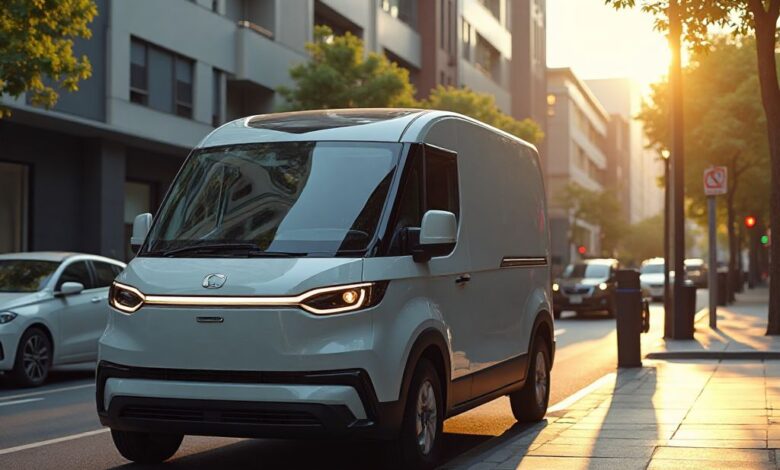
Arrival Van Review: Electric Commercial Vehicles Built for Urban Delivery
Imagine a future where the rumble of a diesel delivery truck is replaced by the silent, swift hum of an electric van, gliding effortlessly through city streets, delivering goods with zero emissions. This isn’t a distant dream; it’s the imminent reality Arrival is striving to build with its groundbreaking Electric Van. While many established automakers are adapting existing platforms for electrification, Arrival started from a clean sheet, designing a commercial EV specifically for the grueling, stop-and-go demands of urban logistics. The result is not just another electric van; it’s a radical reimagining of the workhorse vehicle, promising to revolutionize last-mile delivery as we know it.
The Electrification Imperative: Why Urban Delivery Needs a Green Overhaul
The global surge in e-commerce, accelerated by recent world events, has placed unprecedented strain on urban infrastructure and air quality. Delivery vehicles, often diesel-powered, contribute significantly to city pollution, noise, and traffic congestion. Simultaneously, fuel price volatility and increasingly stringent emissions regulations in major cities worldwide are squeezing the margins of logistics companies. This confluence of factors makes the transition to electric commercial vehicles not just an environmental imperative, but a sound economic decision. Companies like Amazon, UPS, and FedEx are already making massive investments in electrifying their fleets, understanding that the Total Cost of Ownership (TCO) for EVs can often undercut their ICE counterparts over the vehicle’s lifespan, thanks to lower fuel and maintenance costs. The Arrival Van isn’t just joining this movement; it aims to define a new standard for efficiency, sustainability, and driver experience in this critical sector.
A Deep Dive into the Arrival Van: Designed for Tomorrow’s Logistics
Radical Design: Form Meets Function in a Bold New Way
From the moment you lay eyes on the Arrival Van, it’s clear this isn’t your typical utilitarian box on wheels. Its exterior design is refreshingly modern and minimalist, eschewing the aggressive lines often found on passenger EVs for a clean, purposeful aesthetic. The large, expansive windshield and panoramic roof offer exceptional visibility – a critical safety feature in busy urban environments. Built with lightweight composite materials, the body panels are designed for durability and ease of repair, reducing downtime and maintenance costs. The modular “skateboard” platform allows for various body configurations, ensuring flexibility for different cargo needs, from compact city deliveries to larger parcel routes. This design philosophy is a stark contrast to traditional vans, which often prioritize ruggedness over aerodynamic efficiency and driver comfort. It’s a thoughtful blend of futuristic appeal and practical utility.
Performance and Practicality: Powering Through the Urban Jungle
The Arrival Van is engineered from the ground up to excel in urban environments. While specific power figures can vary by configuration, the electric powertrain delivers instant torque, making acceleration from a standstill smooth and responsive – a significant advantage in stop-and-go traffic compared to sluggish diesel engines. Its low center of gravity, thanks to the underfloor battery placement, contributes to stable handling and a surprisingly car-like driving experience, reducing driver fatigue. Maneuverability is key in tight city streets, and the Arrival Van’s optimized turning radius and compact footprint (depending on variant) are designed to navigate congested areas with ease. Payload capacity and cargo volume are competitive with, if not superior to, many traditional vans in its class, ensuring it can handle a wide range of delivery demands. This is where it directly challenges established players like the Ford E-Transit and Mercedes-Benz eSprinter, which are often adaptations of existing ICE platforms.
Interior and Driver Experience: A Digital Office on Wheels
Step inside the Arrival Van, and you’re greeted by an interior that prioritizes the driver. The design is minimalist, clean, and highly ergonomic, feeling more like a modern office than a traditional van cabin. The central, large touchscreen infotainment system dominates the dashboard, providing access to navigation, vehicle diagnostics, and fleet management tools. Physical buttons are kept to a minimum, streamlining the interface. The seats are designed for comfort during long shifts, and the high driving position, coupled with the expansive glasshouse, offers excellent all-around visibility, crucial for safely maneuvering in crowded cityscapes. Arrival has paid close attention to the small details that matter to delivery drivers, such as ample storage compartments, easy ingress/egress, and a quiet cabin environment that reduces stress. This driver-centric approach is a clear differentiator, aiming to attract and retain talent in the logistics sector.
Technology and Connectivity: A Software-Defined Vehicle
Perhaps one of Arrival’s most ambitious claims is its “software-defined vehicle” philosophy. The van is designed to be constantly connected and updated over-the-air (OTA), much like a Tesla. This means improvements, bug fixes, and even new features can be pushed directly to the vehicle, ensuring it evolves throughout its lifecycle. Advanced Driver-Assistance Systems (ADAS) are integrated, including features like automatic emergency braking, lane-keeping assist, and 360-degree cameras, enhancing safety for both the driver and urban pedestrians. Fleet managers benefit from real-time telematics, predictive maintenance alerts, and optimized route planning, all accessible through a unified digital platform. This level of integration and connectivity is a significant leap forward for commercial vehicles, moving them closer to the smart, networked ecosystems found in premium passenger cars.
Specs, Range, and Charging: The Electric Backbone
Arrival offers multiple battery pack options, allowing fleet operators to choose the optimal range for their specific routes, minimizing upfront cost and maximizing efficiency. While exact EPA or WLTP figures are pending for full production models, Arrival has targeted practical urban ranges, typically between 100 to 200 miles on a single charge, depending on battery size (e.g., 67 kWh, 89 kWh, 111 kWh). This range is more than sufficient for the majority of last-mile delivery routes. Charging is flexible, supporting both AC (Level 2) and DC fast charging. With DC fast charging, a significant top-up can be achieved in under an hour, minimizing vehicle downtime. This flexibility is crucial for fleets operating on varied schedules and with different depot charging infrastructures. The motor power is optimized for urban acceleration and payload, ensuring efficient movement without unnecessary energy drain at higher speeds rarely achieved in city driving.
Costs and Value for Money: A TCO Champion?
The initial purchase price of an Arrival Van is expected to be competitive with, or even slightly higher than, some traditional ICE vans. However, Arrival’s value proposition truly shines when considering the Total Cost of Ownership (TCO). Electric vans eliminate fuel costs, replacing them with significantly cheaper electricity. Maintenance costs are also drastically reduced due to fewer moving parts in an EV powertrain – no oil changes, spark plugs, or complex exhaust systems. Regenerative braking also extends brake pad life. When factoring in potential government incentives, tax credits, and the long-term savings on operational expenses, the Arrival Van aims to deliver a compelling financial case for fleet electrification. This TCO advantage is where it truly competes with established players like the Ford E-Transit, Rivian EDV, and BrightDrop Zevo, all vying for dominance in the electric commercial vehicle space.
Expert Analysis: Beyond the Spec Sheet
- The Microfactory Revolution: Arrival’s innovative “microfactory” model is not just a clever buzzword; it’s a potential game-changer. By using smaller, highly automated production facilities located closer to demand centers, Arrival aims to significantly reduce capital expenditure, accelerate production, and minimize logistics costs. This modular approach could allow for rapid scaling and customization, offering an agility that traditional automotive giants struggle to match.
- Driver as the North Star: Unlike many commercial vehicles where the driver is an afterthought, Arrival has genuinely put the driver experience at the forefront. The ergonomic design, superior visibility, quiet cabin, and intuitive technology are not just comfort features; they are tools to reduce fatigue, improve safety, and potentially decrease driver turnover – a significant pain point for logistics companies.
- Software-First, Hardware-Second: Arrival’s commitment to a software-defined vehicle is more than just OTA updates. It means the vehicle’s capabilities can evolve and improve over time, making it a dynamic asset rather than a static piece of equipment. This approach allows for rapid deployment of new features, enhanced fleet management, and potentially new revenue streams for operators.
- Materials Innovation: The use of lightweight composite materials for body panels is a crucial element. Not only does it contribute to energy efficiency by reducing overall vehicle weight, but it also simplifies repairs. Instead of complex body shop procedures, panels can be easily replaced, significantly reducing vehicle downtime and maintenance costs.
- A True Urban Specialist: While many electric vans are designed to be “all-rounders,” Arrival has laser-focused on the specific challenges of urban delivery. This specialization in maneuverability, visibility, driver comfort for stop-and-go, and range optimized for city routes gives it a distinct advantage over more generalized offerings, especially in dense metropolitan areas.
Pros and Cons
- Pros:
- Purpose-built for urban electric delivery, optimizing efficiency and driver experience.
- Innovative “microfactory” production model promises scalability and efficiency.
- Modern, ergonomic, and driver-centric interior with excellent visibility.
- Software-defined vehicle architecture allows for OTA updates and future-proofing.
- Reduced Total Cost of Ownership (TCO) through lower fuel and maintenance costs.
- Lightweight composite materials for durability and ease of repair.
- Multiple battery options to suit specific range requirements.
- Advanced safety features and telematics for fleet management.
- Cons:
- As a relatively new company, long-term reliability and service network are unproven compared to established brands like Ford or Mercedes.
- Initial purchase price might be higher than some traditional ICE vans, requiring a longer payback period for TCO benefits.
- Production ramp-up and delivery schedules have faced challenges, as is common with startups.
- Limited brand recognition compared to automotive giants.
- Dependency on charging infrastructure, which can vary by location and fleet depot.
Final Verdict: A Bold Bet on the Future of Logistics
The Arrival Van is more than just another electric commercial vehicle; it’s a statement. It represents a bold, ground-up approach to solving the complex challenges of urban last-mile delivery. While the company faces the inherent hurdles of any automotive startup – particularly in scaling production and building out a service network – its innovative design, driver-centric philosophy, and software-first approach position it as a formidable contender. For fleet operators looking to make a decisive leap into electrification, prioritizing driver well-being, operational efficiency, and a truly modern platform, the Arrival Van offers a compelling package. It’s a specialist, not a generalist, and in the highly demanding world of urban logistics, specialization often wins the day. We at AutoPulse are eagerly watching Arrival’s journey, confident that their fresh perspective could truly reshape how goods move through our cities. If you’re managing a fleet, the Arrival Van demands a serious look – it might just be the most forward-thinking investment you make this decade.
Ready to electrify your fleet? Research potential government incentives and compare the Arrival Van’s TCO against your current diesel fleet. The future of delivery is electric, and Arrival is building the vehicles to drive it.


