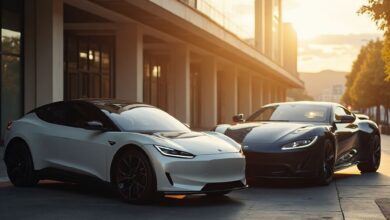
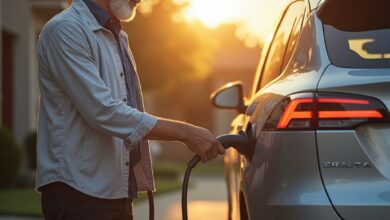
Welcome, fellow automotive enthusiasts and curious commuters! For years, the electric vehicle revolution has hummed along, a quiet promise of a cleaner, more efficient future. But lurking beneath the surface, a persistent question has echoed in the minds of potential buyers and even seasoned gearheads: “Just how far can these electric wonders *really* go on a single charge?” If you’re still picturing early EVs barely making it to the grocery store and back, prepare for a shock. Today, the answer isn’t just “far enough,” it’s often “farther than you’d ever need for a typical day,” with some models now routinely eclipsing the 400-mile mark and pushing well beyond – a feat that would have seemed like science fiction just a decade ago.
The Elephant in the Garage: Why EV Range Matters More Than Ever
In the grand tapestry of car buying, few concerns loom larger for the uninitiated EV shopper than range anxiety. It’s the phantom fear of running out of juice in the middle of nowhere, the ghost of an empty battery light haunting long road trips. For decades, we’ve been conditioned by the reassuring glow of a gas station sign every few miles. The transition to electric means a paradigm shift, and for EVs to truly go mainstream, they need to offer not just comparable, but often superior, convenience and capability to their gasoline counterparts. This is why the relentless pursuit of longer range isn’t just a bragging right for manufacturers; it’s a crucial pillar in dismantling barriers to adoption, convincing millions that an EV can seamlessly integrate into their lives – from daily commutes to cross-country adventures. Understanding current EV range isn’t just about numbers; it’s about freedom, flexibility, and the future of personal transportation.
The Electrifying Truth: How Far EVs Go Today
Let’s dive into the core question. The days of sub-100-mile EVs are largely behind us, relegated to history books and niche urban commuters. The modern EV landscape is dominated by vehicles offering ranges that comfortably cover the vast majority of daily driving needs, and then some.
The Numbers Game: EPA Estimates and Real-World Performance
When you see an EV’s range advertised, it’s usually based on the Environmental Protection Agency (EPA) estimate in the United States, or the Worldwide Harmonized Light Vehicles Test Procedure (WLTP) in Europe. The EPA standard is generally considered more conservative and closer to real-world driving conditions, while WLTP tends to yield higher numbers. For our purposes, we’ll focus primarily on EPA estimates when discussing specific models.
- Entry-Level/Commuter EVs (200-250 miles): Even at the more affordable end of the spectrum, vehicles like the Chevrolet Bolt EUV and Volkswagen ID.4 offer very respectable ranges that easily handle daily commutes and weekend errands without a second thought. Many drivers find this range more than adequate, especially with convenient home charging.
- Mainstream Workhorses (250-350 miles): This is the sweet spot for many popular EVs today. Models like the Tesla Model 3 Long Range, Hyundai Ioniq 5, Kia EV6, Ford Mustang Mach-E, and BMW i4 eDrive40 consistently deliver ranges in this bracket. This level of range opens up comfortable long-distance travel, making multi-state road trips entirely feasible with proper charging stops.
- Long-Distance Cruisers (350-400+ miles): Here’s where the truly impressive numbers start appearing. The Tesla Model S, Mercedes-Benz EQS, and BMW iX xDrive50 routinely offer ranges pushing or exceeding 350 miles. These vehicles virtually eliminate range anxiety for most drivers, allowing for significant stretches between charges.
- Range Royalty (400-500+ miles): At the pinnacle of current EV range, we find vehicles like the Lucid Air. The Lucid Air Grand Touring, for instance, boasts an incredible EPA-estimated range of up to 516 miles – a figure that utterly shatters previous expectations and puts many gasoline cars to shame in terms of single-tank range. Other contenders like the Tesla Model S Plaid also offer exceptional range in this top tier.
Factors Affecting Real-World Range
It’s crucial to understand that the EPA number is a laboratory estimate. Your actual range will vary based on several factors, much like a gasoline car’s MPG:
- Driving Style: Aggressive acceleration and high speeds drain the battery much faster. Smooth, consistent driving, especially with regenerative braking, maximizes efficiency.
- Speed: Aerodynamic drag increases exponentially with speed. Driving 75-80 mph on a highway will significantly reduce range compared to 60-65 mph.
- Temperature: Cold weather is an EV’s nemesis. Batteries perform less efficiently in low temperatures, and heating the cabin and battery pack consumes considerable energy, often reducing range by 20-30% or more in extreme cold. Conversely, very hot weather can also impact efficiency, though usually less dramatically than cold.
- Terrain: Uphill driving requires more energy, while downhill driving allows for regenerative braking to recoup some energy.
- HVAC Usage: Running the air conditioning or heater uses energy. Modern EVs are becoming more efficient with heat pumps, but it’s still a factor.
- Payload and Towing: Carrying heavy loads or towing a trailer drastically reduces range, often by 30-50% or more, depending on the weight and aerodynamics of what’s being towed. This is particularly relevant for trucks like the Ford F-150 Lightning and Rivian R1T.
Battery Technology and Capacity
The primary driver of increased range is larger battery packs and improved battery chemistry. Today’s EVs often feature battery capacities ranging from around 60 kWh in smaller models to over 100 kWh in larger, longer-range vehicles. Advancements in cell density, thermal management, and overall powertrain efficiency mean that manufacturers are squeezing more miles out of every kilowatt-hour. The development of 800-volt architectures, seen in vehicles like the Hyundai Ioniq 5/6, Kia EV6, and Porsche Taycan, also allows for incredibly fast charging, which, while not directly increasing range, significantly reduces the time spent at charging stations, making long trips more convenient.
Expert Analysis: Beyond the Brochure Numbers
As someone who lives and breathes automotive news, I can tell you that EV range is about more than just the biggest number on the spec sheet. Here are a few insider insights:
- The 80% Rule is Your Real-World Range: Most EV owners rarely charge their vehicle to 100% for daily driving, nor do they run it down to 0%. To preserve battery health and ensure immediate availability, most people charge to around 80-90% and plug in when they hit 10-20%. This means your *usable* daily range is often 60-70% of the advertised maximum. Even with this practical adjustment, modern EVs still offer ample daily mileage.
- Software Optimization is the Unsung Hero: It’s not just about bigger batteries. Manufacturers like Tesla have excelled at optimizing software that manages energy flow, motor efficiency, and thermal management. Over-the-air updates can even improve range and efficiency over time, a concept unheard of in the ICE world. This continuous refinement means a car’s efficiency isn’t static.
- The “Sweet Spot” for Range is Lower Than You Think: While 400+ miles sounds amazing, for the vast majority of drivers, anything over 250 miles EPA is genuinely sufficient. The average American drives less than 40 miles a day. The psychological comfort of more range is real, but the practical need for extreme range diminishes rapidly as charging infrastructure improves and charging speeds increase. Why pay for 500 miles of range if you only use 200 on your longest trips and can recharge to 80% in 20 minutes?
- Charging Speed and Infrastructure Trump Extreme Range (for many): A car with 300 miles of range that can add 200 miles in 15-20 minutes at a reliable fast charger might be more practical for long trips than a 450-mile EV that takes an hour to add the same amount. The holistic charging experience – speed, reliability, and availability of chargers (think Tesla’s Supercharger network, Electrify America, EVgo) – increasingly mitigates the need for ever-higher range numbers.
- Battery Degradation is Overblown (for modern EVs): Early EV batteries did experience more noticeable degradation. However, with sophisticated thermal management systems and improved chemistry, modern EV batteries are holding up remarkably well. Most manufacturers offer 8-year/100,000-mile warranties on their battery packs, and real-world data shows minimal degradation (often less than 10-15%) even after many years and hundreds of thousands of miles.
Pros and Cons of Current EV Range
Pros
- Sufficient for Most Needs: Modern EV range easily covers daily commutes and local errands for the vast majority of drivers.
- Long-Distance Travel Viable: With 250+ mile ranges becoming standard, road trips are increasingly practical, especially with robust fast-charging networks.
- Reduced Range Anxiety: As ranges increase and charging infrastructure expands, the fear of running out of power significantly diminishes.
- Environmental Benefits: Longer range allows for more gasoline-free miles, contributing to lower emissions (especially when charging with renewable energy).
- Performance and Quietness: EVs offer instant torque and a serene driving experience, regardless of range.
Cons
- Still Less Than a Full Tank (for some): While closing the gap, some EVs still can’t match the 500+ mile range of a large gasoline tank, particularly for trucks and SUVs.
- Temperature Sensitivity: Cold weather significantly impacts range and charging speed, requiring careful planning.
- Charging Time vs. Refueling: Even with fast charging, it takes longer to “fill up” an EV than a gasoline car, which can be a factor on very long trips.
- Initial Cost: EVs with very long ranges often come with a premium price tag due to larger battery packs.
- Public Charging Variability: While improving, the reliability and availability of public charging can still be inconsistent compared to the ubiquity of gas stations.
Final Verdict: The Range Revolution is Here, and It’s Ready for You
The question of “how far can electric vehicles really go” has moved from a genuine concern to an increasingly irrelevant one for most drivers. Today’s EVs, from the accessible Chevrolet Bolt EUV to the luxurious Mercedes EQS and the boundary-pushing Lucid Air, offer ranges that not only meet but often exceed the practical needs of daily driving and even ambitious road trips. The anxiety once associated with early electric cars is rapidly fading, replaced by the confidence that comes from reliable ranges, ever-improving charging infrastructure, and sophisticated battery management.
If you’re still on the fence, let this be your wake-up call: the range issue has largely been solved. EVs are no longer a compromise; they are a compelling, high-performance, and increasingly convenient alternative to gasoline cars. My recommendation? Don’t just read about it. Experience it. Take an EV for a test drive, rent one for a weekend, and see how seamlessly it integrates into your life. The future of driving isn’t just coming; it’s already here, and it’s ready to take you further than you ever imagined.
Ready to make the switch? Research your local incentives, explore the diverse range of models available, and prepare to redefine your driving experience. The open road beckons, and with a modern EV, it’s more accessible than ever before.