The Silent Sirens: How Electric Vehicles Are Revolutionizing Emergency and Police Services
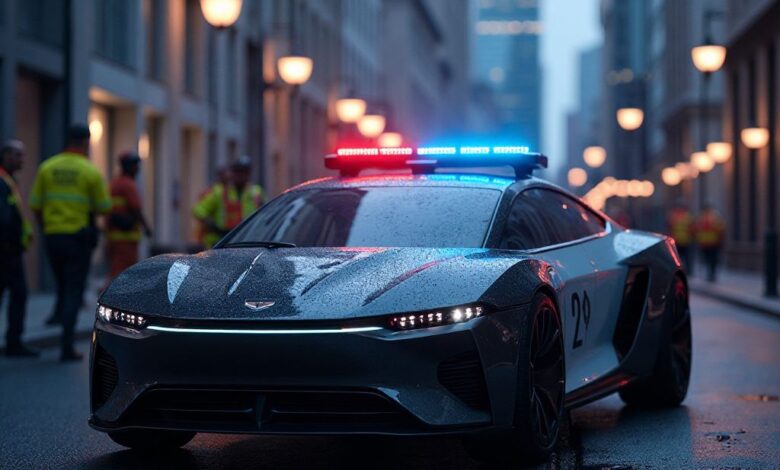
Imagine a high-speed pursuit, not with the roar of a V8, but with the near-silent, electrifying surge of an EV. It’s not science fiction; it’s the rapidly unfolding reality across police forces and emergency services worldwide. In a surprising turn of events, some police departments are reporting up to 90% savings on fuel costs and significantly reduced maintenance bills by integrating electric vehicles into their fleets. This isn’t just about going green; it’s about smarter, more efficient, and often more effective law enforcement and emergency response.
Beyond the Showroom: Why EVs Matter to Public Safety
For years, the image of a police cruiser was synonymous with a heavy-duty, gasoline-powered sedan – think Ford Crown Victoria or Chevrolet Impala. These vehicles were chosen for their robust build, powerful engines, and ease of maintenance in a demanding environment. But as the automotive landscape shifts dramatically towards electrification, public safety agencies are finding themselves at the forefront of this transition, driven by both environmental mandates and compelling economic realities.
This isn’t just a niche topic for fleet managers; it directly impacts car buyers and enthusiasts alike. The rigorous demands placed on police and emergency vehicles serve as an ultimate real-world test for EV technology. If an EV can withstand the punishing routine of patrol, high-speed chases, and the constant drain of auxiliary equipment, it speaks volumes about its durability, performance, and reliability for the everyday consumer. Furthermore, the operational efficiencies discovered by these agencies – from charging infrastructure solutions to long-term cost savings – offer valuable insights for anyone considering making the switch to electric.
Electrifying the Front Lines: EVs in Action
The integration of electric vehicles into emergency and police services is a multifaceted endeavor, touching upon vehicle specifications, operational logistics, and long-term strategic planning. It’s a journey from traditional internal combustion engines (ICE) to a future powered by electrons.
Purpose-Built Performance: Specs and Modifications
When an EV joins a police or emergency fleet, it’s far from a stock model. Manufacturers and aftermarket specialists work hand-in-hand to transform civilian EVs into robust public safety tools. Take the Ford Mustang Mach-E Police SSV (Special Service Vehicle), for instance. While it retains the impressive acceleration and handling characteristics of its consumer counterpart, it undergoes significant reinforcement. This includes heavy-duty suspension, police-grade brakes, and often a reinforced chassis to handle the additional weight of ballistic panels and extensive equipment.
Inside, the modifications are even more extensive. Specialized wiring harnesses are installed to power an array of critical equipment: lights, sirens, police radios, mobile data terminals (MDTs), radar systems, and dash cameras. These systems demand a substantial auxiliary power draw, which requires careful integration with the EV’s 12V system and, in some cases, additional battery packs or converters to ensure consistent power without impacting the main propulsion battery.
Other brands like Tesla Model 3 and Model Y, BMW i4, and Audi e-tron models are also being piloted, often for administrative duties or traffic enforcement where their inherent performance and efficiency shine. The key is adapting these high-performance EVs to meet the unique demands of emergency response, from robust push bars to secure weapon storage.
Range Anxiety vs. Real-World Patrol: Addressing Charging and Range
One of the most persistent concerns for EV adoption in emergency services is range. A typical police patrol shift can span hundreds of miles, often punctuated by periods of idling (which, for an EV, consumes less energy than an ICE vehicle but still draws from the battery) and bursts of high-speed activity. Early concerns about range anxiety are being systematically addressed through strategic planning and infrastructure development.
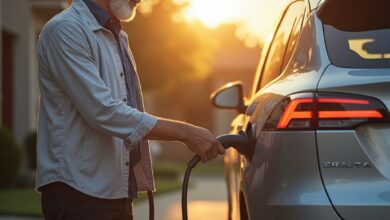
Most agencies deploying EVs are establishing dedicated Level 2 and Level 3 DC fast charging infrastructure at their depots. For example, a Chevrolet Bolt EV or Hyundai Ioniq 5 used for community policing might charge overnight on Level 2, while a Ford F-150 Lightning Pro SSV destined for a patrol shift might utilize a DC fast charger for a quick top-up during a break. The average daily mileage for many patrol vehicles often falls well within the 200-300 mile range offered by modern EVs, especially when factoring in regenerative braking in urban environments.
Fleet managers are also implementing sophisticated telematics systems to monitor battery state of charge, optimize routes, and schedule charging to coincide with officer breaks or shift changes. The concept of “opportunity charging” – plugging in whenever possible, even for short durations – is becoming standard practice, much like how officers might refuel an ICE vehicle during their shift.
The Bottom Line: Costs and Savings
While the upfront purchase price of an EV can sometimes be higher than a comparable ICE vehicle, the total cost of ownership (TCO) often swings dramatically in favor of electric. Fuel savings are the most obvious benefit. With electricity prices generally more stable and lower than gasoline, agencies are seeing substantial reductions in their operational budgets. For instance, the City of Boulder, Colorado, reported saving thousands per year per vehicle after switching some of its fleet to EVs.
Maintenance costs are another significant factor. EVs have fewer moving parts than ICE vehicles, meaning no oil changes, spark plug replacements, or complex transmission maintenance. Brake wear is also reduced thanks to regenerative braking. This translates into fewer shop visits, lower parts costs, and less downtime for critical vehicles. The long-term savings in maintenance alone can offset a higher initial purchase price within a few years, making EVs a fiscally responsible choice for public services.
Expert Analysis: Beyond the Brochure
Having covered the industry for a decade, I’ve seen the evolution of EVs from niche curiosities to mainstream contenders. Here are a few insider insights you won’t find in every press release:
- The “Stealth” Advantage: One often-overlooked benefit for police is the near-silent operation of EVs. This provides a tactical advantage in certain scenarios, allowing officers to approach suspects or respond to calls with reduced audible presence, enhancing surprise and safety. It’s a game-changer for community policing and surveillance.
- Infrastructure is King (and Queen): The biggest hurdle isn’t the vehicles themselves, but the charging infrastructure. Agencies are realizing that simply buying EVs isn’t enough; they need robust, scalable charging solutions that can handle multiple vehicles simultaneously, often on a 24/7 basis. This involves significant upfront investment in electrical grid upgrades and smart charging management systems.
- The Power of Public Perception: Deploying EVs sends a powerful message to the community. It demonstrates a commitment to environmental responsibility, cost-efficiency, and innovation. This can significantly boost public trust and foster a more positive image for law enforcement and emergency services.
- Beyond Patrol Cars: While police cruisers grab headlines, EVs are also being adopted for a host of other critical roles. Fire chiefs and EMS supervisors are using models like the Rivian R1S or Lucid Air for rapid response and administrative duties, appreciating their blend of range, performance, and cargo capacity for specialized equipment. Even utility vehicles like the Ford F-150 Lightning are finding roles in fire departments and public works.
- Cold Weather Performance is Improving: Early EVs struggled with range degradation in extreme cold. However, advancements in battery thermal management systems, heat pumps, and preconditioning capabilities in modern EVs (like those from Audi, Porsche, and Volkswagen) are significantly mitigating these issues, making them viable even in northern climates.
The EV Advantage: A Clear-Cut Case
Pros of EVs in Emergency and Police Services:
- Lower Operating Costs: Significant savings on fuel and maintenance lead to better allocation of public funds.
- Reduced Emissions: Contributes to cleaner air and helps agencies meet environmental mandates.
- Quieter Operation: Enhanced stealth for tactical situations and reduced noise pollution in communities.
- Instant Torque and Acceleration: Superior performance for rapid response and pursuit scenarios.
- Public Image Boost: Demonstrates innovation and environmental responsibility.
- Reduced Heat Signature: Potentially safer in certain high-risk situations.
- Mobile Power Source: Some EVs (like the F-150 Lightning) can serve as mobile generators in emergencies.
Cons of EVs in Emergency and Police Services:
- Higher Upfront Cost: Initial purchase price can be greater than comparable ICE vehicles, though TCO offsets this.
- Charging Infrastructure Investment: Requires substantial capital expenditure for depot charging stations.
- Range Limitations: While improving, long-distance inter-jurisdictional travel or prolonged high-speed operations can still present challenges.
- Charging Time: Although DC fast charging is quick, it’s not as fast as a 5-minute gas fill-up.
- Weight: Battery packs add significant weight, potentially impacting handling dynamics and tire wear, though suspension upgrades mitigate this.
- Battery Degradation: Over a vehicle’s lifespan, battery capacity will slightly diminish, especially with frequent fast charging.
- Cold Weather Impact: Range can be reduced in extremely low temperatures, although technology is improving.
The Future is Electric: A Recommendation and Call to Action
The evidence is clear: electric vehicles are not just a passing trend but a fundamental shift in how emergency and police services operate. From the streets of London, where Metropolitan Police are deploying hundreds of Tesla Model 3s and Kia EV6s, to countless municipal forces across North America adopting the Ford Mach-E SSV, the transition is underway. For first-time EV buyers, observing these rigorous deployments should instill confidence in the robustness and capability of modern electric vehicles. For experienced owners, it highlights the continuous innovation and the expanding utility of EV technology.
My recommendation is unequivocal: public safety agencies should actively explore and invest in EV fleets. The long-term financial benefits, coupled with environmental advantages and enhanced operational capabilities, make a compelling case. For consumers, this trend is a powerful indicator of the EV market’s maturity and reliability. It’s time to embrace the silent revolution on our streets. What are your local police and emergency services doing? Ask them! Engage with your community leaders and encourage the transition to a cleaner, more efficient, and smarter future.