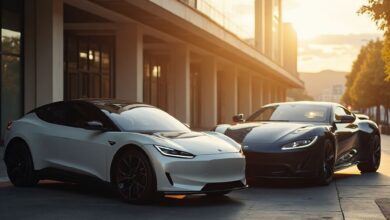
What First-Time EV Owners Wish They Had Known Before Buying
The electric vehicle revolution isn’t just coming; it’s here, and it’s accelerating at a pace that would make a Porsche Taycan blush. Every day, more drivers are making the leap from gasoline to electrons, drawn by the promise of silent power, zero emissions, and lower running costs. Yet, beneath the glossy brochures and enthusiastic test drives, a subtle truth emerges: owning an EV is fundamentally different from owning a traditional internal combustion engine (ICE) vehicle. It’s not just a new car; it’s a new lifestyle. Many first-time EV owners, myself included, will tell you there’s a learning curve, a handful of quirks, and a few things they genuinely wish they had known before signing on the dotted line.
Embracing the Electric Era: Why This Matters Now
The automotive landscape is undergoing its most significant transformation in a century. Global EV sales are soaring, with projections showing electric cars making up a substantial portion of new car sales in major markets within the next decade. Governments worldwide are pushing for electrification through incentives and regulations, while manufacturers like Ford, General Motors, Volkswagen, and Hyundai are pouring billions into developing new EV platforms and models. From the rugged Ford F-150 Lightning to the luxurious Mercedes-Benz EQS, the market is brimming with choices. But with this rapid shift comes a crucial need for education. Understanding the realities of EV ownership isn’t just for early adopters anymore; it’s essential for anyone considering a new vehicle today.
The Unspoken Realities of EV Ownership
The Charging Labyrinth: More Than Just a Plug
This is arguably the most significant paradigm shift for new EV owners. Forget the five-minute gas station stop; charging an EV is a different beast entirely.
- Home Charging is King: The single biggest piece of advice any veteran EV owner will give you is to install a Level 2 charger at home. While you can trickle charge with a standard 120V outlet (Level 1), it’s agonizingly slow, adding only a few miles of range per hour. A 240V Level 2 charger, typically installed by an electrician, can fully charge most EVs overnight. This convenience is unparalleled, transforming your garage into your personal “fueling station.” Many wish they had budgeted for this installation earlier, as costs can range from a few hundred to a couple of thousand dollars depending on your home’s electrical panel and wiring needs.
- Public Charging: A Mixed Bag: While networks like Electrify America, EVgo, ChargePoint, and of course, Tesla’s Supercharger network are expanding rapidly, the experience isn’t always seamless. Reliability can vary, payment methods differ, and finding an available, functioning DC Fast Charger (DCFC) can be a scavenger hunt, especially during peak travel times. The speed of DCFCs also varies wildly; a Hyundai IONIQ 5 or Kia EV6 on an 800V architecture can charge from 10-80% in under 20 minutes, while some older EVs or networks might take significantly longer. New owners often underestimate the need for planning on longer trips and the frustration of a broken charger.
- Charging Etiquette: It’s a nascent culture. Don’t “ICE” a charger (park your ICE car in an EV spot), and don’t “hog” a fast charger once your battery is nearly full and charging speeds taper off.
Range Anxiety vs. Range Reality
The fear of running out of juice, or “range anxiety,” is a common hurdle for prospective EV buyers. However, most first-time owners quickly realize it’s largely overblown for daily driving.
- Daily Commute Coverage: Modern EVs like the Chevrolet Bolt EUV, Volkswagen ID.4, or Ford Mustang Mach-E offer EPA ranges well over 200 miles, more than enough for the vast majority of daily commutes. With home charging, you start every day with a “full tank.”
- The Cold Truth: What many don’t anticipate is the significant impact of cold weather on range. Batteries are less efficient in low temperatures, and heating the cabin draws considerable power. A car rated for 300 miles might only achieve 200-220 miles in freezing conditions. Similarly, high-speed highway driving also reduces range more dramatically than city driving.
- Road Trip Planning: Longer journeys require more meticulous planning than with an ICE car. Charging stops need to be factored into travel time, and reliable chargers along the route identified beforehand. Tesla’s integrated navigation and Supercharger network simplify this greatly, but other brands require more manual effort.
The True Cost of Ownership: Beyond the Sticker Price
While EVs often have a higher upfront cost, the long-term savings can be substantial, though not always immediately obvious.
- Fuel Savings: This is where EVs shine. Electricity is almost universally cheaper than gasoline, especially if you charge at home during off-peak hours. The exact savings depend on local electricity rates and gas prices, but they can amount to hundreds, even thousands, of dollars annually.
- Maintenance Surprises: EVs have far fewer moving parts than ICE vehicles – no oil changes, spark plugs, timing belts, or complex transmissions. This means significantly reduced routine maintenance. However, owners quickly learn about increased tire wear (due to instant torque and heavier battery packs) and the importance of checking brake fluid, coolant (for battery thermal management), and cabin air filters. Regenerative braking also means brake pads last much longer.
- Insurance: This can be a wildcard. Some insurers might charge more for EVs due to higher repair costs for specialized components or simply their novelty. It’s crucial to get quotes before buying.
- Incentives: Federal, state, and local incentives can dramatically reduce the purchase price of an EV. Many wish they had researched these tax credits and rebates more thoroughly, as eligibility requirements can be complex and change frequently.
Driving Dynamics: A Silent, Swift Revelation
The driving experience itself is a revelation for many, with a few unexpected characteristics.
- Instant Torque: The moment you press the accelerator, an EV delivers 100% of its torque. This provides exhilarating, seamless acceleration that can surprise even seasoned drivers. Even an entry-level EV feels sprightly; high-performance models like the Audi e-tron GT or Lucid Air are simply breathtaking.
- One-Pedal Driving: Many EVs offer strong regenerative braking, allowing you to slow down significantly, sometimes to a complete stop, just by lifting off the accelerator. This takes some getting used to but is incredibly efficient and can extend range.
- The Quiet Cabin: The absence of engine noise is blissful, making for a serene driving experience. However, this also means road noise and wind noise become more pronounced, leading manufacturers to invest heavily in sound insulation.
Software and the Connected Car
EVs are essentially computers on wheels, a concept pioneered by Tesla that is now standard across brands like BMW, Mercedes, and Rivian.
- Over-the-Air (OTA) Updates: Your car can improve overnight! Software updates deliver new features, performance enhancements, and bug fixes without a trip to the dealership. This is a huge benefit but means the infotainment system and app integration become central to the ownership experience, requiring some tech savviness.
- Pre-conditioning: Being able to pre-heat or pre-cool your car while it’s still plugged in, saving battery range, is a luxury many wish they had known how much they’d appreciate.
Expert Analysis: Insider Insights for the Curious Buyer
Having navigated the evolving EV landscape for a decade, I’ve gleaned a few insights that often escape the initial buying frenzy:
- The “Gas Station Mentality” Is Your Biggest Hurdle: Many new owners struggle to shed the ingrained habit of waiting until the tank is nearly empty before “filling up.” EVs thrive on opportunity charging – plugging in whenever you’re parked, even if it’s just for an hour at a Level 2 public charger. Embrace “topping up” rather than “filling up.”
- Not All Charging Networks Are Created Equal: While the number of chargers is growing, the *quality* and *reliability* of those chargers vary wildly. Tesla’s Supercharger network remains the gold standard for its seamless integration and uptime. Other networks are catching up, but always factor charger reliability into your trip planning. Don’t just look at the number of chargers; look at user reviews and recent success rates.
- The Cold Truth About Range is Colder Than You Think: While I mentioned it above, it bears repeating: the impact of extreme cold on range and charging speed is often underestimated. If you live in a cold climate, plan for at least a 20-30% reduction in range during winter months, and longer charging times, especially on DC fast chargers that might throttle power in very low temperatures.
- Beyond the Price Tag: The Lifecycle Cost Advantage is Real: While EV sticker prices can be daunting, a holistic view of ownership costs over 5-7 years often reveals significant savings. Factor in fuel, maintenance, and potential depreciation (which can be lower for popular EVs). The total cost of ownership (TCO) is often the true selling point, not just the initial MSRP.
- Embrace the Software-Defined Car: Your EV is a platform. It will evolve. Learning to use its mobile app for pre-conditioning, remote charging management, and monitoring updates will enhance your ownership experience significantly. Think of it less as a mechanical device and more as a sophisticated gadget that happens to transport you.
Pros and Cons of EV Ownership
- Pros:
- Significantly lower “fuel” costs (electricity vs. gasoline).
- Reduced maintenance requirements (fewer moving parts).
- Instant torque and smooth, quiet acceleration.
- Zero tailpipe emissions, contributing to cleaner air.
- Government incentives and tax credits often available.
- Convenience of home charging.
- Over-the-Air (OTA) software updates improve the car over time.
- Access to HOV lanes in some regions.
- Cons:
- Higher upfront purchase price compared to equivalent ICE vehicles.
- Charging infrastructure can be inconsistent or unreliable.
- Longer “refueling” times compared to gasoline cars.
- Range can be significantly impacted by cold weather or high speeds.
- Installation cost for home Level 2 charger.
- Can have higher insurance premiums.
- Limited towing capacity on some models.
- Tire wear can be higher due to instant torque and vehicle weight.
Final Verdict: The Future is Electric, But Be Prepared
Making the switch to an electric vehicle is a transformative experience, one that most owners wouldn’t trade for anything. The quiet cabin, the exhilarating acceleration, and the satisfaction of driving emissions-free are genuinely addictive. However, it’s not simply a matter of swapping one fuel type for another. It requires a