

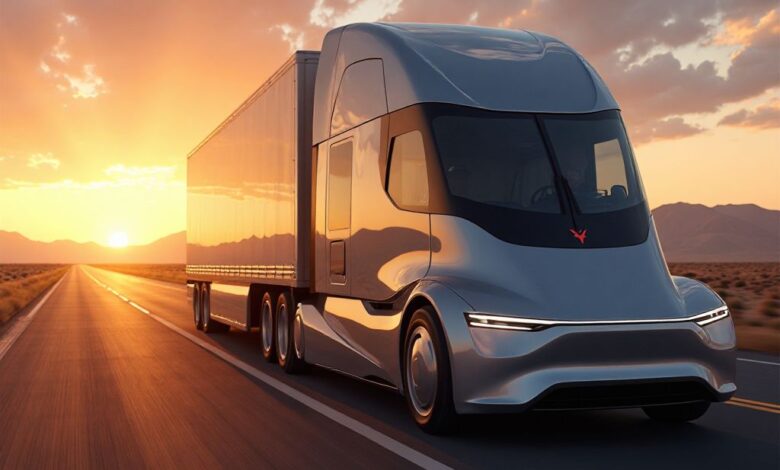
Tesla Semi Review: How the Electric Truck Is Disrupting Long Haul Freight
Imagine a world where the roar of diesel engines on our highways is replaced by a near-silent hum, where long-haul trucks emit zero tailpipe emissions, and where the cost of moving goods plummets. Sounds like science fiction, right? Not anymore. The Tesla Semi isn’t just a concept; it’s a colossal, electric reality that’s already hauling freight for some of the biggest names in logistics. This isn’t just about a new truck; it’s about a seismic shift in a trillion-dollar industry, promising to reshape supply chains, clean up our air, and fundamentally alter the economics of transportation as we know it.
The Road Ahead: Why Electric Trucks Matter Now More Than Ever
For decades, the backbone of our economy – long-haul freight – has been synonymous with diesel power. These behemoth machines, while essential, are also significant contributors to air pollution and greenhouse gas emissions. Moreover, the trucking industry faces persistent challenges: volatile diesel prices, increasing maintenance costs for complex combustion engines, and a looming driver shortage. These factors create a perfect storm, making the transition to electric vehicles not just an environmental imperative but an economic necessity. For car buyers and enthusiasts, this shift might seem distant, but its implications are profound. Every product on store shelves, every component in your car, moves by truck. More efficient, cleaner, and potentially cheaper freight directly impacts everything from consumer prices to the air quality in our communities. The Tesla Semi, therefore, isn’t just an interesting piece of engineering; it’s a pivotal player in a global transformation that affects us all.
Tesla Semi: A Deep Dive into the Future of Freight
When Elon Musk first unveiled the Tesla Semi in 2017, it looked like something ripped from a futuristic movie. Now, with PepsiCo and others putting them to work, we can finally evaluate how this electric disruptor stacks up.
Design: Aerodynamic Prowess Meets Driver-Centric Innovation
Forget the boxy, chrome-laden aesthetic of traditional big rigs. The Tesla Semi is a study in aerodynamic efficiency. Its sleek, cab-forward design, smooth surfaces, and fully integrated fairings are engineered to slice through the air with minimal drag, a critical factor for maximizing range and efficiency in an EV. The most striking interior design element is the central driving position, placing the driver front and center, much like a race car or a McLaren F1. This provides unparalleled visibility, reducing blind spots and enhancing safety. Dual large touchscreens flank the driver, replacing a myriad of physical buttons and gauges, providing all necessary information and controls at a glance. The cabin itself is surprisingly spacious, offering standing room and a comfortable, modern environment that stands in stark contrast to the often cramped and utilitarian interiors of conventional trucks. This thoughtful design isn’t just for aesthetics; it’s a deliberate move to improve driver comfort and reduce fatigue, directly addressing the industry’s driver retention challenges.
Performance: Unprecedented Power and Efficiency
The Tesla Semi isn’t just fast for an electric truck; it’s fast, period. Tesla claims a 0-60 mph time of just 20 seconds when fully loaded to its maximum Gross Combined Weight Rating (GCWR) of 82,000 pounds. This is a significant improvement over typical diesel trucks, which can take twice as long. This instant torque from its four independent electric motors (one for each rear wheel) not only translates to quicker acceleration but also allows the Semi to maintain highway speeds on steep grades, a common challenge for diesel trucks that often lose momentum on inclines. Its impressive powertrain also boasts an energy consumption rate of less than 2 kWh per mile, a remarkable feat for a vehicle of this size and capability. The regenerative braking system is another performance highlight, not only extending range by recapturing energy but also significantly reducing wear on traditional brake components, leading to lower maintenance costs.
Range & Charging: The Megawatt Solution
The headline-grabbing range for the Tesla Semi is 500 miles on a single charge for the longer-range variant (a 300-mile version is also available). This range is crucial for long-haul operations, allowing many regional routes to be completed without needing to recharge mid-trip. However, range is only half the equation; charging speed is paramount for commercial vehicles. This is where Tesla’s “Megacharger” network comes into play. Capable of delivering over 1 megawatt (1,000 kW) of power, these chargers can add up to 70% of the Semi’s range in just 30 minutes. This ultra-fast charging capability is a game-changer, allowing quick turnarounds that are essential for maintaining tight delivery schedules. While the network is still nascent, Tesla’s commitment to building out this dedicated infrastructure mirrors its successful Supercharger strategy for passenger vehicles, giving it a significant competitive advantage.
Technology: Autonomy, Safety, and Connectivity
As expected from Tesla, the Semi is packed with advanced technology. It features enhanced Autopilot capabilities, including automatic emergency braking, lane keeping, and adaptive cruise control, all designed to improve safety and reduce driver fatigue. The central driving position and expansive glass area contribute to superior visibility, further aided by an array of cameras providing a 360-degree view around the truck. Over-the-air software updates ensure that the Semi’s capabilities continually improve, adding new features and refining existing ones without the need for dealership visits. Predictive maintenance, remote diagnostics, and sophisticated route planning tools integrated into the vehicle’s software further enhance operational efficiency and uptime.
Value for Money: The TCO Advantage
While the upfront purchase price of the Tesla Semi is higher than a comparable diesel truck (estimated between $150,000 for the 300-mile range and $180,000 for the 500-mile range, before incentives), its true value lies in its Total Cost of Ownership (TCO). Tesla claims savings of up to $200,000 over 3 years compared to a diesel truck, primarily driven by significantly lower “fuel” costs (electricity is cheaper and more stable than diesel) and dramatically reduced maintenance. Electric powertrains have far fewer moving parts than internal combustion engines, leading to less wear and tear and fewer scheduled maintenance intervals. When factoring in potential government incentives for electric vehicles and the reduced downtime, the Semi presents a compelling financial argument for fleets looking to electrify.
Expert Analysis: Beyond the Spec Sheet
Having watched the automotive industry evolve for a decade, here are a few insider insights that go beyond the readily available facts:
- The Megacharger is the Real MVP: While the Semi itself is impressive, Tesla’s commitment to a proprietary Megacharger network is arguably the most crucial element. This vertical integration, much like their Supercharger network for cars, solves the chicken-and-egg problem of infrastructure. Without reliable, ultra-fast charging, even the best electric truck is a glorified paperweight. This gives Tesla a distinct advantage over traditional OEMs like Daimler (Freightliner eCascadia) or Volvo (VNR Electric), who rely more heavily on third-party charging solutions.
- Driver Acceptance is Key to Adoption: The central driving position and spacious, quiet, technology-rich cabin aren’t just novelties; they’re strategic moves to address the chronic driver shortage. A more comfortable, safer, and technologically advanced work environment could be a significant draw for new drivers and a retention tool for existing ones. Trucking is a tough job, and anything that improves the daily experience will be welcomed.
- The “Ripple Effect” on Logistics: The Semi’s impact extends far beyond just the truck itself. Its efficiency, predictable “fuel” costs, and potential for autonomous features will force logistics companies to rethink everything from route planning and scheduling to depot design and energy management. We’re looking at a fundamental restructuring of supply chain operations, not just a vehicle replacement.
- Grid Stability and Energy Management: The deployment of thousands of Megawatt-charging trucks presents a significant challenge to local and regional power grids. Fleets will need sophisticated energy management systems, potentially incorporating onsite solar and battery storage, to mitigate demand charges and ensure reliable power. This opens up new opportunities for energy companies and smart grid solutions.
- Hydrogen Fuel Cells Aren’t Dead Yet: While Tesla is betting big on battery-electric, it’s important to remember that hydrogen fuel cell electric vehicles (FCEVs) from players like Nikola (Tre FCEV) and traditional OEMs like Hyundai and Toyota are still in the race, especially for ultra-long-haul routes or areas where grid infrastructure is a major constraint. The Semi’s success will likely accelerate both technologies as the industry seeks diverse solutions.
Pros and Cons of the Tesla Semi
- Pros:
- Significantly lower operating costs due to cheaper electricity and reduced maintenance.
- Zero tailpipe emissions, contributing to cleaner air and meeting environmental mandates.
- Instant torque and powerful acceleration, improving performance and safety.
- Enhanced driver comfort and safety features, potentially attracting and retaining drivers.
- Advanced technology including Autopilot, over-the-air updates, and robust connectivity.
- Quiet operation, reducing noise pollution in urban and residential areas.
- Competitive range for many regional and even some long-haul routes.
- Cons:
- High upfront purchase cost compared to diesel trucks, though offset by TCO.
- Charging infrastructure (Megachargers) is still in its early stages of deployment.
- Range anxiety for specific, extremely long-haul routes or those without Megacharger access.
- Battery weight can impact payload capacity for certain types of cargo, though Tesla claims it’s offset by other efficiencies.
- Potential strain on local power grids where large fleets are charging simultaneously.
- Reliance on electricity pricing, which can fluctuate, though generally more stable than diesel.
Final Verdict: The Dawn of a New Era in Freight
The Tesla Semi isn’t just another electric vehicle; it’s a declaration of intent, a powerful statement that the future of heavy-duty trucking is electric. While challenges remain – particularly with scaling the Megacharger network and managing the initial investment – the compelling economic and environmental benefits are undeniable. For fleets looking to future-proof their operations, reduce their carbon footprint, and significantly lower their operating expenses, the Semi presents a revolutionary proposition. It’s ready for prime time for companies with defined routes, dedicated depots, and a willingness to invest in the future. For the broader automotive world, the Semi’s success will accelerate the development of electric powertrains and charging solutions across all vehicle segments, influencing everything from your daily commute to the cost of your groceries.
The Tesla Semi is more than just a truck; it’s a testament to innovation and a harbinger of a cleaner, more efficient future for logistics. Keep your eyes on the road, because the silent revolution is already underway, and it’s heading your way at highway speed. What are your thoughts on electric freight? Share your comments below and join the conversation about how the Tesla Semi will reshape our world!


