

Mazda MX-30 Review: Stylish but Is the Range Too Short to Be Practical?
In a world where electric vehicle ranges are constantly pushing past the 300-mile mark, Mazda made a rather audacious move with its first mass-market EV, the MX-30. While brands like Tesla, Hyundai, and Kia are locked in a battle for who can offer the most miles per charge, Mazda deliberately opted for a smaller battery and a more modest range. This wasn’t an oversight; it was a philosophical statement. The question, then, isn’t just about the numbers on the spec sheet, but whether this stylish, unconventional electric crossover can truly fit into the lives of everyday buyers, or if its limited range is a deal-breaker in the hyper-competitive EV landscape.
The EV Landscape and Mazda’s Unique Position
The automotive industry is in the midst of its most profound transformation in a century. Electric vehicles are no longer a niche curiosity but a rapidly growing segment, driven by environmental concerns, government incentives, and advancements in battery technology. For many car buyers, the primary hurdle to EV adoption remains range anxiety – the fear of running out of charge before reaching a destination or a charging point. This has led manufacturers to prioritize larger batteries, often resulting in heavier, more expensive vehicles. Brands like Ford with the Mustang Mach-E, Chevrolet with the Bolt EUV, and Volkswagen with the ID.4 have all aimed for competitive ranges exceeding 200 miles, with some pushing much further.
Mazda, a brand long celebrated for its “Jinba Ittai” (horse and rider as one) philosophy and driver-focused internal combustion engines, entered this fray with a distinctly different approach. They argued that a smaller battery, optimized for urban and suburban driving, is actually more environmentally friendly over the vehicle’s lifecycle, requiring fewer raw materials and less energy to produce. The MX-30, therefore, isn’t just another EV; it’s a test of whether consumers value a different kind of practicality – one that prioritizes lightweight agility and a lower environmental footprint over maximum range bragging rights. This context is vital when evaluating the MX-30, as it challenges conventional wisdom in a category where range is often king.
Detailed Review of the Mazda MX-30
Design: A Bold Statement
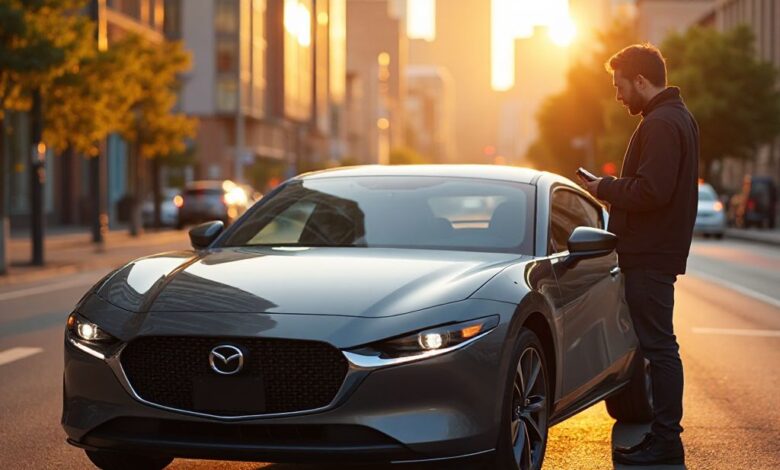
From the moment you lay eyes on the Mazda MX-30, it’s clear this isn’t your typical crossover. Mazda’s Kodo design language is in full effect, but with an electric twist. The exterior is sleek, modern, and surprisingly muscular, with a coupe-like roofline that gives it a sporty demeanor. The most striking feature, undoubtedly, is the pair of “freestyle doors” – effectively half-doors for the rear passengers, reminiscent of the iconic RX-8. These pillarless openings create a wide aperture, making ingress and egress to the rear surprisingly easy for a car of its size, though they do require the front doors to be open first. The design is polarizing; some will love its distinctive flair, others might find it a bit quirky. But one thing is certain: it stands out in a crowded parking lot, exuding a premium feel that belies its price point.
Interior: Sustainable and Stylish
Step inside, and the MX-30 continues to impress with its thoughtful design and commitment to sustainability. The cabin feels airy and modern, characterized by high-quality materials and a minimalist aesthetic. Mazda has incorporated unique elements like cork accents on the floating center console – a nod to the company’s origins as a cork manufacturer. Recycled fabric made from plastic bottles is used for the door trim, further emphasizing its eco-conscious credentials. The driving position is excellent, providing a commanding view of the road, and the front seats are comfortable and supportive. Rear passenger space is adequate for children or short journeys for adults, but the sloping roofline and smaller windows can make it feel a bit confined compared to more traditional crossovers like the Hyundai Kona Electric or Kia Niro EV.
Performance: Smooth and Responsive
The MX-30 is powered by a single electric motor driving the front wheels, producing 143 horsepower and 200 lb-ft of torque. While these figures won’t set any drag strip records (0-60 mph comes in around 9.7 seconds), the acceleration is smooth and immediate, as is typical of EVs. Around town, it feels sprightly and responsive, easily keeping up with traffic. On the open road, it maintains composure, though rapid overtakes require a bit more planning. Where the MX-30 truly shines is in its driving dynamics. Mazda’s engineers have worked their magic, delivering a surprisingly engaging and balanced ride. The steering is precise and well-weighted, and the suspension strikes an excellent balance between comfort and handling. It feels planted and agile through corners, embodying Mazda’s “fun-to-drive” ethos even in an electric package. This car feels distinctly like a Mazda, which is high praise in the EV world.
Range and Charging: The Elephant in the Room
Now, let’s address the headline concern. The Mazda MX-30 is equipped with a modest 35.5 kWh battery pack, which translates to an EPA-estimated range of just 100 miles (or 124 miles WLTP). In real-world driving, especially in colder climates or with enthusiastic use of the accelerator and climate control, this figure can drop further. For comparison, most direct competitors offer significantly more: the Mini Electric has 114 miles (but is smaller), while the Kona Electric boasts 258 miles, and the Niro EV offers 253 miles. Even the entry-level Nissan Leaf starts at 149 miles.
This limited range undeniably positions the MX-30 as a city car or a second vehicle for most households. It’s perfectly suited for daily commutes, school runs, and local errands, where the average daily driving distance is well within its capabilities. However, longer road trips become a carefully planned exercise in charging stops. Charging capabilities are decent for its battery size: a 7.4 kW AC charger will replenish the battery from 20-80% in about 4.5 hours. DC fast charging (up to 50 kW) can take it from 20-80% in roughly 36 minutes. While these speeds are adequate for the battery, the frequent stops required for longer journeys highlight the range limitation.
It’s important to note that Mazda did introduce a rotary-powered range-extender version (MX-30 R-EV) in some markets, which significantly extends its usability. However, for the pure battery-electric MX-30, the range is its most significant constraint.
Technology and Safety: Intuitive and Comprehensive
Mazda has always excelled at integrating technology without overwhelming the driver, and the MX-30 is no exception. It features an 8.8-inch infotainment display controlled by Mazda’s intuitive Commander knob, minimizing distractions while driving. Apple CarPlay and Android Auto are standard, ensuring seamless smartphone integration. Below the main screen, a separate 7-inch touchscreen handles climate control, adding a touch of modern sophistication. While some might prefer physical buttons, this setup is generally well-executed.
In terms of safety, the MX-30 comes loaded with Mazda’s i-Activsense suite of advanced driver-assistance systems. This includes adaptive cruise control, lane-keeping assist, blind-spot monitoring, rear cross-traffic alert, and automatic emergency braking. These systems work harmoniously, providing a reassuring layer of protection and contributing to a relaxed driving experience. It earned good safety ratings, further solidifying its appeal as a secure family vehicle.
Value for Money: A Premium Proposition
The MX-30 often sits at a price point that puts it in contention with longer-range EVs like the base Hyundai Kona Electric or even the Chevrolet Bolt EUV, especially when considering available incentives. While its starting MSRP might seem competitive, the limited range inevitably raises questions about its overall value proposition. What you are paying for, however, is a distinctly premium experience. The interior quality, unique design, and engaging driving dynamics feel more upmarket than many of its direct competitors. It offers a sense of exclusivity and craftsmanship that you might associate with a Mini Electric, but with a more practical crossover body style. For buyers who prioritize style, build quality, and a refined driving experience over maximum range, the MX-30 offers a compelling package, especially if they qualify for federal or local EV tax credits.
Expert Analysis: Beyond the Numbers
- Mazda’s “Right-Sizing” Philosophy: Mazda’s decision to equip the MX-30 with a smaller battery wasn’t a mistake; it was a deliberate strategy. Their argument is that a smaller battery reduces the environmental footprint of the vehicle’s production, makes the car lighter (improving handling), and uses fewer precious resources. For many urban drivers whose daily commute is less than 50 miles, a 100-mile range is perfectly adequate, making a larger, heavier, and more resource-intensive battery unnecessary. This challenges the industry’s range-at-all-costs mentality.
- The “Freestyle Door” Dilemma: While aesthetically unique and practical for accessing the rear compartment in tight spaces, the freestyle doors are a double-edged sword. They require the front doors to be open, which can be inconvenient in certain situations (e.g., trying to buckle a child into the back in a cramped parking spot). It’s a design choice that prioritizes form and a specific type of function, but might not suit every family’s needs.
- Target Audience Precision: The MX-30 isn’t trying to be a Tesla Model 3 or a long-distance cruiser. It’s precisely aimed at a specific demographic: urban dwellers, multi-car households, or environmentally conscious buyers who appreciate unique design and driving enjoyment, and whose daily mileage fits within the modest range. It’s a second car, a city car, or a stylish commuter, not a do-it-all family hauler.
- The Rotary Range Extender’s Importance: While this review primarily focuses on the pure BEV, the MX-30 platform was always designed with a rotary range extender (R-EV) in mind. The existence of the R-EV version (available in some markets) implicitly acknowledges the BEV’s range limitation and offers a practical solution to “range anxiety” without resorting to a massive battery. It’s a clever engineering solution that hints at Mazda’s long-term electrification strategy, leveraging its heritage.
- A Premium Niche Player: Mazda isn’t chasing volume with the MX-30; it’s carving out a niche. Its premium interior, unique design, and engaging driving dynamics position it as a more sophisticated and fun-to-drive alternative to entry-level EVs, even if it sacrifices raw range. It’s for buyers who value the Mazda brand experience in an EV, rather than just the lowest cost per mile.
Brand Comparisons and Mentions
The MX-30 finds itself in a peculiar position. Its price point often puts it up against the likes of the Hyundai Kona Electric and Kia Niro EV, both of which offer significantly more range and slightly more conventional packaging. However, its premium interior and unique styling arguably place it closer to the Mini Electric, which also boasts a similarly limited range but a strong brand identity and engaging driving dynamics. While it can’t compete with the long-distance capabilities of a Tesla Model 3 or a Ford Mustang Mach-E, it offers a more refined and tactile experience than a Chevrolet Bolt EUV. Its focus on driving pleasure and quality materials might even draw comparisons to entry-level luxury EVs from BMW or Audi, albeit at a much more accessible price point and with a different range philosophy.
Pros and Cons
- Pros:
- Distinctive and stylish exterior design
- High-quality, eco-friendly, and well-designed interior
- Engaging and fun-to-drive handling dynamics
- Comprehensive suite of safety features (i-Activsense)
- Premium feel and build quality for the price
- Unique “freestyle” doors for easy rear access
- Cons:
- Very limited range (100 miles EPA) is a major constraint
- Rear passenger space can feel tight
- Slower acceleration compared to many rival EVs
- “Freestyle” doors can be inconvenient in some situations
- Value proposition challenged by longer-range competitors at similar prices
Final Verdict and Recommendation
The Mazda MX-30 is a car that refuses to play by the established rules of the EV market. It’s stylish, well-built, and genuinely enjoyable to drive, carrying Mazda’s “Jinba Ittai” spirit into the electric age. The interior is a masterclass in thoughtful design and sustainable materials, making every journey feel a bit special. However, there’s no escaping the elephant in the room: its 100-mile range. This single factor dictates who the MX-30 is for.
Recommendation:
If you are an urban dweller, have a short daily commute, or are looking for a stylish second car in a multi-vehicle household, the Mazda MX-30 could be an excellent choice. It’s perfect for those who value unique design, a premium feel, and engaging driving dynamics over maximum range. It’s a statement car that shows Mazda’s commitment to a different, perhaps more sustainable, vision of electric mobility. However, if you frequently take long road trips, live in a rural area with sparse charging infrastructure, or need a single do-it-all family vehicle, its range will likely prove too restrictive. In that scenario, longer-range EVs from Hyundai, Kia, or Chevrolet would be more practical alternatives.
Ultimately, the MX-30 is a delightful car with a significant asterisk. It’s stylish, it’s fun, but its practicality hinges entirely on your specific lifestyle and driving habits. If it fits your


