

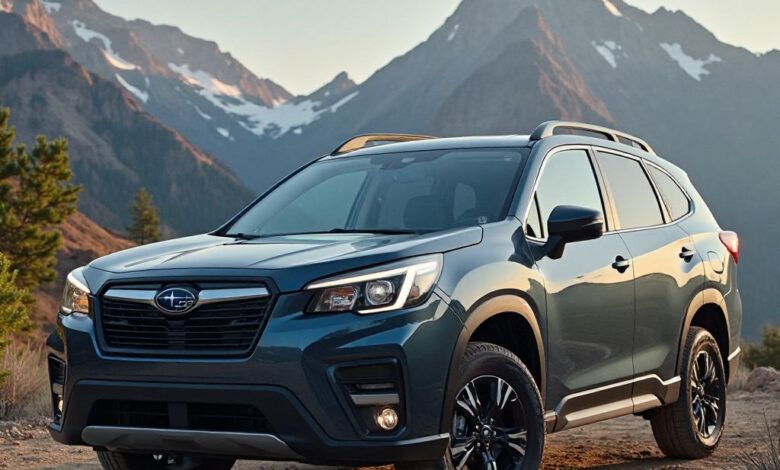
Subaru Solterra Review: An Adventurous EV That Knows Its Audience
After years of watching the electric vehicle revolution unfold from the sidelines, Subaru, the beloved purveyor of all-wheel-drive adventure machines, has finally plunged into the battery-electric fray. And it’s done so with a name that perfectly encapsulates its mission: Solterra. A portmanteau of “Sol” (sun) and “Terra” (earth), it’s a bold statement of intent for a brand synonymous with exploring the great outdoors. But can Subaru’s first global EV, born from a partnership with Toyota, truly deliver the rugged, go-anywhere spirit its loyalists expect, while also competing in a rapidly evolving electric landscape? The answer, as we discovered after extensive testing, is a nuanced but ultimately compelling “yes” – for the right buyer.
The Dawn of an Electric Era for Subaru Enthusiasts
The automotive industry is undergoing its most profound transformation in a century, with electric vehicles rapidly shifting from niche curiosities to mainstream contenders. For Subaru, a brand built on a foundation of symmetrical all-wheel drive, boxer engines, and a reputation for safety and reliability, this transition presents both immense opportunity and significant challenges. The Solterra isn’t just another EV; it’s Subaru’s declaration that its ethos of adventure and capability can thrive in an electrified future. This matters immensely to car buyers today because it signals how a brand deeply ingrained in a specific lifestyle is adapting. It’s a litmus test: can Subaru electrify without losing its soul? For the legions of Forester, Outback, and Crosstrek owners who cherish their vehicles’ ability to handle rough roads and inclement weather, the Solterra represents a crucial step in maintaining that adventurous legacy in an era of environmental consciousness and rising fuel costs. It’s an EV designed not just for the daily commute, but for the weekend escape to the trailhead or the snowy mountain pass.
Design: Rugged Utility Meets Modern EV Aesthetics
Exterior: Familiar Yet Fresh
From the outside, the Solterra strikes a balance between Subaru’s signature rugged aesthetic and the aerodynamic demands of an EV. It shares its basic silhouette with the Toyota bZ4X, its platform sibling, but Subaru has injected enough of its own design DNA to give it a distinct personality. The hexagonal grille, though mostly closed off for aerodynamics, is unmistakably Subaru. Muscular fender flares, ample body cladding, and a generous 8.3 inches of ground clearance immediately signal its off-road intentions – a figure that puts it ahead of many EV crossovers, including the Tesla Model Y and Hyundai Ioniq 5. The Solterra looks ready for action, albeit with a sleeker, more futuristic edge than a typical Forester. Its LED lighting signatures are sharp and modern, and the overall stance is confident and planted. It’s not a head-turner in the way some exotic EVs are, but it possesses a handsome, purposeful appeal that resonates with the Subaru faithful.
Interior: Practicality with a Premium Touch
Step inside, and the Solterra presents a cabin that prioritizes functionality and space, hallmarks of Subaru design. The layout is clean and modern, with a mix of soft-touch materials and more durable surfaces. The most striking feature is the high-mounted digital instrument cluster, positioned above the steering wheel rim. While some drivers might find the steering wheel partially obstructing the view, most will adjust quickly to this unique arrangement, which aims to keep essential information closer to the driver’s line of sight. The 12.3-inch central infotainment touchscreen dominates the dashboard, offering crisp graphics and intuitive operation. Passenger space is generous in both rows, with ample legroom and headroom, even for taller occupants. Cargo capacity is competitive, offering 29 cubic feet behind the rear seats, expanding further with the seats folded flat. Subaru has also incorporated thoughtful storage solutions throughout the cabin, reinforcing its practical nature. The overall ambiance is one of understated quality, comfortable for long drives, and robust enough for the occasional muddy boot.
Performance: Capable, Composed, and Confidently AWD
Powertrain and Driving Dynamics
The Solterra comes standard with a dual-motor all-wheel-drive system, delivering a combined 215 horsepower and 249 lb-ft of torque. While these figures won’t win any drag races against a Tesla Model Y Performance, they provide more than adequate acceleration for daily driving and highway passing. The 0-60 mph sprint is dispatched in a respectable 6.5 seconds. What truly sets the Solterra apart, however, is its driving dynamics, especially when the pavement ends. Subaru’s legendary Symmetrical All-Wheel Drive is seamlessly integrated with the electric powertrain, providing exceptional traction and stability. The Solterra also features X-Mode, Subaru’s advanced off-road system, which optimizes throttle, transmission, and AWD for various challenging conditions like snow, dirt, and mud, complete with Hill Descent Assist. We found the Solterra to be remarkably composed on unpaved roads and light trails, feeling much more at home than many rival electric crossovers. On the road, the ride is comfortable and refined, soaking up bumps with ease, while the steering offers a pleasant, albeit not overly sporty, feel. It’s a vehicle designed for confident, stable progress, not outright speed thrills.
Range and Charging: The Practical Realities
Here’s where the Solterra faces its stiffest competition. The EPA-estimated range for the Solterra varies slightly by trim: 228 miles for the Premium and 222 miles for the Limited and Touring models. While this range is perfectly adequate for most daily commutes and weekend adventures, it falls short of segment leaders like the Hyundai Ioniq 5 (up to 303 miles), Kia EV6 (up to 310 miles), and Tesla Model Y (up to 330 miles). This is the Solterra’s most significant compromise. For charging, the Solterra can accept up to 6.6 kW on a Level 2 (240V) AC charger, meaning a full charge from empty will take approximately 9-10 hours. On a DC fast charger, it can handle a maximum of 75 kW. This is notably slower than many competitors, some of which can charge at over 200 kW, dramatically reducing wait times on longer journeys. A 10-80% charge on a DC fast charger will take around 56 minutes. While not ideal for extensive road trips requiring multiple rapid charges, it’s sufficient for topping up during a grocery run or a quick stop on a shorter trip. This charging speed is a clear area where Subaru (and Toyota) have room for improvement in future iterations.
Technology: Intuitive and Safety-Focused
The Solterra comes well-equipped with modern technology. The aforementioned 12.3-inch infotainment system features wireless Apple CarPlay and Android Auto, ensuring seamless smartphone integration. Navigation, a Wi-Fi hotspot, and a premium Harman Kardon sound system are available on higher trims. Subaru’s renowned EyeSight Driver Assist Technology suite is standard across all models, providing a comprehensive array of safety features including adaptive cruise control, lane departure warning, lane-keeping assist, pre-collision braking, and blind-spot monitoring. These systems operate smoothly and unobtrusively, adding an extra layer of confidence to every drive. A 360-degree camera system, heated and ventilated seats, and a panoramic fixed glass roof further enhance comfort and convenience, making the Solterra a pleasant place to spend time.
Value for Money: A Premium for the Name and Capability
The Subaru Solterra starts at an MSRP of around $44,995 for the Premium trim, moving up to approximately $48,495 for the Limited, and topping out at $51,995 for the Touring model (prices can vary by model year and destination charges). These prices position the Solterra squarely against competitors like the Volkswagen ID.4, Ford Mustang Mach-E, and even the base models of the Hyundai Ioniq 5 and Kia EV6. While its range and charging speed might not lead the pack, its standard AWD, genuine off-road capability, and comprehensive safety features present a strong value proposition for buyers who prioritize those attributes. Furthermore, the Solterra may be eligible for federal EV tax credits, which can significantly reduce the effective purchase price, making it more competitive. Subaru’s reputation for strong resale value and reliability also adds to its long-term appeal.
Mini-Verdict: A Confident First Step
The Solterra is a commendable first effort from Subaru in the EV space. It delivers on the brand’s core promises of capability and safety, wrapped in a modern, practical package. While its range and charging speed are areas that need improvement, its adventurous spirit and well-appointed interior make it a compelling choice for its target audience.
Expert Analysis: Beyond the Spec Sheet
-
The Toyota Partnership: A Double-Edged Sword: The Solterra’s shared platform with the Toyota bZ4X is both its greatest strength and a subtle weakness. It allowed Subaru to enter the EV market much faster and more cost-effectively than developing a bespoke platform. However, it also means certain decisions, like the charging architecture and range, are dictated by a joint venture, potentially limiting Subaru’s ability to fully differentiate on those technical fronts. While Subaru has done an excellent job injecting its own AWD tuning and design cues, it begs the question of how “Subaru” this EV truly is under the skin.
-
Range Anxiety vs. Real-World Use: While 220-228 miles of range might seem modest on paper compared to a Tesla Model Y Long Range, it’s crucial to consider the Solterra’s intended audience. Many Subaru owners aren’t looking to hypermile across the country in one go; they’re driving to trailheads, ski resorts, or campsites, often within a 100-150 mile radius. For these use cases, the Solterra’s range is perfectly adequate, especially if home charging is available. The perception of range anxiety often overshadows the reality of daily driving habits for many.
-
The 75 kW DC Charging Anomaly: The relatively slow 75 kW DC fast charging rate is a head-scratcher in today’s EV market. Most competitors, including mainstream options like the Ford Mustang Mach-E and Volkswagen ID.4, offer significantly faster rates. This decision, likely a product of the joint development with Toyota, could deter some buyers who frequently undertake longer journeys or rely on public charging. It suggests a design philosophy rooted more in reliability and thermal management than in pushing charging speed boundaries, a trait often associated with Toyota.
-
Subaru’s EV Future: A Crucial Learning Platform: The Solterra is more than just a single model; it’s Subaru’s vital learning platform for its electric future. The experience gained from its development, production, and customer feedback will be invaluable for subsequent, potentially more distinct, Subaru EVs. Expect future models to build upon the Solterra’s strengths while addressing its shortcomings, particularly in battery technology and charging infrastructure.
-
The Undeniable AWD Advantage: While many EV crossovers offer all-wheel drive, few can match the Solterra’s combination of symmetrical AWD, X-Mode, and genuine ground clearance. This isn’t just a marketing gimmick; it translates to tangible capability when faced with unpaved roads, snowy conditions, or light off-road trails. For the brand’s core demographic, who often live in areas with challenging weather or pursue outdoor hobbies, this advantage is a significant differentiator against more road-biased competitors like the Hyundai Ioniq 5 or even the base Model Y.
Brand Comparisons: Where It Stands in the Electric Crowd
The Subaru Solterra enters a crowded and fiercely competitive EV crossover segment. Its most direct rival is, of course, its platform mate, the Toyota bZ4X, which offers a nearly identical experience with slightly different styling. Against the Hyundai Ioniq 5 and Kia EV6, the Solterra struggles to match their class-leading range and ultra-fast 800V charging architecture. However, the Solterra offers superior ground clearance and a more robust off-road system. The Ford Mustang Mach-E provides a sportier driving experience and often higher range, but typically at a higher price point and without the


