

Xpeng P7 Review: A Chinese EV With Impressive Tech at a Lower Price
Introduction
Forget for a moment the established titans of the electric vehicle world – Tesla, Porsche, Lucid, and even the formidable newcomers from Europe and Korea. While the automotive industry, and indeed the world, has been captivated by the electrifying race for supremacy, a quiet, yet undeniably powerful, revolution has been brewing from the East. And at the forefront of this charge, challenging preconceived notions and delivering a shockwave of innovation, stands the Xpeng P7. This isn’t just another EV; it’s a statement, a meticulously engineered sedan that delivers a compelling blend of cutting-edge technology, striking design, and exhilarating performance, all wrapped up in a package that, quite frankly, demands a closer look – especially when you consider its price tag.
Background or Context
For years, the narrative around Chinese automobiles in Western markets has been dominated by skepticism, often unfairly so, regarding quality, design originality, and technological prowess. Yet, as a journalist who’s spent a decade dissecting every facet of this industry, I can tell you unequivocally that this narrative is rapidly becoming obsolete, particularly in the EV space. China is not just the world’s largest automotive market; it’s also the most competitive and rapidly evolving EV ecosystem on the planet. This intense domestic pressure has forged a new generation of automakers, like Xpeng, who are not merely playing catch-up but are actively setting new benchmarks, especially in software-defined vehicles and advanced driver-assistance systems (ADAS). The Xpeng P7 is a shining example of this paradigm shift, offering a genuine alternative to established players and forcing both car buyers and enthusiasts to reconsider what they expect from a premium electric sedan, without having to pay a premium price.
Main Content
Design: Sleek, Sporty, and Distinctly Modern
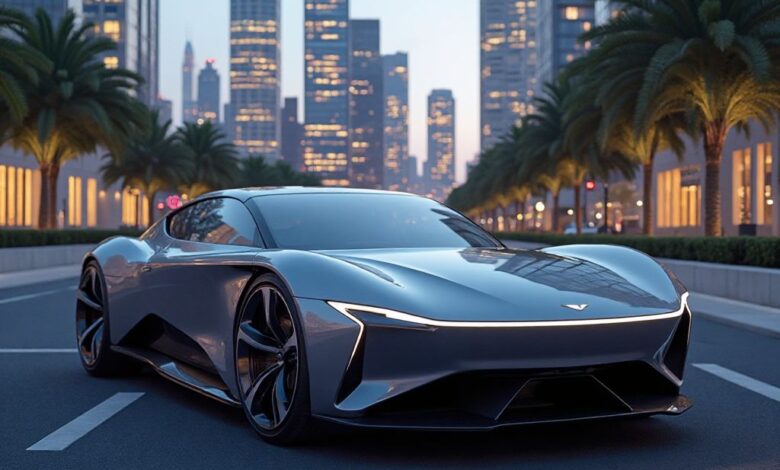
From the moment you lay eyes on the Xpeng P7, it’s clear this is not a car content to merely blend in. Its design language is a sophisticated blend of minimalist elegance and sporty aggression. The low-slung silhouette, long wheelbase, and short overhangs give it a dynamic stance that hints at its performance capabilities. The front end is dominated by a distinctive ‘robot face’ design, featuring slim, interconnected LED daytime running lights that create a futuristic signature, while the main headlights are cleverly integrated lower down. The frameless doors and hidden door handles contribute to its sleek, aerodynamic profile, reminiscent of the Tesla Model 3 or Polestar 2, but with its own unique flair. Around the back, a continuous LED light bar mirrors the front’s minimalist aesthetic, completing a look that is both modern and undeniably premium. It’s a design that doesn’t shout for attention but subtly commands it, showcasing a maturity that belies Xpeng’s relative youth.
Performance: Electrifying Pace and Refined Dynamics
Underneath that sculpted skin, the Xpeng P7 offers a range of potent electric powertrains. The most popular configurations typically involve a rear-wheel-drive (RWD) variant and a more powerful all-wheel-drive (AWD) Performance model. The RWD versions usually deliver around 263 horsepower and 288 lb-ft of torque, capable of a respectable 0-60 mph sprint in the low 6-second range. However, it’s the AWD Performance model that truly excites, boasting a combined output of approximately 426 horsepower and a massive 472 lb-ft of torque. This translates to an exhilarating 0-60 mph time of around 4.1 seconds, putting it squarely in contention with performance versions of the Tesla Model 3 and BMW i4. On the road, the P7 exhibits a confident and composed demeanor. The chassis, tuned for a balance of comfort and sportiness, handles corners with surprising agility for a car of its size. The steering is precise, offering good feedback, and the suspension (often featuring a double-wishbone front and multi-link rear setup, with adaptive dampers available on higher trims) effectively smooths out road imperfections while keeping body roll in check during spirited driving. Braking is strong and reassuring, completing a well-rounded dynamic package that makes the P7 a genuinely enjoyable car to drive, whether you’re commuting or tackling winding roads.
Interior: A Sanctuary of Tech and Comfort
Step inside the P7, and you’re greeted by a minimalist yet luxurious cabin that immediately feels both modern and inviting. The design philosophy echoes the exterior’s clean lines, with a focus on digital interfaces. Dominating the dashboard are two large screens: a 10.25-inch digital instrument cluster for the driver and an expansive 14.96-inch central touchscreen for infotainment and vehicle controls. Material quality is impressive, with soft-touch surfaces, premium synthetic leather, and subtle metallic accents creating an upscale ambiance that rivals offerings from Mercedes-Benz or Audi. Seating comfort is excellent, with supportive front seats offering ample adjustment, and a spacious rear bench that comfortably accommodates two adults, with decent legroom and headroom thanks to the car’s generous wheelbase. The panoramic glass roof, often standard, floods the cabin with natural light, enhancing the sense of spaciousness. Storage solutions are practical, and the trunk, while not class-leading, is adequately sized for daily use.
Technology: Where Xpeng Truly Shines
This is perhaps the Xpeng P7’s strongest suit and where it truly differentiates itself. Xpeng positions itself as a technology company first, and a car company second, and it shows. The P7 runs on Xpeng’s proprietary Xmart OS, an intuitive and highly customizable infotainment system that supports over-the-air (OTA) updates, ensuring the car continuously improves. Voice control is exceptionally robust, capable of understanding complex natural language commands for navigation, media, climate control, and even opening windows. Connectivity features like Apple CarPlay and Android Auto are often integrated, alongside a suite of native apps.
However, the crown jewel is Xpeng’s Advanced Driver-Assistance System (ADAS), known as XPILOT (or XNGP in its most advanced form). The P7 is equipped with a formidable array of sensors, including multiple cameras, ultrasonic sensors, and frequently, high-definition radars, and even lidars on newer versions. This hardware powers features like Adaptive Cruise Control, Lane Keeping Assist, Automatic Parking Assist, and its Navigated Guided Pilot (NGP) function. NGP, similar to Tesla’s Autopilot or GM’s Super Cruise, allows for semi-autonomous highway driving, including automatic lane changes, overtaking, and navigating interchanges, all with remarkable smoothness and confidence. While full autonomous driving is still a future goal for all manufacturers, Xpeng’s current ADAS suite is among the most sophisticated and effective on the market, offering a glimpse into the future of mobility and providing a genuinely relaxing driving experience in suitable conditions.
Range & Charging: Practicality for the Long Haul
The Xpeng P7 typically offers several battery options, with capacities ranging from around 70 kWh to 86 kWh. This translates to highly competitive range figures. Depending on the battery size and drivetrain configuration, the P7 can achieve WLTP (Worldwide Harmonised Light Vehicle Test Procedure) ranges upwards of 500 km (around 310 miles), with some variants pushing towards 580 km (360 miles) or even more on the CLTC (China Light-duty Vehicle Test Cycle) standard. Real-world range will, of course, vary with driving style and conditions, but these figures place the P7 firmly among the leaders in its segment, comparable to the Hyundai Ioniq 6 or Kia EV6.
When it comes to charging, the P7 supports both AC charging (typically up to 11 kW) for home or public Level 2 chargers, and DC fast charging. On a suitable DC fast charger, the P7 can replenish its battery from 10% to 80% in approximately 30-40 minutes, depending on the charger’s power output (often peaking around 80-90 kW, with some newer versions supporting higher rates). This ensures that long-distance travel is a viable and relatively quick affair, provided access to a robust charging infrastructure.
Costs & Value for Money: Disrupting the Status Quo
This is where the Xpeng P7 truly shines and earns its “lower price” moniker. While specific pricing varies significantly by market and local incentives, the P7 consistently undercuts similarly equipped and performing premium EVs from established brands. It offers a combination of sleek design, potent performance, a luxurious interior, and bleeding-edge technology that would typically cost significantly more if it bore a BMW, Audi, or even a higher-end Tesla badge. For buyers looking for a sophisticated, high-tech electric sedan without the hefty price premium associated with European luxury marques or even some American EV startups like Rivian or Lucid, the P7 represents exceptional value. It’s a compelling proposition that forces buyers to reconsider their brand loyalties and focus on the tangible benefits and features they receive for their investment.
Expert Analysis
Having spent countless hours behind the wheel of everything from a Ford F-150 Lightning to a Porsche Taycan, here are a few insider insights that truly define the Xpeng P7’s place in the market:
- Software-Defined Vehicle Masterclass: Xpeng isn’t just bolting on screens; they’ve engineered the P7 from the ground up as a software-defined vehicle. This means deep integration of hardware and software, allowing for rapid iteration, seamless OTA updates, and a level of customization and intelligence that many legacy automakers are still striving to achieve. This approach makes the P7 feel perpetually modern.
- The ADAS Arms Race is Real: While Tesla often gets the headlines for Autopilot, Xpeng’s XPILOT (and especially XNGP) is a serious contender. The P7’s sensor suite and AI algorithms are incredibly robust, often demonstrating a smoother, more human-like intervention than some rivals. It’s a testament to the intense competition in China pushing the boundaries of what ADAS can do today.
- Breaking the “Chinese Car” Stereotype: For years, the perception of Chinese cars in export markets was one of compromise. The P7 unequivocally shatters that. Its build quality, material choices, and refinement are on par with, and in some areas surpass, established premium brands. This isn’t a cheap imitation; it’s a legitimate, high-quality product.
- Design Maturity Beyond Its Years: Xpeng has managed to create a design language that is both distinctive and universally appealing. It avoids the overt flashiness sometimes seen in new brands, opting instead for a sleek, understated elegance that gives it genuine presence without resorting to gimmicks. This design maturity is crucial for global appeal.
- The Value Proposition Isn’t Just Price: While the lower price is a major draw, the true value of the P7 lies in the sheer amount of technology, performance, and luxury you get for that money. It’s not just cheaper; it’s delivering a near-premium experience at a mass-market price point, disrupting the traditional hierarchy.
Brand Comparisons or Mentions
It’s impossible to talk about the Xpeng P7 without drawing comparisons. Its most direct rival is undoubtedly the Tesla Model 3, particularly the Long Range and Performance variants. The P7 often matches or exceeds the Model 3 in interior quality, ADAS sophistication (especially in specific scenarios), and overall refinement, often at a more attractive price. Its design also positions it against the Polestar 2, offering a similar sleek, minimalist aesthetic but with a more performance-oriented sedan stance. For buyers considering premium European EVs like the BMW i4 or Mercedes-Benz EQE, the P7 presents a compelling argument, offering comparable performance and technology at a significantly lower entry cost. Even more mainstream, yet excellent, EVs like the Hyundai Ioniq 6 and Kia EV6 face stiff competition from the P7’s blend of advanced tech and refined luxury, especially for those prioritizing the software experience. Xpeng is making a clear statement: you don’t need a legacy badge to deliver a world-class electric vehicle experience.
Pros and Cons
Pros:
- Striking, aerodynamic design with a premium feel.
- Excellent performance, especially in AWD variants, with engaging driving dynamics.
- High-quality, minimalist interior with impressive comfort and spaciousness.
- Cutting-edge technology, including advanced infotainment (Xmart OS) and sophisticated ADAS (XPILOT/XNGP).
- Competitive electric range and respectable DC fast-charging capabilities.
- Exceptional value for money, offering premium features at a lower price point.
- Frequent over-the-air (OTA) updates ensure continuous improvement and


