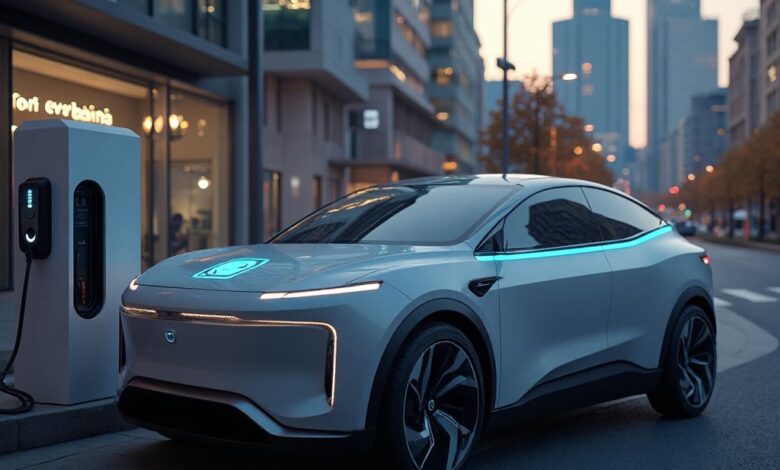
How Solid-State Batteries Will Change Electric Vehicles Forever
Imagine an electric vehicle that charges faster than you can grab a coffee, travels over 600 miles on a single charge, and poses virtually no fire risk. Sounds like science fiction, right? Well, prepare for a paradigm shift, because this isn’t a distant dream. Solid-state battery technology is rapidly moving from the lab to the road, promising to redefine everything we know about electric vehicles. The automotive world is on the cusp of its next great revolution, and it’s powered by a battery that leaves its liquid-filled predecessors in the dust.
The Current EV Landscape: A Foundation for Disruption
Today’s electric vehicles, from the pioneering Tesla Model 3 to the luxurious Lucid Air and the rugged Ford F-150 Lightning, are powered predominantly by lithium-ion batteries. These powerhouses have been instrumental in launching the EV revolution, offering impressive range and performance that continue to improve year after year. However, even the best lithium-ion packs come with inherent limitations that present hurdles for mass adoption and push the boundaries of what an EV can truly be.
Current lithium-ion technology relies on a liquid or gel electrolyte to shuttle ions between the anode and cathode. While effective, this liquid component contributes to several challenges: it’s flammable, limiting energy density due to safety considerations, prone to dendrite formation (which can lead to short circuits), and sensitive to temperature fluctuations, which can degrade performance and lifespan. These factors mean longer charging times than gasoline cars, ranges that still induce “range anxiety” for some, and battery packs that are heavy, bulky, and expensive to produce. For the everyday car buyer and the seasoned enthusiast alike, these are the pain points that solid-state batteries aim to obliterate.
The Solid-State Revolution: What It Is and Why It Matters
At its core, a solid-state battery replaces the flammable liquid electrolyte of traditional lithium-ion batteries with a solid material. This might sound like a minor tweak, but it’s a monumental leap in chemistry and engineering. This solid electrolyte – often a ceramic, glass, or polymer composite – unlocks a cascade of benefits that are set to transform electric vehicles forever.
Unprecedented Energy Density: Range Without Limits
One of the most exciting promises of solid-state batteries is their ability to pack significantly more energy into a smaller, lighter package. Without the need for bulky separators and cooling systems required by liquid electrolytes, solid-state cells can achieve far greater energy density – potentially 50% to 100% higher than current lithium-ion batteries. Imagine a BMW iX with a range of 500 miles, or a Chevrolet Silverado EV that can haul heavy loads for 600 miles on a single charge. This increased energy density means less range anxiety, more practical long-distance travel, and the possibility of smaller, lighter battery packs that free up interior space and improve vehicle dynamics. This is a game-changer for everyone, from first-time EV buyers worried about their commute to experienced owners craving the ultimate road trip machine.
Blazing Fast Charging: A Pit Stop, Not a Power Nap
The Achilles’ heel of many current EVs is charging time. While DC fast charging has improved dramatically, waiting 20-30 minutes for an 80% charge can still feel like an eternity compared to a 5-minute gas stop. Solid-state batteries, with their inherently more stable chemistry and superior thermal management, are projected to slash charging times dramatically. Researchers are targeting charging speeds that could see an EV go from 10% to 80% charge in as little as 10-15 minutes – rivaling and even surpassing the time it takes to fill a traditional gas tank. This isn’t just a convenience; it’s a fundamental shift in how we interact with our vehicles, making EV ownership seamless and truly comparable to, if not better than, gasoline cars.
Unrivaled Safety: Erasing Fire Concerns
While EV fires are statistically rare, the dramatic nature of battery fires often captures headlines and fuels public apprehension. The flammable liquid electrolyte in lithium-ion batteries is the primary culprit. By eliminating this liquid and replacing it with a stable, non-flammable solid, solid-state batteries virtually eliminate the risk of thermal runaway and battery fires. This safety enhancement is not just a technical improvement; it’s a powerful psychological one that can boost consumer confidence and accelerate mainstream adoption of EVs, making them safer for occupants and emergency responders alike.
Longer Lifespan and Reduced Costs
Solid-state batteries are also expected to offer a longer cycle life, meaning they can be charged and discharged many more times before significant degradation occurs. This translates to a longer lifespan for the vehicle’s most expensive component, potentially reducing the total cost of ownership and making EVs a more attractive long-term investment. While initial manufacturing costs for solid-state batteries may be higher due to new production processes, the potential for using less expensive and more abundant materials (like lithium metal anodes) and the ability to create smaller, more efficient packs could eventually lead to cost parity or even lower costs than current lithium-ion technology.
Expert Analysis: Beyond the Hype
As an automotive journalist who’s had his hands on countless prototypes and spoken with engineers from nearly every major automaker, I can offer a few insider insights that go beyond the headlines:
- The “When” is as Important as the “What”: While Toyota has been a long-time leader in solid-state patents and prototypes, and companies like Volkswagen (investing in QuantumScape), BMW (partnering with Solid Power), and Mercedes-Benz (working with Factorial Energy) are making significant strides, the transition to mass production is complex. We’re likely looking at pilot programs and niche applications in the mid-2020s, with widespread adoption in mainstream models not truly taking off until the late 2020s or early 2030s. Don’t expect your next Hyundai Ioniq 5 to have a full solid-state pack next year, but it’s coming.
- Not a Single “Winner”: The solid-state race isn’t about one company dominating. There are multiple chemistries and manufacturing processes being explored (sulfide-based, oxide-based, polymer-based). The eventual market will likely see a diversity of solid-state solutions, each optimized for different applications – perhaps one for high-performance sports cars like a Porsche Taycan, another for heavy-duty trucks like a Rivian R1T, and a third for mass-market commuters from Kia or Chevrolet.
- The Supply Chain Challenge is Real: Shifting from liquid to solid electrolytes means entirely new supply chains for raw materials and manufacturing equipment. This isn’t just about making a better battery; it’s about building an entirely new industrial ecosystem from the ground up, which will require massive investment and international cooperation. Expect strategic partnerships between battery developers, material suppliers, and automakers to be key.
- Tesla’s “Wait and See” Approach: While many established automakers are publicly championing solid-state, Tesla, a pioneer in EV battery tech with its 4680 cells, has been more cautious, focusing on incremental improvements to lithium-ion and structural battery packs. Elon Musk has expressed skepticism about the timeline for solid-state mass production, suggesting the industry still has much to gain from current tech. However, rest assured, Tesla’s R&D labs are undoubtedly working on it, ensuring they won’t be left behind if the breakthroughs materialize.
- A Hybrid Transition? It’s possible we’ll see “semi-solid-state” or hybrid batteries emerge first, incorporating some solid-state components to enhance current lithium-ion packs, rather than an immediate full leap. This could be a way for brands like Audi or Ford to gradually introduce the benefits while refining full solid-state production.
Pros and Cons of Solid-State Batteries
Pros:
- Significantly Increased Energy Density: Longer range and smaller, lighter battery packs.
- Ultra-Fast Charging: Potentially 10-80% in 10-15 minutes.
- Enhanced Safety: Elimination of flammable liquid electrolyte drastically reduces fire risk.
- Longer Lifespan: Reduced degradation over charge cycles.
- Improved Packaging: Smaller and lighter packs can lead to more interior space and better vehicle dynamics.
- Better Performance in Extreme Temperatures: Less sensitive to cold or hot weather.
Cons:
- High Manufacturing Costs (Initially): New production processes are expensive and not yet scaled.
- Complex Manufacturing: Producing solid electrolytes at scale with consistent quality is challenging.
- Material Availability and Cost: Some solid electrolyte materials can be rare or expensive.
- Interface Resistance: Ensuring good contact between solid layers without degradation is a hurdle.
- Dendrite Formation (Still a Challenge): While reduced, preventing lithium dendrites entirely in some solid-state configurations remains an area of research.
- Limited Commercial Availability: Widespread deployment is still years away.
Final Verdict and Call to Action
Solid-state batteries are not just an incremental upgrade; they represent a fundamental paradigm shift that will redefine the electric vehicle. They promise to solve the current pain points of range anxiety, charging times, and safety concerns, making EVs irresistible to the masses. From the luxury performance of a Lucid Air to the practicality of a Volkswagen ID.4, every segment of the market stands to benefit immensely.
My recommendation for both first-time EV buyers and seasoned owners is clear: while you might not be buying a full solid-state EV tomorrow, understand that the future of electric mobility is incredibly bright, and it’s coming faster than you think. This technology will render many of today’s EV limitations obsolete, ushering in an era where electric vehicles are unequivocally superior to their internal combustion counterparts in every meaningful way.
Keep a close eye on announcements from Toyota, BMW, Volkswagen, and other automotive giants, as the first production solid-state vehicles will mark a true turning point. The question is no longer if solid-state batteries will change EVs forever, but how quickly they will reshape our driving experience. What are your thoughts on this impending revolution? Are you ready for an EV that truly has no compromises?