How Hyundai and Kia Are Winning the Affordable EV Race in 2026
Forget the hype surrounding Tesla’s ever-expanding Supercharger network, Rivian’s rugged adventure vehicles, or even the legacy giants like Ford and GM pouring billions into their electric futures. By 2026, the undisputed champions of the affordable electric vehicle market are not who you might expect, but rather two brands that have quietly, strategically, and aggressively positioned themselves for dominance: Hyundai and Kia. While others chase the luxury segment or struggle with manufacturing scalability, the Korean automotive powerhouses are set to flood the market with compelling, stylish, and crucially, accessible EVs that will redefine mainstream electric mobility.
The Tipping Point: Why Affordable EVs Matter Now More Than Ever
For years, electric vehicles have been a niche product, primarily appealing to early adopters with disposable income or those willing to pay a premium for cutting-edge technology and environmental benefits. The early market was dominated by Tesla, followed by luxury offerings from BMW, Mercedes, Audi, and Porsche. Even more “mainstream” options like the Ford Mustang Mach-E or Volkswagen ID.4 often carried price tags that put them out of reach for the average family car buyer.
But 2026 marks a crucial tipping point. Government incentives are evolving, battery costs are continuing their downward trend, and consumer anxiety about range and charging is steadily decreasing. What remains the biggest barrier to widespread EV adoption is the upfront cost. Mainstream car buyers, those accustomed to spending $30,000 to $45,000 on a new vehicle, have largely been left out of the EV revolution. This is precisely the void that Hyundai and Kia are not just filling, but dominating, by offering a diverse portfolio of electric vehicles that meet this critical price point without compromising on design, technology, or practicality. Their strategy isn’t just about selling EVs; it’s about making them a viable, desirable option for everyone.
Hyundai and Kia’s Unbeatable Strategy for Affordable EV Dominance
The success of Hyundai and Kia in the affordable EV space by 2026 isn’t accidental; it’s the culmination of years of strategic planning, significant investment, and an unwavering commitment to making electric vehicles accessible. Their multi-pronged approach tackles every aspect of the mainstream buyer’s needs.
The E-GMP Platform: A Scalable, Cost-Efficient Foundation
At the heart of their winning formula is the Electric-Global Modular Platform (E-GMP). This dedicated EV architecture, shared across both brands, is a game-changer. Unlike many legacy automakers who initially adapted internal combustion engine (ICE) platforms for EVs, E-GMP was designed from the ground up for electric propulsion. This allows for optimal packaging, maximizing interior space, and integrating an advanced 800V electrical system. The 800V architecture isn’t just a fancy number; it enables ultra-fast charging, often allowing a 10-80% charge in under 18 minutes on compatible DC fast chargers. This significantly reduces range anxiety for busy families and commuters, making road trips a practical reality even in more affordable models.
Crucially, E-GMP’s modularity allows Hyundai and Kia to produce a wide array of vehicles – from compact hatchbacks to mid-size SUVs and even larger family haulers – all leveraging common components and manufacturing processes. This economies of scale approach directly translates into lower production costs, which are then passed on to the consumer, making their EVs inherently more affordable than many competitors.
Strategic Product Diversification: An EV for Every Budget
By 2026, Hyundai and Kia will boast an unparalleled lineup of affordable EVs targeting various segments, ensuring that there’s an electric vehicle for nearly every mainstream buyer.
Hyundai’s Playbook: Expanding the Ioniq Range
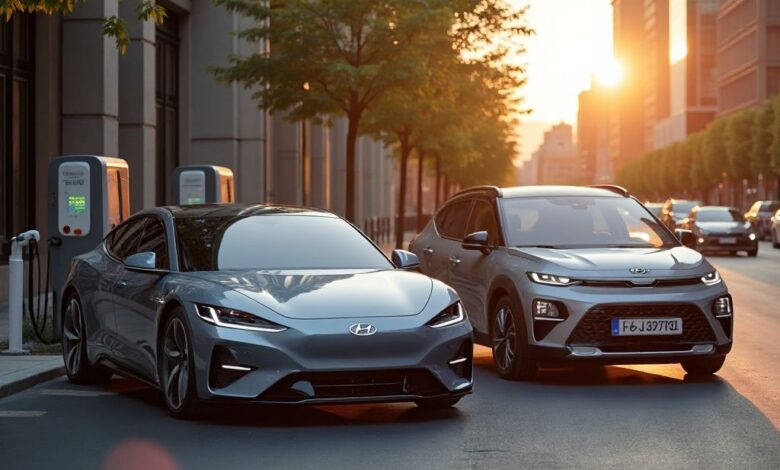
Building on the success of the critically acclaimed Ioniq 5 and Ioniq 6, Hyundai is aggressively expanding downwards into more compact and budget-friendly segments. The much-anticipated Ioniq 3, expected to be a subcompact crossover or hatchback, will serve as Hyundai’s volume seller, directly competing with entry-level EVs from Chevrolet and Volkswagen. With a projected starting price well under $35,000, it’s set to offer a practical range of around 250 miles, surprisingly nimble performance, and a suite of advanced safety features. The Ioniq 4, likely a compact sedan or a sleek crossover, will bridge the gap, providing more space and range at a slightly higher, but still highly competitive, price point.
Kia’s Strategy: The EV Lineup Grows Downwards
Kia, with its bold “Plan S” strategy, is mirroring Hyundai’s approach with its own distinctive EV lineup. Following the successful launch of the EV6 and the upcoming EV9, Kia will introduce the EV3 and EV4. The EV3, a charismatic subcompact SUV, is poised to be a design-forward, urban-friendly EV with an attractive price tag, making it a compelling option for young professionals and small families. The EV4, potentially a compact sedan or a sporty crossover, will offer a blend of style, practicality, and efficiency, embodying Kia’s reputation for value and distinctive design. Both the EV3 and EV4 are expected to leverage advancements in battery technology to offer respectable ranges (200-280 miles) at price points that significantly undercut rivals like the Ford Mustang Mach-E or Tesla Model 3.
Battery Technology and Efficiency: More Range, Less Cost
Hyundai and Kia are not just relying on their platform; they’re also investing heavily in battery technology. By 2026, expect to see a wider adoption of Lithium Iron Phosphate (LFP) batteries in their more affordable models. While LFP batteries might have a slightly lower energy density than nickel-manganese-cobalt (NMC) cells, their significantly lower cost, longer lifespan, and improved safety make them ideal for entry-level EVs where outright range isn’t the sole priority. This strategic use of LFP batteries allows them to hit aggressive price targets without sacrificing core EV benefits.
Furthermore, continuous improvements in aerodynamics, motor efficiency, and advanced thermal management systems across their entire EV fleet mean that even smaller battery packs can deliver impressive real-world range, further enhancing their value proposition.
Design and Interior Revolution: Making Affordable Desirable
Unlike some early affordable EVs that prioritized function over form, Hyundai and Kia have consistently demonstrated a knack for creating visually appealing vehicles. Their “Sensuous Sportiness” and “Opposites United” design philosophies have yielded cars that stand out from the crowd. By 2026, their affordable EVs will continue this trend, offering sleek exteriors and surprisingly premium interiors that belie their price tags. Expect innovative use of sustainable materials, intuitive infotainment systems, and thoughtful storage solutions that make daily driving a pleasure, not a compromise.
Expert Analysis: Insider Insights into Their Winning Formula
As someone who’s spent a decade tracking the automotive industry’s every tremor, here are 3-5 insider insights into why Hyundai and Kia are not just participating, but truly winning, the affordable EV race:
- Vertical Integration Advantage: Unlike many competitors reliant on external suppliers for key components, Hyundai Motor Group’s vast ecosystem, including Hyundai Mobis for parts and their strategic partnerships in battery development, gives them unparalleled control over their supply chain. This reduces costs, ensures quality, and accelerates development cycles – a massive competitive edge.
- Global Market Acumen: While Tesla and Rivian initially focused on North America and Europe, Hyundai and Kia have a deep understanding of diverse global markets, including emerging economies where affordable, reliable transportation is paramount. Their EV strategy isn’t just for the West; it’s a worldwide play.
- “Tesla Effect” Without the Tesla Price Tag: Hyundai and Kia have successfully adopted some of Tesla’s most appealing aspects – sleek design, advanced tech, over-the-air updates, and dedicated EV platforms – but packaged them in vehicles that are financially accessible to a much broader audience. They’re democratizing desirable EV features.
- Dealer Network Strength and Serviceability: This is huge for mainstream buyers. While direct-to-consumer models like Tesla have their advantages, the vast, established dealer networks of Hyundai and Kia provide comfort and accessibility for sales, service, and parts – a significant factor for first-time EV owners and those less comfortable with online-only purchasing.
- Aggressive Pricing and Incentives: The Korean brands are masters of market positioning. They understand how to price their vehicles competitively, often undercutting rivals, and are adept at leveraging government incentives to make their EVs even more attractive. This aggressive approach ensures they capture market share rapidly.
Pros and Cons of Hyundai/Kia’s Affordable EV Strategy in 2026
- Pros:
- Unbeatable value for money, making EVs accessible to a wider audience.
- Stylish, modern designs that appeal to mainstream tastes.
- Fast charging capabilities thanks to 800V architecture.
- Practical range for daily commuting and occasional road trips.
- Strong warranty programs and extensive dealer support.
- Advanced safety and infotainment features trickling down to affordable models.
- Cons:
- Brand perception, while improving, may still face challenges against premium EV brands for some buyers.
- Software maturity, while good, may not always match the seamless integration seen in a Tesla.
- Potential for dealer markups on high-demand models, a historical issue for popular Hyundai/Kia vehicles.
Final Verdict: The Future is Electric, and It’s Korean
By 2026, Hyundai and Kia will have solidified their position as the undisputed leaders in the affordable electric vehicle market. Their combination of a dedicated, scalable EV platform (E-GMP), a diverse and well-priced product portfolio, continuous advancements in battery technology, and a keen understanding of mainstream consumer desires will make their EVs the go-to choice for millions. While brands like Tesla continue to innovate at the high end, and legacy automakers like Chevrolet and Volkswagen play catch-up, Hyundai and Kia are quietly, confidently, and effectively democratizing electric mobility.
For any car buyer looking to make the leap to an electric vehicle in the next few years, especially those mindful of their budget, ignoring Hyundai and Kia would be a grave mistake. Their 2026 lineup promises to deliver not just affordable EVs, but truly desirable, practical, and technologically advanced vehicles that will make the electric transition a joy, not a compromise. Keep a very close eye on their upcoming announcements and head to your local dealership when these models arrive – you might just find your perfect electric future waiting for you.