

Tesla Model S Plaid Review: The Fastest Accelerating Car You Can Buy
Imagine this: You’re at a standstill, the world is quiet, and then with a silent, visceral surge, you’re catapulted from 0 to 60 mph in a mind-bending 1.99 seconds. That’s not a figure from a hypercar costing millions, nor is it a dragster designed solely for the strip. That, my friends, is the everyday reality of the Tesla Model S Plaid, the fastest accelerating production car you can buy today. It’s a statement, a revolution, and a brutal lesson in physics, all wrapped up in a four-door sedan.
The New Apex Predator: Why the Plaid Matters
For over a decade, Tesla has been synonymous with pushing the boundaries of electric vehicle performance and range. From the original Roadster to the Model S, they’ve consistently challenged the automotive establishment, proving that electric cars can be not just practical, but exhilarating. The Model S Plaid isn’t just another iteration; it’s the culmination of that relentless pursuit, a defiant roar in the face of gasoline-powered performance. In a world rapidly shifting towards electrification, the Plaid stands as a beacon, demonstrating the sheer, unadulterated potential of EV technology. It’s not just for early adopters anymore; it’s for anyone who craves speed, innovation, and a glimpse into the future of automotive engineering, forcing traditional performance giants like Porsche and BMW to rethink their entire strategy.
Design: Subtle Aggression, Aerodynamic Prowess
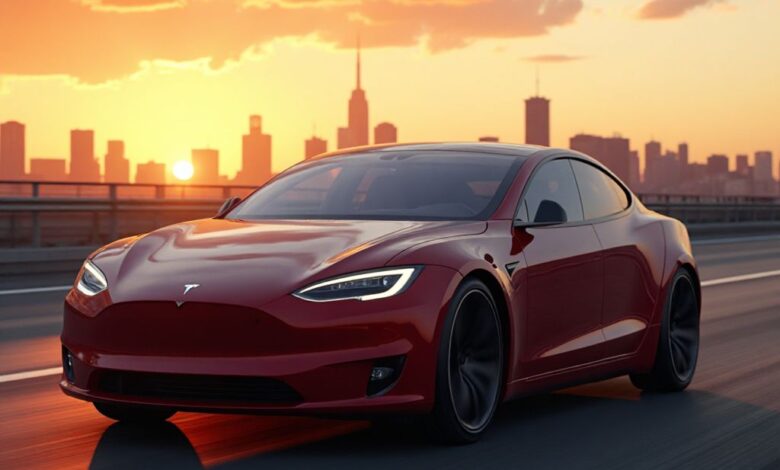
At first glance, the Model S Plaid maintains the sleek, familiar silhouette of the standard Model S, a design that has aged remarkably well since its inception. However, closer inspection reveals subtle, yet purposeful, aerodynamic enhancements. The front fascia boasts a slightly redesigned bumper with larger air intakes, essential for cooling the beast within. Wider fenders hint at the broader stance, accommodating larger wheels and tires. The rear features a carbon fiber lip spoiler, not just for aesthetics but to provide downforce at ludicrous speeds. Every line, every curve, is meticulously crafted not just for visual appeal but to slice through the air with minimal resistance, achieving an incredibly low drag coefficient of 0.208 Cd. It’s an exercise in understated power, letting its performance speak louder than any flamboyant styling cues.
Performance: Redefining “Fast”
This is where the Plaid truly earns its stripes. Underneath that elegant exterior lies a tri-motor all-wheel-drive powertrain, generating an astounding 1,020 horsepower and 1,050 lb-ft of torque. These aren’t just big numbers; they translate into a driving experience that genuinely redefines the sensation of speed. The aforementioned 0-60 mph sprint in 1.99 seconds (with rollout subtracted, as Tesla measures it) is not just quick; it’s physically demanding, pinning you to your seat with G-forces usually reserved for fighter jets. The quarter-mile flashes by in a blistering 9.23 seconds at 155 mph, making it one of the quickest production cars ever to conquer that distance. Top speed is a dizzying 200 mph (with the proper software unlock and wheels/tires). The acceleration is instant, relentless, and delivered with an almost eerie silence, save for the subtle whine of the electric motors.
While straight-line speed is its party trick, the Plaid also handles with surprising agility for a large, heavy sedan. The adaptive air suspension keeps body roll in check, and the all-wheel-drive system provides immense grip. However, it’s important to set expectations: while incredibly capable on winding roads, it’s not a lightweight track weapon like a Porsche 911 GT3 RS. Repeated hard braking and cornering can highlight its substantial weight, and while the standard brakes are competent for road use, serious track enthusiasts might look for aftermarket upgrades to cope with the immense power over sustained periods.
Interior: Minimalist Luxury Meets Sci-Fi Tech
Step inside, and you’re greeted by a cabin that is both familiar and futuristic. The dominant feature remains the massive 17-inch landscape-oriented touchscreen, now faster and more responsive, serving as the command center for virtually all vehicle functions. A new 8-inch screen for rear passengers adds a touch of luxury and entertainment. The materials feel premium, with soft-touch surfaces and tasteful accents. The panoramic glass roof creates an airy, spacious feel, further enhancing the sense of openness.
However, the most talked-about interior feature is undoubtedly the “yoke” steering wheel. This controversial design choice removes the top and bottom of the traditional wheel, resembling something out of a sci-fi movie. While it offers an unobstructed view of the instrument cluster and the road ahead, its practicality is debatable. Low-speed maneuvers and tight turns require an adaptation period, as the lack of a full wheel makes hand-over-hand turning awkward. Some drivers love its futuristic feel, others find it frustrating. It’s a bold statement, but one that warrants a test drive before committing.
Technology: A Digital Command Center
Tesla has always been a tech company first, and the Model S Plaid is a rolling testament to that philosophy. The infotainment system is arguably the best in the industry, offering seamless navigation, streaming services, gaming, and over-the-air (OTA) updates that continually improve and add new features to the car. Autopilot and the optional Full Self-Driving (FSD) Beta package represent the bleeding edge of driver-assistance technology, offering advanced adaptive cruise control, lane-keeping, and increasingly sophisticated automated driving capabilities. The Tesla Supercharger network remains a significant advantage, providing reliable and fast charging infrastructure globally, making long-distance travel in an EV genuinely feasible.
Value for Money: Performance Bargain with a Premium Price Tag
With a starting price typically in the six-figure range, the Model S Plaid is by no means cheap. However, when you consider the performance it offers – out-accelerating cars that cost two, three, or even ten times as much – it begins to look like a relative bargain. Compare its 0-60 time to a Bugatti Chiron or a Koenigsegg, and the Plaid’s price tag suddenly seems incredibly reasonable. Factor in lower “fuel” costs (electricity vs. premium gasoline) and reduced maintenance requirements typical of EVs, and the long-term cost of ownership can be surprisingly competitive against high-performance ICE sedans like a BMW M5 Competition or a Mercedes-AMG E63 S. Tesla’s strong resale values also help cushion the initial investment.
Expert Analysis: Beyond the Spec Sheet
- The Yoke: A Design Statement or a Compromise? While visually striking, the yoke steering wheel is more than just a novelty; it’s a deliberate design choice that forces a new driving paradigm. It’s fantastic for highway cruising where minimal steering input is needed, offering an unobstructed view. However, in urban environments or for quick, evasive maneuvers, it requires a recalibration of muscle memory. Many traditionalists will find it frustrating, but it also signals Tesla’s willingness to challenge established norms, for better or worse.
- Street King, Not Track God: The Plaid’s acceleration is unparalleled, but its true performance envelope on a racetrack is different from its straight-line prowess. While it can lap a track quickly, its substantial weight and the thermal management demands of its immense power mean it’s not designed for repeated, sustained track abuse in the same way a purpose-built track car is. Brake fade and power reduction can occur, underscoring that it’s an ultra-high-performance road car first and foremost.
- Software Defines the Experience: Unlike most legacy automakers, Tesla’s approach is software-first. This means the Plaid you buy today will likely be better tomorrow, next month, or next year through OTA updates. This continuous improvement model, from performance tweaks to new features and bug fixes, is a fundamental differentiator that traditional manufacturers are still struggling to replicate effectively.
- The Plaid as a Halo Car: More than just a sales leader, the Plaid serves as a crucial halo car for Tesla. It showcases the company’s engineering prowess and pushes the brand image into hypercar territory, attracting attention and validating the entire Model S lineup (and by extension, other Tesla models) as cutting-edge and desirable. It’s a statement piece that says, “Look what EVs can do.”
- The Growing EV Performance War: While the Plaid currently holds the crown for acceleration, it’s not alone in the burgeoning hyper-EV segment. Competitors like the Lucid Air Sapphire (with over 1,200 hp and even quicker acceleration claims) and the Porsche Taycan Turbo S are pushing boundaries, signaling an exciting new era where electric power is redefining what’s possible at the pinnacle of automotive performance. The Plaid set the bar, and now others are aiming to clear it.
Brand Comparisons: How the Plaid Stacks Up
The Model S Plaid exists in a unique space, bridging the gap between luxury performance sedans and outright hypercars. Its closest direct EV competitor is undoubtedly the **Lucid Air Sapphire**. While the Sapphire boasts even more power and potentially quicker acceleration, it also comes with a significantly higher price tag, positioning it as an even more exclusive offering. The **Porsche Taycan Turbo S** offers incredible handling and a more traditional, driver-focused interior, but it falls short of the Plaid’s outright acceleration and range.
Against traditional ICE performance sedans like the **BMW M5 Competition** or the **Mercedes-AMG E63 S**, the Plaid simply outclasses them in raw acceleration, offering a different kind of visceral thrill. Even supercars from brands like **Ferrari** or **Lamborghini** would struggle to keep up with the Plaid in a straight line, highlighting the paradigm shift brought about by electric powertrains. The Plaid also benefits from Tesla’s robust **Supercharger network**, a significant advantage over other EV brands like **Audi** or **Hyundai** which rely on third-party charging infrastructure.
Pros and Cons
- Pros:
- Unmatched acceleration (0-60 mph in 1.99 seconds).
- Impressive range for a high-performance EV.
- Access to the industry-leading Supercharger network.
- Cutting-edge technology and infotainment system.
- Practical four-door sedan with ample cargo space.
- Continuous improvement via over-the-air updates.
- Cons:
- Controversial “yoke” steering wheel requires adaptation.
- Ride can be firm, especially on less-than-perfect roads.
- Not a dedicated track car; can suffer from thermal limitations during sustained track use.
- Premium price point.
- Some interior materials, while improved, still don’t match the absolute luxury of traditional German rivals.
Final Verdict: A Glimpse into the Future, Today
The Tesla Model S Plaid is more than just a car; it’s a statement. It’s a testament to what’s possible when engineering prowess meets an unwavering vision for the future of transportation. It redefines what “fast” means in a production car, delivering an experience that is both exhilarating and, at times, mind-bending. While the yoke steering wheel and its track limitations might give some purists pause, there’s no denying its monumental achievement.
Who is it for? If you’re an early adopter, a tech enthusiast, or simply someone who craves the absolute pinnacle of acceleration wrapped in a practical, luxurious package, the Plaid is for you. It’s for those who want to experience the future of automotive performance, today. It’s a car that will put a grin on your face every single time you floor it, and it will challenge your perception of what a sedan can be.
Are you ready to experience the fastest accelerating car you can buy? Go for a test drive, feel the G-forces, and decide for yourself if you’re ready to join the Plaid revolution. The future of speed has arrived, and it’s shockingly quiet.


