How China’s Dominance in EV Manufacturing Is Reshaping Global Trade
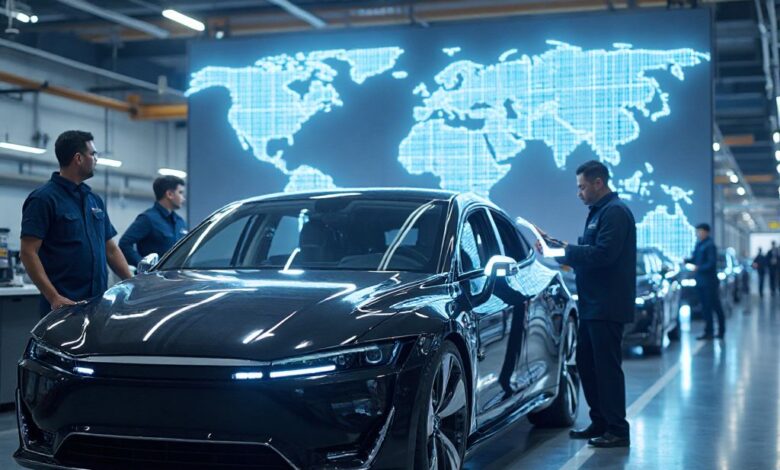
Picture this: a brand new electric vehicle, packed with cutting-edge tech, impressive range, and a price tag that makes European or American rivals blush, rolling off a production line in China every few seconds. This isn’t a futuristic fantasy; it’s the current reality. China now produces more than 60% of the world’s electric vehicles and controls an astounding 80% of the global battery manufacturing capacity. This isn’t just a shift; it’s a seismic event that’s fundamentally reshaping global trade, challenging established automotive giants, and offering car buyers unprecedented choices – and dilemmas – worldwide.
Why China’s EV Ascent Matters to You, The Car Buyer
For decades, the automotive world revolved around Detroit, Stuttgart, and Tokyo. The cars we drove, the technology we experienced, and the prices we paid were largely dictated by these traditional powerhouses. Today, the landscape is dramatically different. China’s meteoric rise in EV manufacturing isn’t just an abstract economic headline; it directly impacts your next car purchase, the future value of your current vehicle, and even the job market in your local community. It means more affordable EVs, a dizzying array of new brands and models, faster technological advancements, and a potential “race to the bottom” on pricing that could benefit consumers immensely, while simultaneously putting immense pressure on legacy automakers like Volkswagen, Ford, and Toyota.
The Dragon’s Roar: Unpacking China’s EV Manufacturing Might
The Unprecedented Scale of Production
China’s dominance isn’t merely about having a few successful EV companies; it’s about an industrial ecosystem built for scale. The country boasts the world’s largest automotive market and has invested colossal sums in EV infrastructure and manufacturing. Companies like BYD, now a global EV behemoth, produce millions of vehicles annually, rivaling and often surpassing the output of long-established brands. This scale translates directly into cost efficiencies, allowing Chinese manufacturers to offer compelling products at highly competitive prices. It’s a volume game, and China is playing it better than anyone.
Technological Prowess and Rapid Innovation
Gone are the days when “Made in China” implied a compromise on quality or innovation. Chinese EVs are at the forefront of several key technological advancements. Take battery technology, for instance: Chinese companies like CATL and BYD are pioneering innovations in LFP (lithium iron phosphate) batteries, which are safer, more durable, and significantly cheaper to produce than traditional NMC (nickel manganese cobalt) cells. This allows for more affordable long-range EVs. Furthermore, Chinese manufacturers are leading in integrating advanced software, connectivity, and autonomous driving features. Vehicles from brands like Nio and Xpeng often come standard with features that are premium add-ons or not even available on many Western counterparts, showcasing a rapid development cycle and a keen understanding of the modern, tech-savvy consumer.
The Cost Advantage: A Game Changer for Global Markets
Perhaps the most disruptive aspect of China’s EV dominance is its unparalleled cost advantage. From raw materials to finished vehicles, every step of the supply chain is optimized for efficiency and affordability. The BYD Seagull, for example, offers an impressive package for under $15,000 in China, a price point virtually impossible for Western manufacturers to match without significant subsidies or compromises. This pricing power is not just limited to entry-level models; brands like MG (owned by SAIC) are making significant inroads in Europe with well-equipped, value-for-money EVs like the MG4, directly challenging established players like the Volkswagen ID.3 or even the entry-level Tesla Model 3. This forces global brands to either lower their prices, innovate faster, or risk losing market share.
The Export Surge and Global Market Penetration
China’s domestic EV market is massive, but its ambitions extend far beyond its borders. Chinese EV exports have exploded, particularly into Europe, Southeast Asia, and Latin America. Ports are bustling with ships carrying thousands of BYD Atto 3s, MG ZS EVs, and Nio ES6s. This influx is creating intense competition, especially in Europe, where local manufacturers are struggling to ramp up their own EV production and match the price points and feature sets of the Chinese newcomers. The strategic implications are enormous, as traditional markets suddenly face a flood of new, highly competitive options.
Supply Chain Control: The Unseen Lever of Power
The true depth of China’s dominance lies not just in vehicle assembly but in its near-monopoly over the entire EV supply chain. China refines the vast majority of critical battery minerals like lithium, cobalt, and graphite. It also dominates the production of battery components (cathodes, anodes, separators, electrolytes) and, crucially, the manufacturing of the battery cells themselves. This integrated control gives Chinese manufacturers a significant strategic advantage, ensuring stable supply, lower costs, and faster innovation cycles, while Western automakers often rely on Chinese suppliers for these vital components, creating a dependency that is increasingly a source of geopolitical concern.
Government Support and Industrial Strategy
It’s impossible to discuss China’s EV success without acknowledging the proactive and sustained government support. Decades of strategic industrial policy, massive subsidies for R&D, manufacturing, and consumer purchases, and a clear vision for becoming a global leader in new energy vehicles have fueled this growth. This top-down approach has created an environment where EV innovation and production can flourish at an unprecedented pace, establishing a competitive edge that is difficult for other nations to replicate.
Expert Analysis: Beyond the Headlines
As someone who’s watched this industry evolve over the past decade, I can tell you that China’s rise isn’t just about cheap cars; it’s about a fundamental shift in automotive philosophy and power dynamics.
The Software-Defined Car and China’s Head Start
Western automakers, for years, focused on mechanical engineering prowess. The future of the car, however, is increasingly software-defined. Chinese EV makers, unburdened by legacy ICE platforms and mindsets, embraced this early. They’re building cars like giant smartphones on wheels, with over-the-air updates, sophisticated infotainment systems, and advanced driver-aid software as core competencies. Brands like Nio and Xpeng offer subscription models for advanced features, something many Western brands are only now tentatively exploring. This software agility gives them a significant edge in appealing to a digitally native generation of buyers.
The “Adapt or Perish” Ultimatum for Legacy OEMs
For brands like Mercedes-Benz, BMW, and Audi, the challenge isn’t just price; it’s relevance. They must rapidly accelerate their EV transitions, localize production in China to understand the market better, and develop their own compelling software ecosystems. Ford and GM are making strides, but the pace of innovation required is relentless. Tesla, while a formidable competitor, also faces intensified pressure from Chinese brands that are quickly catching up in performance and surpassing in certain tech integrations, often at a lower cost.
The Geopolitical Chess Match Over Critical Minerals
The control over the EV supply chain, particularly critical minerals and battery production, has profound geopolitical implications. Nations are now scrambling to secure their own supplies and reduce dependency on China, leading to increased investment in mining and refining outside China, and the development of new battery chemistries. This isn’t just about cars; it’s about national security and economic sovereignty, making brands like Rivian and Lucid, which aim for more localized supply chains, strategically important.
The Looming Specter of Protectionism
As Chinese EVs flood global markets, expect a significant increase in protectionist measures. Tariffs, stricter import regulations, and local content requirements are likely to become more common, especially in Europe and the US, as governments try to protect their domestic auto industries. This could lead to a fragmented global market, potentially increasing prices for consumers in certain regions, even as the underlying cost of production continues to fall in China.
Pros and Cons of China’s EV Dominance
- Pros:
- Lower Prices for Consumers: Fierce competition drives down the cost of EVs globally, making them more accessible.
- Faster Innovation: The intense rivalry accelerates technological advancements in batteries, software, and autonomous driving.
- Wider Choice of Models: A diverse range of new brands and vehicle types caters to varied consumer needs and preferences.
- Accelerated EV Adoption: More affordable and appealing options help speed up the transition away from fossil fuels.
- Cons:
- Threat to Traditional Auto Industries: Job losses and economic disruption in countries whose legacy automakers struggle to compete.
- Trade Imbalances and Protectionism: Potential for trade wars and tariffs as nations try to safeguard domestic industries.
- Dependence on a Single Source: Over-reliance on China for critical components and raw materials creates supply chain vulnerabilities.
- Data Security and IP Concerns: Questions around data privacy and intellectual property theft with foreign-made connected vehicles.
Final Verdict: Embrace the Disruption, Drive the Future
China’s dominance in EV manufacturing is not a temporary trend; it’s a new paradigm. For car buyers, this means an exciting, albeit complex, future. You’ll have access to more advanced, more affordable electric vehicles than ever before, potentially from brands you’ve never heard of. While established players like Hyundai, Kia, Audi, and Porsche are certainly not out of the race, they face unprecedented pressure to innovate, reduce costs, and adapt to a rapidly changing global landscape.
My recommendation for first-time buyers and experienced owners alike is clear: keep an open mind. Don’t dismiss Chinese brands out of hand. Research their offerings, read objective reviews, and most importantly, test drive them. You might be surprised by the quality, technology, and value on offer. This isn’t just about choosing a car; it’s about witnessing, and participating in, the most significant transformation the automotive industry has seen in a century. The future of mobility is here, and it’s increasingly being shaped by the East.
What are your thoughts on Chinese EVs? Have you considered buying one, or do you prefer traditional brands? Join the conversation below and share your perspective!