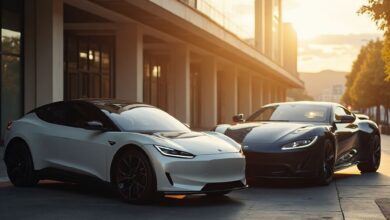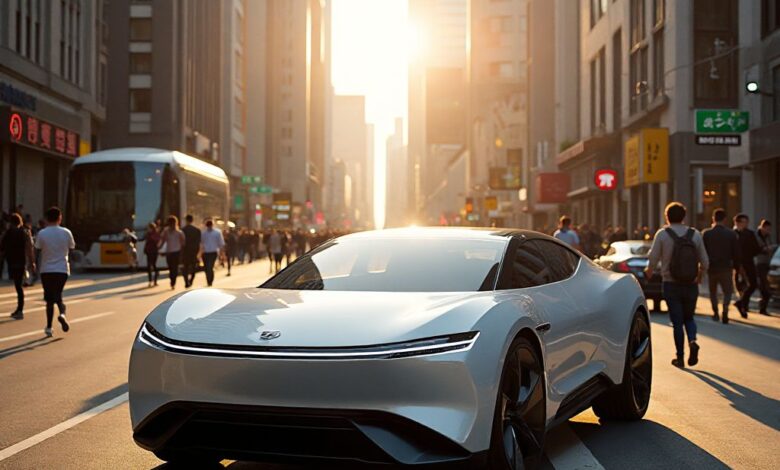
The automotive world just witnessed a seismic shift that few outside industry insiders saw coming with such speed. For the first time in history, a Chinese automaker, BYD, has officially dethroned Tesla to become the world’s largest seller of battery electric vehicles (BEVs) in the fourth quarter of 2023. This isn’t merely a statistical footnote; it’s a thunderclap reverberating across every showroom floor, every R&D lab, and every investor meeting from Stuttgart to Silicon Valley. The once-unquestioned reign of Elon Musk’s EV empire has been challenged, not by a legacy automaker, but by a company that started as a battery manufacturer just three decades ago.
Why BYD’s Ascent Matters to Every Car Buyer and Enthusiast
For years, the narrative around electric vehicles was largely dominated by Tesla’s innovation, range, and performance, alongside the gradual, often cautious, pivots of traditional giants like Volkswagen, Ford, and General Motors. But BYD’s meteoric rise signals a fundamental shift in the global automotive power structure. Why should this matter to you, the car buyer or enthusiast? Because it means more competition, more innovation, and ultimately, more choice and better value for money.
BYD’s success isn’t just about selling cars; it’s about pioneering a new model for automotive manufacturing, challenging established norms, and bringing electric mobility to a broader demographic than ever before. It forces every automaker to rethink their strategies, from battery sourcing to market positioning. For first-time EV buyers, it means a burgeoning market of affordable, technologically advanced options. For experienced car owners, it signifies a fresh wave of contenders that could redefine performance, luxury, and utility in the electric age. This isn’t just about a company growing; it’s about the entire industry being reshaped, with profound implications for vehicle features, pricing, and accessibility worldwide.
How BYD Became the World’s Biggest Electric Car Maker
From Batteries to Global Dominance: The BYD Story
BYD, which stands for “Build Your Dreams,” began its journey in 1995 as a rechargeable battery manufacturer. This seemingly humble origin is, in fact, the bedrock of its current success. Unlike many competitors who rely on external suppliers for their most critical component, BYD has deep expertise and control over battery technology. This vertical integration is not just a strategic advantage; it’s the core of its identity. In 2003, BYD acquired a struggling state-owned automaker, stepping into the car manufacturing arena with little fanfare but immense ambition.
For years, BYD focused on its domestic Chinese market, building a reputation for reliable, if not always stylish, vehicles. A pivotal moment came in 2008 when legendary investor Warren Buffett’s Berkshire Hathaway invested $230 million in BYD, acquiring a 9.9% stake. This investment not only provided crucial capital but also a powerful endorsement that lent credibility to the nascent brand on the global stage.
The Power of Vertical Integration: A Strategic Masterstroke
What truly sets BYD apart in the automotive world is its unparalleled level of vertical integration. While Tesla famously produces its own batteries and software, BYD takes this concept to an entirely different level. BYD manufactures its own batteries (the celebrated Blade Battery), electric motors, electronic control systems, semiconductors, and even has its own fleet of car-carrying ships to transport vehicles globally. This control over the entire supply chain offers several profound advantages:
- Cost Efficiency: By producing most components in-house, BYD significantly reduces manufacturing costs, allowing them to offer highly competitive pricing.
- Supply Chain Resilience: During global chip shortages or battery material constraints, BYD was less affected than rivals, ensuring consistent production.
- Rapid Innovation: Direct control over R&D for critical components means faster iteration and integration of new technologies into their vehicles.
- Quality Control: End-to-end manufacturing allows for tighter quality checks across the entire vehicle ecosystem.
The Blade Battery: A Game Changer
At the heart of BYD’s EV strategy is its innovative Blade Battery. Unveiled in 2020, this lithium iron phosphate (LFP) battery pack is designed to be safer, more durable, and more space-efficient than traditional EV batteries. Its unique “blade” design improves structural integrity, allowing the battery pack to serve as a structural component of the vehicle chassis, thus improving crash safety and increasing volumetric energy density. The Blade Battery has undergone rigorous testing, including the notorious “nail penetration test,” demonstrating its superior thermal stability and resistance to thermal runaway, addressing one of the major safety concerns surrounding EVs.
A Diverse Product Portfolio for Every Segment
Unlike some EV manufacturers that initially focused on premium or niche segments, BYD adopted a “full spectrum” approach. Their lineup spans a remarkable range of vehicle types and price points, catering to a vast global audience:
- Affordable City Cars: Models like the BYD Dolphin, a compact hatchback, offer an accessible entry point into EV ownership with impressive range and features for its class.
- Mid-Range Sedans and SUVs: The BYD Atto 3 (known as Yuan Plus in China) SUV and the Seal sedan are direct competitors to Tesla’s Model Y and Model 3, respectively, offering compelling design, technology, and performance at competitive prices. The Han sedan further pushes into the premium executive segment.
- Luxury and Performance: BYD is also venturing into high-end luxury with sub-brands like Yangwang (featuring the U8 SUV with individual wheel motors and advanced off-road capabilities) and Fang Cheng Bao, demonstrating their technological prowess and ambition to challenge established luxury players.
- PHEV Powerhouse: While the focus here is on BEVs, it’s crucial to note that BYD is also the world’s largest seller of plug-in hybrid electric vehicles (PHEVs). Their DM-i (Dual Mode intelligence) hybrid technology offers exceptional fuel efficiency and electric-only range, serving as a critical bridge for many consumers transitioning from internal combustion engine (ICE) vehicles to full EVs.
Aggressive Global Expansion
BYD’s strategy isn’t confined to China. The company has embarked on an aggressive international expansion, entering markets across Europe, Asia-Pacific, Latin America, and the Middle East. They are establishing dealerships, service networks, and even planning manufacturing facilities in countries like Thailand, Brazil, Hungary, and Indonesia. This global push is backed by a commitment to tailor products for local tastes and regulations, making BYD a formidable challenger in diverse automotive landscapes.
Expert Analysis: Insider Insights into BYD’s Phenomenal Growth
Having observed the automotive industry for over a decade, BYD’s trajectory offers unique insights that go beyond surface-level sales figures:
- The Unsung Hero: The PHEV Bridge Strategy. While the headlines focus on BYD’s BEV sales, their dominance in plug-in hybrids (PHEVs) cannot be overstated. BYD’s DM-i technology offers extended electric range and impressive fuel economy, acting as a crucial stepping stone for millions of Chinese (and now global) consumers hesitant to commit to a full BEV. This strategy effectively broadens their customer base and funnels them into the BYD ecosystem, often leading to a future full EV purchase from the brand. This is a critical differentiator from Tesla, which solely focuses on BEVs.
- Mastery of Cost-Effective Innovation. BYD isn’t just innovating; it’s innovating *affordably*. Their vertical integration, particularly with the Blade Battery and e-Platform 3.0, allows them to control costs in a way few competitors can match. This isn’t about cutting corners; it’s about engineering efficiency and scale. When a BYD Atto 3 can offer comparable range and features to a Ford Mustang Mach-E or a Hyundai Ioniq 5 at a significantly lower price point in many markets, it forces rivals to re-evaluate their entire cost structure.
- The Design Evolution: From Functional to Desirable. For years, Chinese cars were often criticized for derivative or uninspired designs. BYD has systematically addressed this by hiring top international talent, including Wolfgang Egger (formerly of Audi and Lamborghini) as their Global Design Director. The shift is evident in models like the Seal and Atto 3, which boast sleek, modern aesthetics that genuinely appeal to global tastes. This move from purely functional design to aspirational styling is crucial for winning over discerning buyers in mature markets like Europe and Australia, challenging brands like BMW and Mercedes.
- Beyond Batteries: The Software and Connectivity Push. While BYD’s hardware prowess is undeniable, their increasing focus on intelligent cockpits, advanced driver-assistance systems (ADAS), and over-the-air (OTA) updates signals a maturing software game. This is where the battle for future automotive leadership will largely be fought. While still catching up to Tesla’s FSD ambitions or the sophisticated ecosystems of Volkswagen’s MEB platform, BYD is rapidly closing the gap, offering competitive infotainment and connectivity features that are vital for modern car buyers.
- The Geopolitical Undercurrent: A New Era of Automotive Trade. BYD’s success also carries significant geopolitical weight. Its rise symbolizes China’s emergence as a global automotive powerhouse, challenging not just individual brands but entire national auto industries. This will inevitably lead to increased trade tensions, calls for protectionism in some markets, and a re-evaluation of global supply chains. For consumers, it means the competitive landscape will be influenced not just by market forces but also by international relations and policy decisions.
Brand Comparisons and Mentions
BYD’s journey is best understood in context with its rivals:
- Tesla: The most direct competitor. BYD’s overtaking of Tesla in Q4 2023 BEV sales highlights a divergence in strategy. Tesla focuses on premium performance and a more limited model range, while BYD emphasizes affordability, diversity, and vertical integration.
- Volkswagen, Ford, GM: Legacy automakers are playing catch-up. While they have vast resources and brand loyalty, their transition to EVs has been slower and more capital-intensive, often relying on external battery suppliers. BYD’s cost advantage and speed to market are significant threats.
- Hyundai, Kia: These Korean brands have made impressive strides in the EV space with models like the Ioniq 5 and EV6. They represent a strong mid-market challenge to BYD, particularly in design and charging infrastructure partnerships.
- BMW, Mercedes, Audi, Porsche, Lucid: These premium and luxury brands occupy a different segment, but BYD’s sub-brands like Yangwang demonstrate an ambition to compete at the very top, offering ultra-luxury and high-performance EVs that could eventually challenge the likes of the Porsche Taycan or Lucid Air.
- Toyota, Chevrolet: Traditional giants with massive global footprints. While Toyota has been slower to embrace full BEVs, BYD’s success puts immense pressure on them to accelerate their electrification strategies. Chevrolet’s Bolt EV and Equinox EV aim for affordability, a segment where BYD excels.
Pros and Cons of BYD’s Approach and Products
Pros:
- Unmatched Vertical Integration: Leads to cost efficiency, supply chain resilience, and rapid innovation.
- Advanced Battery Technology: The Blade Battery offers superior safety, durability, and space utilization.
- Diverse Product Portfolio: Caters to a wide range of budgets and preferences, from city cars to luxury SUVs.
- Aggressive Pricing: Offers excellent value for money, making EVs more accessible.
- Rapid Global Expansion: Quickly establishing a presence in key international markets.
- Strong PHEV Lineup: Provides a crucial bridge for consumers transitioning to electric, expanding their overall customer base.
- Improving Design and Technology: Modern aesthetics and growing sophistication in infotainment and ADAS.
Cons:
- Brand Perception Challenge: Still building trust and recognition in some Western markets compared to established brands.
- Limited Charging Infrastructure Partnerships: While improving, BYD vehicles don’t always have the same level of integrated charging network access as Tesla or some legacy OEMs in certain regions.
- Resale Value Uncertainty: As a newer entrant in many markets, long-term resale values are yet to be fully established.
- Software and ADAS Maturity: While rapidly improving, some competitors still hold an edge in the polish and advanced capabilities of their autonomous driving features and infotainment ecosystems.
- Data Privacy Concerns: As with many Chinese tech companies, some international buyers may have concerns regarding data privacy and security.
Final Verdict and Recommendation
BYD’s ascent to the pinnacle of electric vehicle sales is not a fluke; it’s the culmination of decades of strategic foresight, relentless innovation, and a bold, vertically integrated