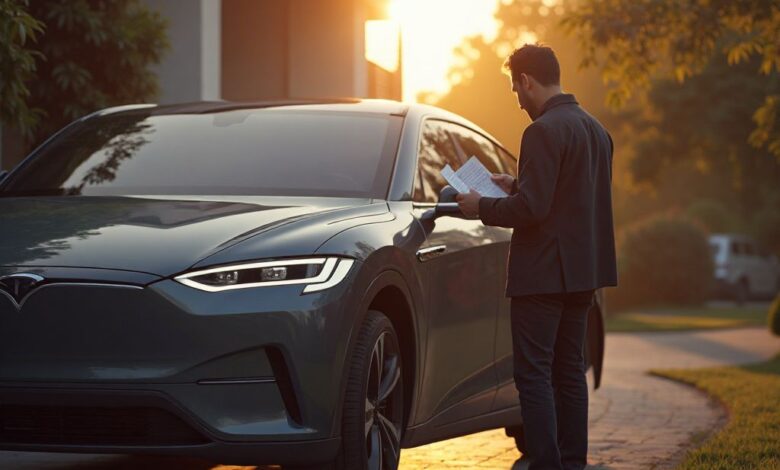
The Real Cost of Owning an Electric Vehicle Over 5 Years
Prepare to have your assumptions challenged: While the sticker price of an electric vehicle (EV) might initially raise an eyebrow, the true financial picture over half a decade paints a remarkably different, often more attractive, canvas. Forget the headlines screaming about expensive batteries; the real story of EV ownership is a complex tapestry of savings, incentives, and evolving costs that savvy buyers absolutely need to understand.
Why Understanding EV Costs Matters More Than Ever
The automotive landscape is electrifying at an unprecedented pace. From the bustling streets of major cities to the quiet roads of rural America, more and more drivers are considering making the switch. With ambitious targets from automakers like Ford, GM, and Volkswagen, and the continued dominance of Tesla, the question is no longer *if* you’ll consider an EV, but *when*. Yet, for many, the “real cost” remains a mystery. Is it truly cheaper to fuel an EV? How much does maintenance differ? And what about that big battery – will it need replacing? These are not just questions for enthusiasts; they are critical considerations for every car buyer navigating a market flooded with exciting new electric options, from the family-friendly Kia EV6 to the rugged Rivian R1T.
Understanding the full financial scope of EV ownership over a typical five-year period is crucial for making an informed decision. It’s about looking beyond the showroom shine and delving into the day-to-day realities that impact your wallet. As an automotive journalist with a decade of dissecting vehicle economics, I’m here to pull back the curtain and reveal the true financial journey of owning an electric vehicle.
Unpacking the Five-Year Financial Journey of an EV
Let’s break down the various cost components that contribute to the total cost of ownership (TCO) for an electric vehicle over a typical five-year period. We’ll compare them against traditional gasoline-powered cars where relevant, giving you a comprehensive view.
1. Initial Purchase Price & Incentives
It’s no secret that the upfront cost of an EV can be higher than a comparable internal combustion engine (ICE) vehicle. A Tesla Model 3, for example, typically starts higher than a Toyota Camry. However, this is where incentives play a pivotal role. The federal tax credit, currently up to $7,500 for eligible vehicles and buyers, can significantly reduce the effective purchase price. State and local incentives can add even more, ranging from additional rebates (some states offer $2,000-$5,000) to free charging station installation credits, or even perks like HOV lane access. For instance, a Chevrolet Bolt EV or a Hyundai Kona Electric, already more affordable, can become exceptionally competitive after incentives. Even premium models like the BMW i4 or Audi Q4 e-tron can see their effective price tag shrink considerably. It’s vital to research what’s available in your specific area and for the specific model you’re eyeing, as eligibility can change.
2. Charging Costs: Fueling the Future
This is arguably where EVs shine brightest in terms of savings. Over five years, the difference in “fuel” costs can be staggering.
- Home Charging: The vast majority of EV charging happens at home, typically overnight. The cost per kilowatt-hour (kWh) varies by region, but it’s almost always cheaper than gasoline on a per-mile basis. With an average electricity rate of $0.15/kWh and an EV efficiency of 3 miles/kWh (e.g., a Tesla Model Y or Ford Mustang Mach-E), driving 12,000 miles a year would cost around $600 annually. Compare that to a gasoline car getting 30 MPG at $3.50/gallon, which would cost $1,400 annually for the same mileage. Over five years, that’s a potential saving of $4,000. Don’t forget the initial cost of installing a Level 2 home charger, which can range from $500 to $2,000, but is a one-time expense often offset by local incentives.
- Public Charging: While more expensive than home charging, public Level 2 and especially DC Fast Charging (found at networks like Electrify America, EVgo, ChargePoint, or Tesla Superchargers) are still often cheaper than gasoline, particularly if you utilize subscription plans or off-peak rates. However, relying heavily on public fast charging can negate some savings. A Porsche Taycan or Lucid Air owner might frequent fast chargers more often for convenience, but for most daily drivers, public charging is supplemental.
3. Maintenance & Repairs: Simplicity is Key
This is another major area of savings for EV owners. Electric vehicles have significantly fewer moving parts than ICE cars. There’s no engine oil to change, no spark plugs, no fuel filters, no complex exhaust systems, and no transmission fluid. This translates to vastly reduced routine maintenance costs. Regenerative braking, where the electric motor slows the car and recharges the battery, means brake pads and rotors last much longer – often well beyond five years. While tire wear can be slightly higher due to the instant torque and heavier battery packs (relevant for a Rivian R1S or even a Volkswagen ID.4), overall, scheduled maintenance is dramatically cheaper. Most EV manufacturers offer comprehensive battery warranties, typically 8 years/100,000 miles, making a costly battery replacement within five years highly unlikely.
4. Insurance Costs: A Mixed Bag
Insurance for EVs can be a bit of a mixed bag. On one hand, the higher initial purchase price and the specialized components (like the battery pack) can lead to higher repair costs if an accident occurs, pushing premiums up. On the other hand, some insurers offer discounts for EVs, recognizing their safety features or environmental benefits. Models like the Hyundai IONIQ 5 or Kia EV6 might have different insurance profiles than a high-performance Tesla Model S or Audi e-tron GT. Expect insurance costs to be potentially 10-25% higher than a comparable ICE vehicle, but this varies widely by model, driver, and location.
5. Depreciation: An Evolving Landscape
Historically, EVs were perceived to depreciate faster than ICE vehicles, partly due to concerns about battery longevity and rapid technological advancements. However, this trend is shifting dramatically. High demand, improving battery technology, and rising gasoline prices have made used EVs highly desirable. Brands like Tesla often hold their value exceptionally well. Models like the Ford F-150 Lightning are also showing strong resale. While a five-year depreciation curve will still see a significant drop from the initial purchase price, the gap between EVs and ICE vehicles is narrowing, and in some cases, EVs are performing better, especially for well-maintained vehicles with good battery health.
6. Road Tax & Registration Fees
As more EVs hit the road, some states are implementing higher registration fees or specific EV taxes to offset lost revenue from gasoline taxes. This is a minor but growing cost to consider, although many states still offer incentives or no additional fees. Always check your local Department of Motor Vehicles for current regulations.
Expert Analysis: Insider Insights You Won’t Find Everywhere
- The Hidden Cost of the Electrical Panel: While a Level 2 home charger installation is often cited, many first-time EV buyers overlook the potential need for an electrical panel upgrade. Older homes, especially, might not have the capacity to handle the additional load of a 240V charger, adding an unexpected $2,000-$5,000 to the initial setup cost. This isn’t common for every EV buyer, but it’s a crucial consideration for those with older infrastructure.
- Beyond the Miles: The Value of Time: We often focus on monetary costs, but the value of time is immense. Imagine never having to stop at a gas station again. The convenience of “fueling” at home overnight, waking up to a full “tank” every morning, saves countless hours over five years. For busy professionals or parents, this intangible benefit of a Lucid Air or a Volkswagen ID.4 can be priceless.
- The Software-Defined Vehicle Advantage: Modern EVs from brands like Tesla, Rivian, and even Chevrolet are increasingly software-defined. Over-the-air (OTA) updates can enhance performance, add new features, and even improve range or charging efficiency over time, effectively improving your vehicle without a trip to the service center. This extends the usable life and perceived value of the vehicle in ways ICE cars simply cannot match.
- The Evolving Public Charging Ecosystem: Don’t just look at today’s public charging costs. The infrastructure is rapidly expanding, with more competition and diverse pricing models emerging. We’re seeing more subscription plans, loyalty programs, and even free charging incentives from workplaces or retailers. This dynamic landscape means your public charging costs five years from now could be significantly different (and potentially lower) than they are today.
- The “Green Premium” is Shrinking: For years, owning an EV carried a “green premium” – you paid more for the environmental benefit. As technology matures and economies of scale kick in, this premium is rapidly shrinking. The Ford F-150 Lightning, for instance, offers compelling utility and performance alongside its electric powertrain, making it a competitive choice not just as an EV, but as a truck, period. The days of sacrificing practicality or performance for an EV are largely behind us.
Pros and Cons of EV Ownership Over 5 Years
Pros:
- Significant Fuel Savings: Dramatically lower “fuel” costs compared to gasoline, especially with home charging.
- Reduced Maintenance: Fewer moving parts mean less routine service and fewer expensive repairs.
- Government Incentives: Federal, state, and local rebates can substantially lower the effective purchase price.
- Environmental Benefits: Zero tailpipe emissions contribute to cleaner air and a reduced carbon footprint.
- Superior Driving Experience: Instant torque, quiet operation, and smooth acceleration (e.g., Porsche Taycan, Tesla Model 3).
- Convenience of Home Charging: “Fuel up” overnight at home, eliminating gas station stops.
- Potential for HOV Lane Access: In some areas, EVs get preferential treatment on congested roads.
Cons:
- Higher Initial Purchase Price: EVs often have a higher sticker price before incentives.
- Charging Infrastructure Concerns: While improving, public charging availability and reliability can still be a challenge in some regions.
- Range Anxiety: For some, the fear of running out of charge on long trips persists, though ranges are constantly increasing (e.g., Lucid Air offers over 500 miles).
- Longer “Refueling” Times: DC Fast Charging is quicker, but still takes longer than filling a gas tank.
- Potential for Higher Insurance Premiums: Due to higher repair costs for specialized components.
- Home Charging Installation Cost: Upfront expense for a Level 2 charger and potential electrical upgrades.
- Battery Degradation (Minor): While warrantied, batteries do degrade slightly over time, impacting range, though often negligible within 5 years.
Final Verdict: The Electrifying Reality of Savings
After a thorough examination, the real cost of owning an electric vehicle over five years is often surprisingly favorable, especially when you factor in all the variables. While the upfront investment might be higher, the cumulative savings from drastically reduced “fuel” costs, minimal maintenance, and significant government incentives create a compelling financial argument. For many, an EV will prove to be the more economical choice in the long run, not to mention the benefits of a superior driving experience and a cleaner conscience.
Recommendation: For first-time buyers and experienced car owners alike, now is an excellent time to seriously consider an EV. Do your homework on available incentives, assess your daily driving needs, and investigate home charging options. Don’t let the sticker price deter you; delve into the total cost of ownership. The future of driving is electric, and it might just be the smartest financial move you make in your automotive journey.
Call to Action: Visit your local dealerships, test drive a few models – perhaps a practical Hyundai IONIQ 5, a luxurious Mercedes-Benz EQE, or a powerful Tesla Model Y – and calculate your potential savings. The numbers might just surprise you. The road ahead is electric, efficient, and increasingly affordable. Are you ready to join the charge?