

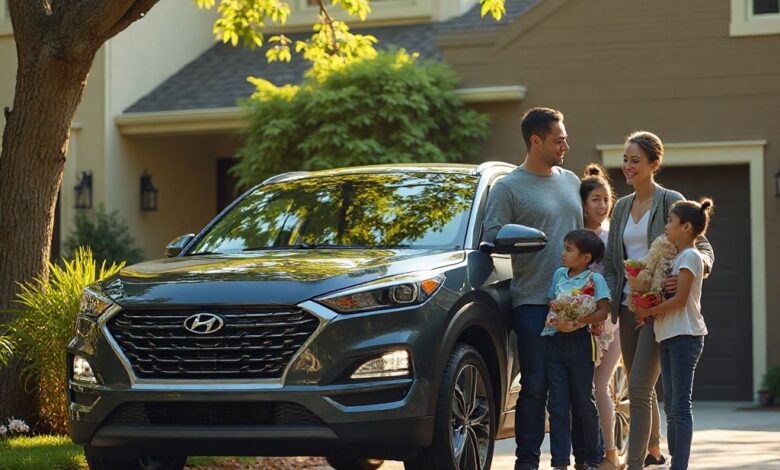
Hyundai Tucson PHEV Review: A Practical Hybrid for Real Family Life
The era of the compromised hybrid is officially over. No longer do you have to choose between genuine eco-credibility and real-world practicality, especially when it comes to the demands of modern family life. For years, the automotive industry promised a bridge to an electric future, and for many, that bridge felt more like a wobbly rope ladder. But with the advent of sophisticated Plug-in Hybrid Electric Vehicles (PHEVs) like the Hyundai Tucson PHEV, that bridge has become a sturdy, multi-lane highway, offering the best of both worlds without the usual caveats. This isn’t just another eco-friendly option; it’s a genuinely compelling, spacious, and stylish family SUV that just happens to be incredibly efficient.
Background: Why PHEVs Matter More Than Ever
In today’s rapidly evolving automotive landscape, the PHEV occupies a crucial sweet spot. For many families, a pure electric vehicle (EV) like a Tesla Model Y or a Ford Mustang Mach-E, while alluring, still presents challenges such as charging infrastructure anxiety, higher upfront costs, or simply the need for extreme long-distance flexibility without planning. This is where PHEVs shine. They offer the ability to run on pure electricity for most daily commutes, drastically reducing fuel consumption and emissions, while still providing the peace of mind of a gasoline engine for longer journeys or when charging isn’t convenient. The Hyundai Tucson PHEV epitomizes this pragmatic approach, offering a seamless transition for those who want to embrace electrification without fully committing to the EV lifestyle just yet.
Hyundai, a brand that has aggressively pushed the boundaries of design, technology, and electrification, has positioned the Tucson PHEV as a direct challenge to established players. It caters directly to the modern family’s need for versatility, safety, and smart spending, all wrapped in a package that refuses to blend into the background. It’s a testament to Hyundai’s commitment to delivering advanced solutions that truly fit into real people’s lives.
Main Content: A Deep Dive into the Tucson PHEV
Design: A Statement on Wheels
Let’s be blunt: the Hyundai Tucson PHEV doesn’t just look good; it looks utterly distinctive. Hyundai’s “Parametric Dynamics” design language is on full display here, making the Tucson stand out in a sea of conservatively styled compact SUVs. The most striking feature is undoubtedly the integration of the daytime running lights (DRLs) into the grille, which appear as an extension of the parametric jewel pattern when off, only to dramatically illuminate when the car is switched on. It’s a bold, almost futuristic touch that still manages to feel sophisticated and not overly aggressive.
The sharp, angular lines continue along the body, creating a sense of movement even when stationary. The muscular fender flares and a chiseled rear end, complete with full-width taillights and hidden rear wiper, reinforce its premium aspirations. Even the charging port, subtly integrated into the rear fender, feels thoughtfully placed. In a segment where rivals like the Toyota RAV4 Prime and Kia Sportage PHEV (its platform sibling) opt for more conventional aesthetics, the Tucson PHEV makes an undeniable statement. This isn’t just a car; it’s a conversation starter.
Performance: Power, Efficiency, and Poise
Underneath that striking exterior lies a powertrain designed for both spirited driving and exceptional efficiency. The Tucson PHEV combines a 1.6-liter turbocharged four-cylinder engine with a powerful electric motor, delivering a robust 261 horsepower and 258 lb-ft of torque. This combination provides brisk acceleration, allowing the Tucson PHEV to merge onto highways with confidence or pass slower traffic without breaking a sweat.
But the real star of the show is its electric-only capability. With an EPA-estimated electric range of 33 miles, many drivers will find they can complete their daily commutes, school runs, or errands entirely on electricity. This translates to significant fuel savings and a quieter, smoother driving experience for a substantial portion of your driving. When the battery depletes, the Tucson seamlessly transitions into a highly efficient hybrid, still delivering an impressive 35 MPG combined. The standard HTRAC all-wheel-drive system ensures confident traction in various weather conditions, a crucial feature for many families.
Charging is straightforward. Using a Level 2 (240V) charger, the 13.8 kWh battery can be fully replenished in just under two hours. Even with a standard 120V household outlet (Level 1), you can fully charge overnight, making it incredibly convenient for most owners without needing to install specialized equipment.
Interior: A Sanctuary of Modernity and Comfort
Step inside the Tucson PHEV, and you’re greeted by an interior that mirrors the exterior’s modern aesthetic while prioritizing comfort and functionality. The cabin feels surprisingly premium for its segment, featuring quality materials and thoughtful design touches. The dual-screen layout, comprising a fully digital instrument cluster and a standard 10.25-inch infotainment touchscreen, dominates the dashboard, offering a clean, uncluttered look.
Space is abundant. Both front and rear passengers enjoy generous legroom and headroom, easily accommodating adults or growing children, even with bulky car seats. The panoramic sunroof, available on higher trims, floods the cabin with natural light, enhancing the airy feel. Cargo capacity is also impressive for a PHEV, with 31.9 cubic feet behind the rear seats and up to 66.3 cubic feet with the seats folded down – only a minor reduction compared to its non-PHEV counterpart, making it highly practical for family adventures or grocery runs.
The seats are supportive and comfortable, perfect for long drives, and the cabin remains remarkably quiet, even at highway speeds, thanks to good sound insulation. Hyundai has truly created a serene environment that makes every journey a pleasure.
Technology: Intuitive and Integrated
Hyundai has packed the Tucson PHEV with a suite of cutting-edge technology designed to enhance convenience, connectivity, and most importantly, safety. The 10.25-inch infotainment system, while requiring a wired connection for Apple CarPlay and Android Auto, is intuitive to use with crisp graphics and quick response times. Built-in navigation is standard on higher trims, and the system supports over-the-air updates.
The star of the tech show, however, is the comprehensive Hyundai SmartSense suite of advanced driver-assistance systems (ADAS). This includes adaptive cruise control with stop-and-go, lane-keeping assist, blind-spot monitoring, rear cross-traffic alert, automatic emergency braking with pedestrian and cyclist detection, and Highway Driving Assist. These features work seamlessly to reduce driver fatigue and significantly enhance safety, providing an extra layer of peace of mind for families.
Other notable features include a digital key (allowing your smartphone to act as the car key), remote smart parking assist, and a surround-view monitor, making parking in tight spots a breeze. Hyundai has clearly prioritized technology that genuinely improves the driving and ownership experience.
Value for Money: The Hyundai Edge
Hyundai has built its reputation on offering exceptional value, and the Tucson PHEV is no exception. While it commands a premium over the standard hybrid model, the added electric range, increased power, and potential for federal or state tax credits (check local eligibility) often make it a smart financial choice in the long run. Hyundai’s industry-leading warranty—a 5-year/60,000-mile limited warranty and a 10-year/100,000-mile powertrain and hybrid/EV component warranty—further sweetens the deal, providing unparalleled peace of mind and significantly reducing long-term ownership anxieties.
When you consider the distinctive design, robust performance, premium interior, and cutting-edge technology, the Tucson PHEV presents a highly compelling package that often undercuts or matches similarly equipped rivals like the Ford Escape PHEV, all while offering a more comprehensive warranty.
Verdict (within Main Content)
The Hyundai Tucson PHEV isn’t just a strong contender in the compact SUV segment; it’s a standout. It offers a sophisticated, practical, and efficient solution for families looking to embrace electrification without compromise. It’s a vehicle that truly understands and delivers on the needs of real family life.
Expert Analysis: Insider Insights You Won’t Find Everywhere
As someone who lives and breathes the automotive world, I’ve spent countless hours evaluating vehicles, understanding market trends, and speaking with engineers and product planners. Here are a few insights into why the Tucson PHEV truly hits differently:
-
The “Sweet Spot” of Electrification is Real: Many in the industry debate whether PHEVs are a stepping stone or a destination. For the vast majority of families today, the Tucson PHEV represents a *destination*. It offers the tangible benefits of electric driving (silent, torque-rich acceleration, zero tailpipe emissions on short trips) without the range anxiety or charging infrastructure headaches that still plague pure EVs for some. This isn’t just a stop-gap technology; it’s a highly practical, long-term solution for diverse driving needs.
-
Hyundai’s Design Language as a Strategic Differentiator: While some brands play it safe with evolutionary designs, Hyundai has taken a calculated risk with its “Parametric Dynamics” – and it’s paying off. The Tucson’s bold, almost polarizing looks aren’t just for show; they create a powerful, unforgettable brand identity that cuts through the noise. In a crowded SUV segment, standing out is half the battle, and the Tucson wins it handily, drawing buyers who are tired of generic designs.
- <


