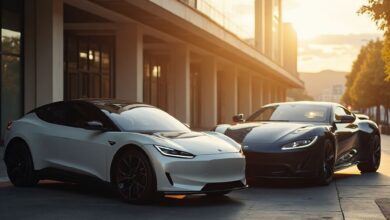
Audi E-Tron vs. Tesla: The Battle for Luxury EV Dominance
For years, Tesla reigned supreme as the undisputed king of the luxury electric vehicle market, a disruptive force that rewrote the rulebook. But here’s a surprising truth: the automotive landscape has shifted dramatically. While Tesla still commands significant market share, the notion that it’s the only game in town for premium EVs is now firmly outdated. Today, legacy luxury automakers like Audi have not just entered the fray; they’re launching a full-scale assault, leveraging decades of craftsmanship and engineering prowess to challenge Tesla’s long-held throne.
Why This Battle Matters to You
The luxury EV segment is no longer a niche curiosity; it’s a rapidly expanding battleground where innovation, design, and brand prestige collide. For car buyers and enthusiasts, this fierce competition is a godsend. It means more choice, better technology, and increasingly refined products as manufacturers push the boundaries to outperform each other. Whether you’re a first-time EV curious buyer or an experienced car owner looking to make the leap to electric, understanding how established players like Audi are stacking up against the pioneers like Tesla is crucial. This isn’t just about horsepower or range; it’s about the very definition of luxury in the electric age, and which brand best delivers on that promise for the discerning consumer.
The Contenders: Audi’s E-Tron Lineup vs. Tesla’s Portfolio
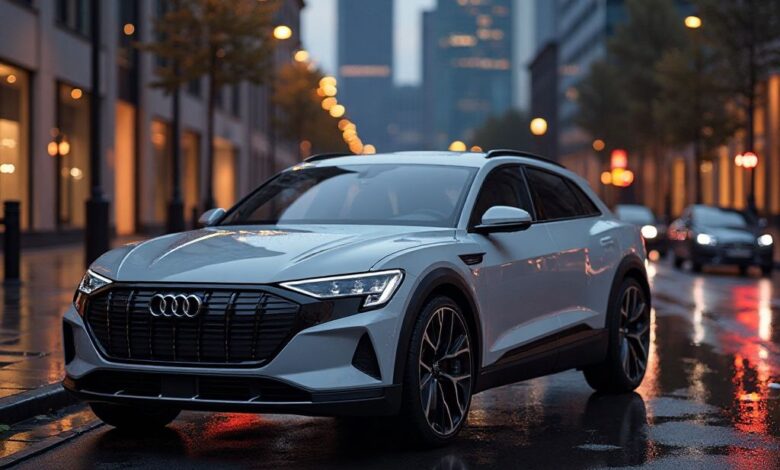
Audi’s E-Tron family has grown significantly since the original e-tron SUV debuted in 2019. Today, it encompasses a diverse range of vehicles designed to tackle different segments of the luxury market, primarily targeting Tesla’s most popular models. The key players from Audi include the Q8 e-tron (formerly the e-tron SUV, a direct competitor to the Tesla Model X and Model Y), the sleek and performance-oriented e-tron GT (a rival to the Tesla Model S and, to some extent, the Model 3 Performance), and the more accessible Q4 e-tron (a strong contender against the Model Y and Model 3).
Tesla, of course, boasts its well-established lineup: the Model S sedan, Model X SUV, Model 3 sedan, and Model Y SUV. These vehicles have set benchmarks for performance, technology, and range, but they now face formidable adversaries from Ingolstadt.
Design and Aesthetics: A Clash of Philosophies
Audi’s approach to EV design largely mirrors its successful ICE (internal combustion engine) strategy: evolutionary, sophisticated, and unmistakably premium. The Q8 e-tron, for instance, retains the familiar, muscular SUV silhouette that Audi buyers love, subtly integrating EV cues like the closed grille and aerodynamic wheels. The e-tron GT, on the other hand, is a masterpiece of design – low-slung, wide-hipped, and incredibly striking, a true grand tourer that signals its electric heart with elegant aggression. Audi’s interiors are a testament to traditional luxury, featuring high-quality materials, meticulous craftsmanship, and an emphasis on tactile buttons alongside digital displays.
Tesla, conversely, champions a minimalist, futuristic aesthetic. Its exteriors are sleek and aerodynamic, often prioritizing efficiency and a clean, uncluttered look. Inside, Tesla’s cabins are dominated by expansive central touchscreens, with physical buttons largely absent. This design choice aims for a spartan, high-tech feel that some find revolutionary, while others miss the traditional luxury touches and ergonomics.
Performance and Driving Dynamics: German Precision vs. Silicon Valley Punch
When it comes to performance, both brands deliver exhilarating experiences, but with distinct personalities. Tesla’s reputation was built on blistering acceleration, and models like the Model S Plaid continue to push the boundaries of what’s possible for a production car. The Model 3 Performance and Model Y Performance also offer thrilling straight-line speed that can surprise many sports cars.
Audi’s E-Tron models, while incredibly quick, often prioritize a more refined and balanced driving experience. The e-tron GT, especially in its RS variant, is an absolute rocket, capable of 0-60 mph in under 3.0 seconds, putting it squarely in Porsche Taycan territory (with which it shares its platform). However, where Audi truly shines is in its driving dynamics. Thanks to its sophisticated suspension systems (including adaptive air suspension on many models) and quattro all-wheel drive, Audi EVs offer exceptional handling, stability, and a composed ride that feels distinctly European and luxurious. They manage to blend thrilling power with the kind of comfortable, confidence-inspiring road manners expected from a premium German sedan or SUV. Tesla’s handling has improved significantly over the years, but some still find its ride quality firmer and less isolated than its German counterparts.
Range and Charging: The EV Lifeline
Range anxiety is a diminishing concern, but it remains a critical metric. Tesla has historically led the pack here, with models like the Model S offering over 400 miles of EPA-estimated range, and the Model 3/Y consistently delivering strong numbers in the 250-330 mile range. Audi’s E-Tron lineup has made significant strides. The Q8 e-tron now boasts an EPA-estimated range of up to 300 miles, making it competitive with the Model X and Model Y. The e-tron GT offers around 249 miles, which is respectable for a performance-focused grand tourer.
Where charging is concerned, Tesla’s Supercharger network remains a significant advantage in terms of ubiquity, reliability, and ease of use (plug and charge). However, Audi is part of the broader effort to build out a robust non-Tesla charging infrastructure. Most Audi E-Tron models support incredibly fast DC charging speeds, often peaking at 150 kW or even 270 kW (for the e-tron GT), allowing for a 10-80% charge in under 30 minutes at compatible Electrify America stations. Audi often bundles charging credits with new vehicle purchases, mitigating some of the network concerns. The industry’s move towards the North American Charging Standard (NACS) adopted by Tesla will eventually level the playing field, but for now, Tesla holds an edge in convenience.
Interior, Technology, and Connectivity: The Digital Battleground
Inside an Audi E-Tron, you’re greeted by a symphony of screens and physical controls. The MMI touch response system, with its haptic feedback, feels intuitive and premium. Audi’s Virtual Cockpit provides a highly customizable digital gauge cluster, and advanced driver-assistance systems (ADAS) like adaptive cruise assist and lane-keeping are seamlessly integrated. The build quality, fit, and finish are typically Audi – impeccable, with high-grade materials like fine leather, open-pore wood, and aluminum accents.
Tesla’s interiors, as mentioned, are dominated by their large central touchscreens, controlling nearly all vehicle functions. The software is generally fast, intuitive, and frequently updated over-the-air (OTA). Tesla’s Autopilot and Full Self-Driving (FSD) Beta systems are also frequently updated, pushing the boundaries of autonomous driving, though their capabilities and safety are subjects of ongoing debate. While Tesla’s material quality has improved, some still find the overall cabin ambiance less traditionally luxurious than Audi’s, with a greater reliance on plastics and a more utilitarian feel.
Cost and Value Proposition: Premium Pricing, Different Perks
Both Audi E-Tron models and Tesla vehicles reside firmly in the luxury price bracket. Tesla has historically adjusted its pricing more dynamically, sometimes leading to fluctuations in resale value, though their strong brand appeal often maintains demand. Audi’s pricing is more stable, reflecting its traditional luxury positioning. When comparing base prices, they are often quite similar for comparable segments. However, Audi typically offers more standard features in its base trims, while Tesla often prices many desirable features (like enhanced Autopilot or FSD) as significant add-ons.
The “value” proposition also extends to ownership experience. Audi benefits from a vast dealer network, offering traditional service experiences, loaner cars, and personalized attention. Tesla, with its direct-to-consumer model, relies on service centers and mobile service, which can be convenient but sometimes lead to longer wait times depending on location.
Expert Analysis: Beyond the Spec Sheet
-
The “Legacy Luxury” Factor vs. Tech Disruptor Appeal:
Audi understands what traditional luxury buyers expect: impeccable build quality, a refined driving experience, and a strong dealer support network. They aren’t trying to reinvent the wheel, but electrify it with a familiar, premium wrapper. Tesla, on the other hand, appeals to those who prioritize cutting-edge technology, minimalist design, and the “cool factor” of being an early adopter. The choice often boils down to whether you prefer evolution or revolution in your luxury vehicle.
-
The Unsung Hero: Dealer Network and Service:
While often overlooked in EV discussions, Audi’s established global dealer network is a significant advantage. For many luxury car owners, the peace of mind that comes with readily available service, expert technicians, and a comfortable waiting lounge (or loaner car) is invaluable. Tesla’s direct-to-consumer model and sometimes strained service infrastructure can be a hurdle for some, particularly those accustomed to white-glove treatment.
-
Platform Strategy: Dedicated vs. Adapted:
Audi, like many legacy automakers, initially adapted existing platforms for some of its EVs (e.g., the original e-tron SUV). However, newer models like the e-tron GT (on the PPE platform shared with Porsche) and future Q6 e-tron are built on dedicated EV architectures, allowing for optimized packaging and performance. Tesla, from its inception, has built its vehicles on ground-up EV platforms. This fundamental difference can impact everything from interior space utilization to driving dynamics, though Audi is rapidly catching up with its new dedicated platforms.
-
The Shifting Definition of “Luxury”:
For decades, luxury was defined by engine size, leather quality, and brand heritage. In the EV era, “luxury” is evolving to include seamless connectivity, autonomous driving capabilities, sustainable materials, and an effortless ownership experience. Both Audi and Tesla are contributing to this redefinition, but from different angles. Audi emphasizes craftsmanship and comfort, while Tesla champions digital integration and future-forward features.
-
Charging Infrastructure: The Unseen Battleground:
While Tesla’s Supercharger network is a huge draw, the rapid expansion of third-party networks like Electrify America, EVgo, and ChargePoint, combined with Audi’s high-speed charging capabilities, is evening the playing field. The impending adoption of NACS by more automakers, including Audi’s parent company VW Group, will further erode Tesla’s charging advantage, making the choice of charging infrastructure less of a differentiator over time.
Brand Comparisons and Mentions
The luxury EV market is far more crowded than it was even five years ago. Besides Tesla, Audi is competing fiercely with the BMW iX and i5, Mercedes-Benz’s EQ lineup (EQE, EQS), and the performance-oriented Porsche Taycan (a close cousin to the e-tron GT). New entrants like Lucid Motors are pushing the boundaries of range and ultra-luxury, while Rivian offers a compelling adventure-oriented EV alternative. Even mainstream brands like Hyundai and Kia are offering incredibly competitive premium EVs (IONIQ 5, EV6) that challenge the lower end of the luxury segment. This vibrant ecosystem means that no single brand can rest on its laurels.
Pros and Cons
Audi E-Tron Lineup
- Pros:
- Exceptional build quality and premium interior materials.
- Refined, comfortable, and composed driving dynamics.
- Familiar luxury brand experience with established dealer network.
- Sophisticated infotainment system (MMI) with haptic feedback.
- High-speed DC charging capabilities.
- Classic, understated luxury aesthetic.
- Cons:
- Generally lower EPA range figures compared to some Tesla models.
- Public charging network can be less seamless than Tesla’s Supercharger.
- Not as aggressively “futuristic” in design as Tesla, which some buyers prefer.
- Often heavier vehicles, impacting efficiency slightly.
Tesla Lineup
- Pros:
- Industry-leading range figures on many models.
- Unparalleled Supercharger network for convenience.
- Blistering acceleration and performance.
- Cutting-edge technology and frequent over-the-air updates.
- Minimalist, tech-forward interior design.
- Strong brand identity as an EV pioneer.
- Cons:
- Interior material quality and fit/finish can be inconsistent.
- Ride comfort and handling can be less refined than traditional luxury rivals.
- Reliance on central touchscreen for almost all functions can be distracting.
- Service experience can be less consistent due to direct-to-consumer model.
- Pricing and feature changes can be dynamic.
Final Verdict: The Future is Electrified Luxury, Your Way
The battle between Audi’s E-Tron lineup and Tesla in the luxury EV market isn’t about one brand definitively winning; it’s about offering distinct visions of what luxury electrification means. Tesla continues to be the innovator, pushing boundaries with software and performance. However, Audi has proven itself a formidable challenger, bringing decades of luxury car-making expertise, superior craftsmanship, and a refined driving experience to the electric table. For the buyer who values traditional luxury, exquisite interiors, and a composed ride combined with cutting-edge EV technology, an Audi E-Tron model like the Q8 e-tron or e-tron GT presents an incredibly compelling argument.
Ultimately, the choice comes down to personal preference. Do you lean towards the established, tactile luxury and driving refinement of Audi, or the minimalist, tech-forward, and often raw performance of a Tesla? Both