

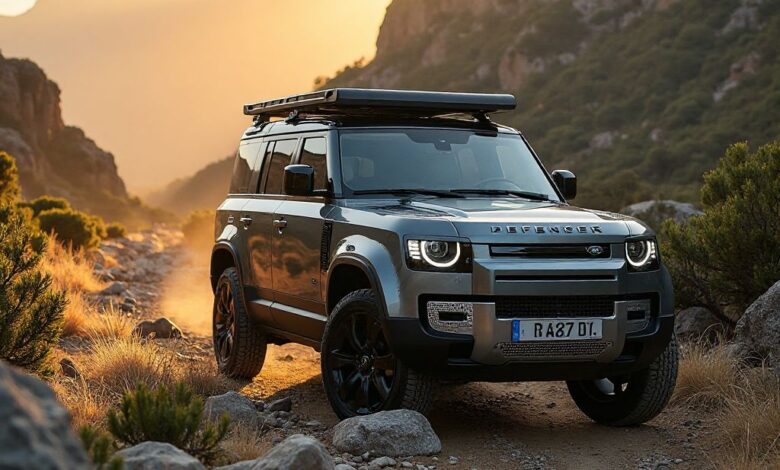
Land Rover Defender PHEV Review: Off-Road Legend Goes Electrified
The Land Rover Defender, a name etched into the very bedrock of off-road motoring history, a vehicle synonymous with unyielding capability and expeditionary spirit, has done the unthinkable: it’s plugged in. For decades, the Defender represented the pinnacle of mechanical resilience, a no-nonsense workhorse designed to conquer the most formidable terrains without a second thought for fuel economy or emissions. Now, with the introduction of the P400e Plug-in Hybrid Electric Vehicle (PHEV) variant, this icon steps boldly into the electrified future, promising to deliver its legendary prowess with a surprising whisper and a significantly lighter carbon footprint. But can a vehicle so deeply rooted in rugged, mechanical heritage truly embrace electrification without losing its soul? We spent considerable time behind the wheel to find out.
Why the Defender PHEV Matters Now More Than Ever
In an automotive landscape rapidly accelerating towards electrification, the Defender P400e isn’t just another powertrain option; it’s a critical statement. For discerning car buyers and enthusiasts today, the conversation around SUVs has shifted dramatically. It’s no longer just about brute force or luxurious comfort; it’s about intelligent sustainability, urban usability, and future-proofing. Traditionalists might balk at the idea of an electric motor assisting their beloved off-roader, but the reality is that tightening global emissions regulations and a growing consumer demand for eco-conscious luxury vehicles make PHEV technology a necessity, not just a novelty.
For Land Rover, the P400e allows the Defender to remain competitive in major markets, offering a compelling blend of its traditional go-anywhere ability with the benefits of lower running costs, reduced emissions, and access to urban low-emission zones. It bridges a crucial gap for those not yet ready for a full battery electric vehicle (BEV) like the Rivian R1S, but who recognize the undeniable advantages of electric propulsion for daily commutes and silent trail exploration. This Defender is a testament to Land Rover’s commitment to evolving its core identity while respecting its formidable legacy.
Detailed Review: Marrying Heritage with the Future
Design: Subtle Evolution, Undeniable Presence
From the outside, the Defender P400e maintains the instantly recognizable, robust, and purposeful aesthetic that defines the new-generation Defender. It’s a design that deftly blends modern minimalism with nods to its storied past. The silhouette is boxy yet refined, purposeful yet premium. Only keen observers will spot the subtle differences signifying its electrified heart: a discreet “P400e” badge on the tailgate and, most notably, the charging port neatly integrated into the left-hand side of the vehicle, just behind the front wheel arch. This integration is seamless, avoiding any awkward protrusions that might detract from its rugged appeal. The choice of wheel designs, from sturdy steel to elegant alloys, further allows owners to tailor its look, whether it’s destined for the urban jungle or the literal one.
Step inside, and the cabin continues the theme of rugged luxury. The materials are robust yet tactile, designed to withstand the rigors of adventure while providing a comfortable, premium environment. Exposed structural elements, durable rubber flooring, and grab handles blend seamlessly with high-quality leather and modern finishes. The P400e doesn’t make any significant departures from the standard Defender interior, which is a good thing, as it’s already a triumph of functional design. The layout is intuitive, with excellent visibility and a commanding driving position that instills confidence.
Performance: Electric Torque Meets Off-Road Prowess
Under the hood, or rather, beneath the floor and bonnet, lies the heart of the P400e: a sophisticated powertrain combining a 2.0-liter four-cylinder Ingenium turbocharged petrol engine with a powerful 105 kW electric motor. Together, they deliver a formidable 404 horsepower and 472 lb-ft of torque, channeled through an eight-speed automatic transmission. This translates to an impressive 0-60 mph sprint in just 5.6 seconds – a figure that feels genuinely startling for a vehicle of this size and capability. The acceleration is smooth, linear, and remarkably quiet, especially in electric-only mode.
But the real magic happens off-road. The instant torque delivery from the electric motor is a game-changer for low-speed crawling and technical maneuvers. It provides precise, immediate power without the lag often associated with internal combustion engines, enhancing control on challenging ascents or descents. Imagine navigating a rocky trail in near silence, the only sounds being the crunch of gravel under tire and the gentle hum of the electric motor. This “stealth mode” capability not only makes for a more serene off-road experience but also minimizes disturbance to wildlife, offering a unique perspective for nature enthusiasts.
The Defender’s legendary Terrain Response 2 system is fully integrated, adapting the hybrid powertrain’s output to suit various conditions. Wading depth remains an impressive 900mm, and ground clearance is excellent, demonstrating that electrification has not compromised its core capabilities. On the road, the P400e is remarkably refined. The ride is composed, soaking up imperfections with aplomb, and the handling, while not sports-car precise (nor should it be), is confident and predictable for a large SUV. The transition between electric and petrol power is seamless, often imperceptible, a testament to Land Rover’s engineering prowess.
The 19.2 kWh battery pack provides an official WLTP electric-only range of up to 31 miles (though real-world figures will vary based on driving style and conditions). This range is more than sufficient for most daily commutes or quick trips to the store, allowing owners to experience the Defender in pure EV mode, drastically reducing fuel consumption and local emissions. Charging takes approximately 2.5 hours using a 7kW home wall box or can be topped up to 80% in around 30 minutes using a 50kW DC fast charger, making it practical for urban living.
Interior: A Sanctuary of Practical Luxury
The Defender’s interior is a masterclass in ergonomic design and thoughtful practicality. The driver-focused cockpit provides easy access to all controls, and the Pivi Pro infotainment system, with its crisp 10-inch touchscreen, is a joy to use. It’s intuitive, responsive, and supports Apple CarPlay and Android Auto seamlessly. For the P400e, specific menus display energy flow, charging status, and allow for scheduling charging times, adding a layer of convenience for the electrified owner.
Comfort is paramount, with supportive seats that offer excellent adjustability for long journeys. Cabin quietness, particularly in EV mode, is outstanding, contributing to a relaxed atmosphere. Practicality is also a strong suit, with ample cargo space (though slightly reduced compared to non-PHEV models due to battery placement) and clever storage solutions throughout the cabin. Rear passenger room is generous, ensuring that even a full complement of adventurers will travel in comfort.
Technology: Smart Features for Modern Adventurers
Beyond the Pivi Pro system, the Defender P400e is packed with advanced technology designed to enhance both safety and convenience. Driver-assistance features like adaptive cruise control, lane-keeping assist, and blind-spot monitoring provide peace of mind on the highway. For off-roading, the 360-degree camera system, including Land Rover’s innovative ClearSight Ground View (which effectively makes the bonnet transparent), is invaluable for navigating tight spots and avoiding obstacles. The Wade Sensing feature, which uses ultrasonic sensors to measure water depth, further reinforces its off-road credentials.
PHEV-specific technologies include the ability to pre-condition the cabin while charging, ensuring a comfortable temperature before you even step inside, and the ability to manage charging via a smartphone app. These thoughtful additions underscore the Defender P400e’s dual personality as both a rugged explorer and a sophisticated, connected daily driver.
Value for Money: A Premium Proposition
The Defender P400e commands a premium over its conventionally powered counterparts, as is typical for PHEV variants in the luxury segment. However, its value proposition extends beyond the initial sticker price. The potential for significant fuel savings, especially for owners who can regularly charge and utilize its electric range for daily commutes, can offset some of the additional cost over time. Furthermore, in certain regions, government incentives for PHEVs can make the purchase more attractive.
While a higher entry point than a Ford Bronco, the Defender P400e positions itself against more luxurious and technologically advanced rivals. Its strong resale value, a hallmark of the Land Rover brand, also adds to its long-term financial appeal. Considering the blend of unparalleled off-road capability, luxurious comfort, and cutting-edge electrification, the P400e offers a unique and compelling package for the discerning buyer.
Expert Analysis: Beyond the Brochure
-
The Strategic Imperative of Electrification:
This isn’t just about offering a “green” option. The Defender P400e is a crucial strategic move for Jaguar Land Rover (JLR) to meet stringent global emissions targets and avoid hefty fines. It allows them to maintain the brand’s adventurous identity while demonstrating compliance and future-proofing their most iconic model line for markets increasingly favoring electrified vehicles. This P400e is a bridge to the fully electric Defender we will undoubtedly see in the latter half of the decade, much like the BMW X5 xDrive45e paved the way for BMW’s broader EV push.
-
The Unsung Hero: Electric Torque Off-Road:
While many focus on the fuel savings, the most profound impact of the electric motor in the Defender is its enhancement of off-road capability. The instant, silent, and precise torque delivery at zero RPM is superior to any internal combustion engine for low-speed technical maneuvers. It allows for finer control over throttle inputs, reducing wheel spin and enhancing traction in a way that’s genuinely transformative. This is an advantage that even dedicated off-roaders like the Toyota 4Runner can’t match without electrification.
-
Weight Management as a Masterclass:
Integrating a substantial battery pack and electric motor into an already robust vehicle without compromising its dynamic capabilities is a significant engineering challenge. The P400e, despite the added weight of its hybrid components, maintains its composure both on and off-road. Land Rover has clearly invested heavily in chassis tuning and suspension calibration to ensure the additional mass doesn’t negatively impact handling, ride quality, or, crucially, its legendary articulation and ground clearance.
-
The “Stealth Mode” Advantage:
Beyond the environmental benefits, the ability to operate in pure EV mode for up to 30 miles offers a unique selling proposition for wildlife photographers, conservationists, or simply those seeking a more immersive outdoor experience. Navigating through a national park or a remote trail with only the sounds of nature surrounding you, rather than an engine drone, adds an entirely new dimension to the adventure. It’s a subtle but powerful differentiator that no traditional ICE off-roader, not even a G-Wagen, can replicate.
-
A Bridge to the Future, Not a Compromise:
The Defender P400e isn’t just a stop-gap measure; it’s a statement about the future of rugged luxury. It proves that electrification can enhance, rather than diminish, the core attributes of an off-road legend. It positions the Defender as a viable alternative to emerging fully electric off-roaders like the Rivian R1S, offering similar eco-credentials for daily driving while providing the proven reliability and extensive dealer network of a legacy brand. It caters to a segment of buyers who appreciate electrification but aren’t quite ready to commit to a full EV, or require the flexibility of a petrol engine for extended range in remote areas where charging infrastructure is nonexistent.
Brand Comparisons and Mentions
The Land Rover Defender P400e occupies a rather unique niche in the market. While it competes tangentially with traditional luxury SUVs like the Mercedes-Benz G-Class (which doesn’t yet offer a PHEV) and the Porsche Cayenne E-Hybrid (which is more road-biased), its true rivals are few. The BMW X5 xDrive45e offers similar PHEV technology in a luxury SUV package, but lacks the Defender’s extreme off-road prowess. On the pure EV side, the Rivian R1S is arguably its closest philosophical competitor, offering electric off-road capability, but as a full EV, it comes with different range and charging considerations. For those looking at more traditional off-roaders like the Ford Bronco or Toyota Land Cruiser, the Defender P400e represents a significant leap


