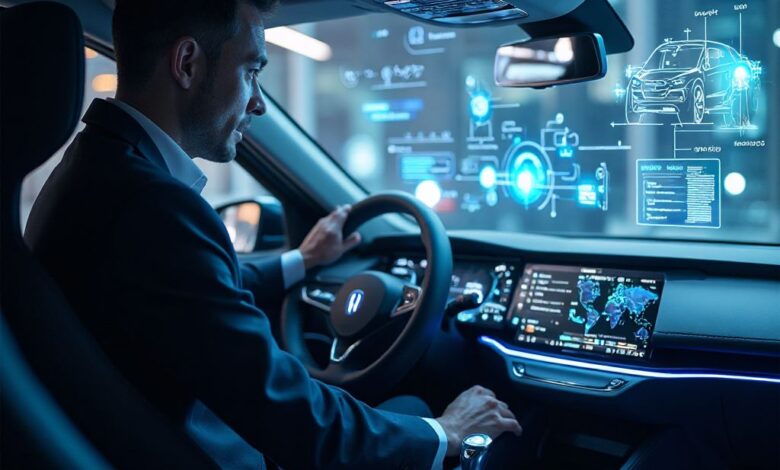
Why Car Manufacturers Are Investing Billions in Software Development
Imagine buying a new smartphone today and knowing it would never receive another update, never get new features, and never have its bugs fixed. Unthinkable, right? Yet, for decades, that was largely the reality for car owners. But no more. The automotive industry is undergoing a seismic shift, and at its epicenter is software. In a move that would have seemed ludicrous just a decade ago, traditional automotive giants are now pouring billions – yes, billions – into software development, transforming themselves from hardware-first manufacturers into tech companies on wheels. This isn’t just about bigger touchscreens; it’s about re-engineering the very DNA of the automobile, making it smarter, safer, and infinitely more adaptable.
The Digital Revolution: Why Your Next Car is a Supercomputer
For the modern car buyer and enthusiast, this monumental investment isn’t just a corporate balance sheet item; it’s a fundamental change that directly impacts everything from safety and performance to daily convenience and long-term value. The car is no longer merely a collection of mechanical parts; it’s a sophisticated, connected device, a supercomputer on wheels, constantly processing data, learning, and evolving. This shift means that the software stack within a vehicle is becoming as critical, if not more so, than the engine displacement or suspension setup. From the moment you unlock the doors to how it navigates traffic, charges its battery, or even prevents an accident, software is the invisible architect of your driving experience. Understanding this transformation is key to appreciating the cars of today and anticipating the vehicles of tomorrow.
The Pillars of Software Investment: Reshaping the Automotive Landscape
The Brains Behind the Drive: Autonomous & Assisted Driving Systems
Perhaps no area showcases the monumental software investment more clearly than the relentless pursuit of autonomous driving and advanced driver-assistance systems (ADAS). Brands like Tesla, with its much-debated Full Self-Driving (FSD) beta, have pushed the envelope, demonstrating the potential for cars to navigate complex scenarios with minimal human intervention. But they’re not alone. Mercedes-Benz has achieved Level 3 conditional autonomy with its Drive Pilot system in certain markets, allowing drivers to legally take their hands off the wheel in specific traffic conditions. General Motors’ Super Cruise and Ford’s BlueCruise offer sophisticated Level 2 hands-free driving on mapped highways, greatly reducing driver fatigue. This isn’t just about cameras and radar; it’s about incredibly complex software algorithms that process vast amounts of sensor data in real-time, fuse it together, predict traffic flow, make instantaneous decisions, and control the vehicle with precision. Developing this software requires armies of engineers, petabytes of data, and AI models that learn and adapt, all demanding colossal financial commitment.
Your Digital Living Room: Infotainment & User Experience
Step inside any modern car, and the first thing that grabs your attention is likely the expansive digital displays. But it’s not the size that matters; it’s the intelligence behind them. The infotainment system is no longer just a radio; it’s the central nervous system of the car’s user experience. BMW’s iDrive 8 and 9, Mercedes-Benz’s MBUX, and Audi’s MMI systems are powerful, intuitive interfaces that integrate navigation, media, climate control, and vehicle settings seamlessly. Hyundai and Kia have made remarkable strides with their connected car platforms, offering a wealth of features and user-friendly interfaces, often powered by robust underlying software. The investment here is in creating fluid, responsive, and personalized digital cockpits that rival your latest smartphone or tablet. This includes sophisticated voice recognition (like “Hey Mercedes”), seamless smartphone integration, and the ability to customize everything from ambient lighting to driver profiles, all powered by millions of lines of code designed for an intuitive, engaging experience.
The Car That Gets Better with Age: Over-the-Air Updates
The concept of a car improving *after* you buy it was once a futuristic fantasy, but thanks to significant software investment, it’s now a reality. Tesla pioneered the widespread use of Over-the-Air (OTA) updates, delivering everything from performance boosts and range improvements to new features and critical bug fixes directly to the vehicle. Now, legacy automakers are catching up rapidly. Ford’s “Power-Up” updates for vehicles like the F-150 Lightning and Mustang Mach-E, and GM’s Ultifi platform, are designed to keep cars fresh, secure, and feature-rich throughout their lifespan. This capability fundamentally changes the ownership experience, allowing manufacturers to respond to customer feedback, enhance safety features, and even unlock new revenue streams by offering subscription-based functionalities down the line. It transforms the car from a static product into an evolving digital platform, adding immense long-term value for both the owner and the manufacturer.
Powering the Future: Software at the Heart of EVs
Electric Vehicles (EVs) are inherently software-defined machines. Their efficiency, range, charging speed, and performance are intricately linked to sophisticated software. Brands like Lucid Motors, with its hyper-efficient Air sedan, and Porsche, with the Taycan, rely on cutting-edge software for their Battery Management Systems (BMS), which optimize energy flow, monitor cell health, and ensure safety. Motor control units, regenerative braking systems, and thermal management for batteries and powertrains are all orchestrated by complex algorithms. The difference between a good EV and a great EV often comes down to the intelligence of its software – how effectively it manages power, predicts range, and integrates with charging infrastructure. This software is crucial for unlocking maximum performance, extending battery life, and ensuring a seamless, worry-free electric driving experience, demanding continuous, heavy investment.
Beyond the Drive: Connectivity, Services, and New Revenue Streams
As cars become more connected, they also become platforms for new services and revenue opportunities – a significant driver for software investment. Imagine your car communicating with traffic lights to optimize flow (V2X communication), predicting maintenance needs before they become problems, or offering personalized concierge services. Companies like Volkswagen are exploring subscription models for features like heated seats or enhanced performance, while others are leveraging data analytics to improve vehicle design and offer customized insurance. This brave new world of connected services requires robust, secure, and scalable software infrastructure, both in the vehicle and in the cloud. It’s about creating an ecosystem around the car that extends its utility and value beyond mere transportation, generating recurring income that can offset the massive R&D costs.
Expert Analysis: Unpacking the Digital Transformation
From my decade covering this industry, here are a few insider insights that truly highlight the depth of this software revolution:
- The Talent War is Real: Legacy automakers aren’t just buying software; they’re trying to become software companies. This means competing directly with Silicon Valley for top engineering talent, often requiring a complete cultural overhaul within traditionally hardware-focused organizations. It’s a massive challenge, and the ones who succeed will be those who can attract and retain the best coders and AI specialists.
- Integration is the Ultimate Hurdle: Tesla had the advantage of building its software stack from scratch. Established brands like Toyota or Chevrolet, with decades of legacy hardware and multiple suppliers, face an incredibly complex task of integrating disparate systems into a cohesive, software-defined architecture. It’s like rebuilding an airplane mid-flight.
- Cybersecurity is Paramount: As cars become more connected, they also become potential targets for cyberattacks. The billions invested aren’t just for features; a significant portion goes into building impenetrable digital fortresses around the vehicle’s systems to protect user data and ensure vehicle integrity. This is a constant, evolving battle.
- The “App Store” Model for Cars: Expect cars to increasingly adopt an app store-like model, allowing third-party developers to create applications for your vehicle. This will open up a world of customization and functionality we can barely imagine today, but it requires a robust, secure, and open-source-friendly software platform from the manufacturer.
- Hardware Agnostic Software: The ultimate goal for many is to develop software that is largely hardware agnostic, meaning it can run on different chipsets and vehicle architectures. This allows for faster innovation cycles and greater flexibility, moving the industry closer to a true software-defined vehicle where hardware updates are less frequent than software ones.
The Digital Drive: Pros and Cons
Pros:
- Enhanced Safety: Advanced ADAS and autonomous features significantly reduce accidents and improve driver awareness.
- Improved Performance & Efficiency: Software optimizes powertrain, battery management, and energy recuperation, especially crucial for EVs.
- Personalization & Customization: Tailor your driving experience, infotainment, and vehicle settings to your preferences.
- Over-the-Air (OTA) Updates: Your car can gain new features, performance boosts, and bug fixes post-purchase, improving over time.
- Convenience & Connectivity: Seamless smartphone integration, advanced navigation, and connected services simplify daily life.
- Predictive Maintenance: Software can monitor vehicle health and alert you to potential issues before they become major problems.
Cons:
- Increased Complexity & Potential for Bugs: More software means more potential for glitches, requiring robust testing and frequent updates.
- Cybersecurity Risks: Connected cars are vulnerable to hacking, necessitating constant vigilance and investment in security.
- Subscription Fatigue: The move towards subscription-based features could lead to ongoing costs for owners.
- Privacy Concerns: Cars collect vast amounts of data, raising questions about how it’s used and protected.
- Cost to Consumer: The immense R&D costs for software development will inevitably be reflected in vehicle prices.
- Obsolescence: While updates extend life, rapidly evolving software could make older systems feel dated faster.
Final Verdict: The Software-Defined Future is Here
The automotive industry’s multi-billion dollar bet on software isn’t just a trend; it’s the future. From the pioneering efforts of Tesla to the aggressive pivot by established players like Ford, BMW, Mercedes, and Volkswagen, every major brand recognizes that the battle for market share and customer loyalty will increasingly be fought on the digital front. For car buyers, this means a future where your vehicle is not just a mode of transport but an evolving, intelligent companion that adapts to your needs, enhances your safety, and offers a level of customization and convenience previously unimaginable. While there are challenges – particularly around cybersecurity, data privacy, and the potential for subscription overload – the benefits of a software-defined vehicle far outweigh the drawbacks.
My recommendation for both first-time buyers and seasoned car owners is clear: when evaluating your next vehicle, look beyond horsepower and torque. Dive deep into the technology stack. Ask about OTA update capabilities, the fluidity of the infotainment system, the sophistication of the ADAS, and the manufacturer’s long-term software strategy. A car’s software will increasingly define its value, functionality, and longevity. The automotive landscape is transforming at warp speed, and understanding the power of software is your key to navigating it successfully. Embrace the digital revolution – your next car is smarter than you think!