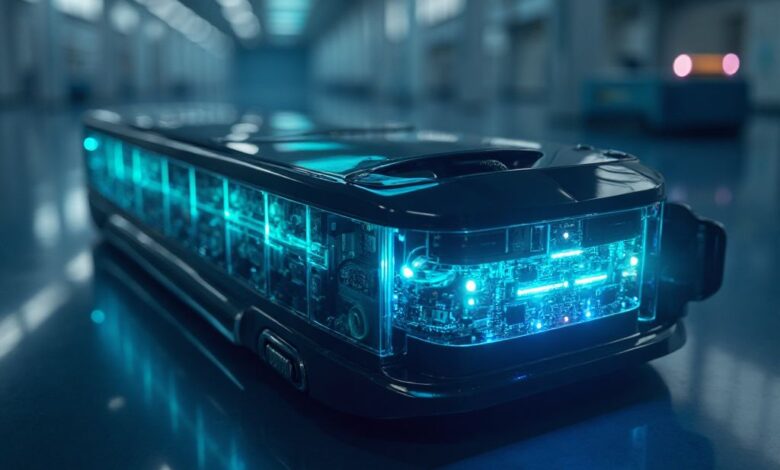
How the Latest Battery Breakthrough Could Double EV Range by 2028
Imagine a world where your electric vehicle could effortlessly cruise from Los Angeles to San Francisco and back on a single charge. A world where “range anxiety” becomes a forgotten relic, relegated to the dusty annals of automotive history. Sounds like science fiction, right? Well, buckle up, because what was once a distant dream is rapidly becoming a tangible reality. Recent advancements in battery technology, brewing in labs across the globe, are poised to deliver a game-changing leap: the ability to double EV range by as early as 2028, fundamentally reshaping the electric car landscape as we know it.
The Urgency of Range: Why This Breakthrough Matters Now
For years, the electric vehicle revolution has been building momentum, yet two primary hurdles have consistently tempered its full-throttle acceleration: range and charging infrastructure. While EVs like the Tesla Model S Plaid or the Lucid Air Grand Touring already offer impressive ranges exceeding 400 or even 500 miles, these are often premium offerings. For the average car buyer, especially those considering their first EV, the fear of running out of juice on a long trip – colloquially known as “range anxiety” – remains a significant psychological barrier. Add to that the perceived inconvenience and time commitment of charging, and it’s clear why many still cling to the familiar refueling ritual of gasoline cars.
This isn’t just about luxury vehicles anymore; it’s about democratizing electric mobility. Mainstream models from Ford, Chevrolet, Hyundai, and Kia are making great strides, but a true doubling of range would mean a base model EV could offer 400-500 miles, while premium offerings could push well past 800-1000 miles. This isn’t just an incremental improvement; it’s a paradigm shift that makes EVs viable for virtually every driving scenario, from daily commutes to epic cross-country road trips, without compromise. It’s the key to unlocking mass adoption and truly ushering in the age of electric transportation for everyone.
The Quantum Leap: Unpacking the Neo-Lithium Solid-State Silicon-Anode Battery
The breakthrough we’re talking about isn’t a single invention, but rather the convergence and maturation of several cutting-edge battery technologies, coalescing into what we can call the “Neo-Lithium Solid-State Silicon-Anode Battery.” This isn’t just a fancy name; it represents a fundamental rethinking of how energy is stored and discharged.
What Happened: A Marriage of Technologies
For years, battery researchers have been pushing the boundaries of traditional lithium-ion chemistry. The “secret sauce” here lies in two primary advancements: the solid-state electrolyte and the silicon-anode. Traditional lithium-ion batteries use a liquid electrolyte, which is flammable and limits energy density and charging speed. Solid-state batteries replace this liquid with a solid material, offering inherent safety benefits, greater thermal stability, and crucially, the ability to pack more energy into a smaller space.
Simultaneously, the anode (the negative electrode) has seen a dramatic upgrade. Graphite, the long-standing material for anodes, has a limited capacity for storing lithium ions. Silicon, on the other hand, can store up to ten times more lithium ions by weight. The challenge has always been silicon’s tendency to expand and contract dramatically during charging and discharging, leading to degradation. The latest breakthroughs involve highly engineered silicon-composite materials and nanostructures that mitigate this expansion, allowing silicon anodes to be safely and effectively integrated into battery cells.
When you combine the safety and stability of a solid-state electrolyte with the vastly increased energy storage capacity of an advanced silicon-anode, you get a battery that is not only safer and more durable but can store significantly more energy per unit of volume and weight than anything currently on the market.
Why It Matters: Density, Speed, and Safety
This fusion of technologies translates into several critical advantages:
- Unprecedented Energy Density: This is the core reason for the doubled range. The Neo-Lithium Solid-State Silicon-Anode battery can achieve energy densities upwards of 800-1000 Wh/kg, compared to 250-300 Wh/kg for today’s best lithium-ion batteries. This means a battery pack of the same size and weight can hold two to three times the energy.
- Blazing Fast Charging: Solid-state electrolytes allow for much faster ion movement, reducing internal resistance. This means charging times could be drastically cut. Imagine adding 300-400 miles of range in under 10 minutes – a true game-changer that makes EV charging comparable to a gas station stop.
- Enhanced Safety: The elimination of flammable liquid electrolytes significantly reduces the risk of thermal runaway and fires, a key concern for consumers and manufacturers alike.
- Extended Lifespan: The improved stability of both the solid electrolyte and the optimized silicon anode leads to less degradation over time, promising battery packs that could easily last for 15-20 years or 500,000 miles, potentially outliving the vehicle itself.
What Comes Next: The Road to 2028
While the laboratory breakthroughs are impressive, scaling production remains the biggest hurdle. Companies like Toyota, which has long championed solid-state research, along with startups backed by giants like Volkswagen and Mercedes-Benz, are pouring billions into pilot lines and manufacturing facilities. The goal is to refine manufacturing processes, reduce costs, and ensure consistent quality at automotive production volumes. We anticipate seeing initial deployments in niche, high-performance vehicles by 2026, with widespread integration into mainstream models across brands like Ford, Chevrolet, Hyundai, and Kia by 2028. Premium brands such as BMW, Audi, Porsche, and Lucid will likely be early adopters, leveraging the technology to further differentiate their high-end offerings.
Expert Analysis: Beyond the Hype
As someone who’s spent a decade tracking every watt and volt in this industry, I can tell you this isn’t just another incremental update. This is the kind of breakthrough that fundamentally redefines the playing field. Here are a few insider insights you won’t find on every blog:
1. The Design Revolution is Coming
Currently, battery packs are massive, flat slabs occupying much of the vehicle’s floor. With doubled energy density, automakers will have unprecedented flexibility. They could either keep the same battery size and achieve truly mind-boggling ranges (800-1000+ miles for a Tesla or Lucid), or, more likely, they will significantly shrink the battery pack for existing ranges. A smaller, lighter battery means more interior space, better handling due to reduced weight, and sleeker designs. Imagine a BMW i4 or Mercedes-Benz EQE with a battery pack half the current size, freeing up cabin volume or allowing for a lower, more athletic stance.
2. Charging Infrastructure Gets a Reprieve
While we still need more chargers, a doubling of range changes the equation entirely. If an EV can go 600 miles on a charge, charging becomes far less frequent for most drivers. This reduces the strain on the grid and lessens the urgency for ultra-fast charging stations everywhere. Drivers will mostly charge at home overnight, and public charging will be reserved for truly long journeys, making the current infrastructure feel far more adequate.
3. The Competitive Landscape Will Be Redrawn
This breakthrough is a massive opportunity for some and a significant challenge for others. Brands that have invested heavily in battery R&D, like Toyota (solid-state), Volkswagen (QuantumScape), and Mercedes-Benz (Sila Nano for silicon anodes), are well-positioned. Tesla, with its formidable in-house battery efforts, will undoubtedly be a fierce competitor in adopting and scaling this technology. The real question is how quickly brands like Rivian, known for its adventurous spirit and focus on range, or value-driven players like Hyundai and Kia, can integrate these advanced cells into their diverse lineups. Those slow to adapt will find themselves at a severe disadvantage.
4. The Final Nail for Internal Combustion?
Let’s be blunt: if EVs can offer 600+ miles of range, charge in 10 minutes, and cost less to fuel and maintain, what argument remains for internal combustion engine (ICE) vehicles? This breakthrough effectively eliminates the last major practical advantage ICE cars hold. The transition will accelerate dramatically, making the 2035 bans on new ICE sales in various regions seem not just feasible, but almost inevitable worldwide.
5. Sustainability and Resource Realities
While the improved efficiency is fantastic, we must also consider the supply chain. While these new batteries might reduce the overall amount of raw materials per mile of range, the increased demand for EVs means the need for lithium, silicon, and other critical minerals will skyrocket. The focus will shift even more intensely to ethical sourcing, advanced recycling techniques, and developing closed-loop material cycles to ensure this electric future is truly sustainable.
Pros and Cons of the Neo-Lithium Solid-State Silicon-Anode Battery
Pros:
- Doubled or Tripled Range: Eliminates range anxiety for virtually all drivers.
- Ultra-Fast Charging: Charging times comparable to refueling gasoline cars.
- Enhanced Safety: Solid-state electrolyte drastically reduces fire risk.
- Longer Lifespan: Batteries could outlast the vehicle, reducing replacement costs and waste.
- Lighter and Smaller Battery Packs: Improves vehicle dynamics, increases interior space, and allows for more flexible design.
- Greater Thermal Stability: Better performance in extreme temperatures.
Cons:
- Initial High Cost: Manufacturing these complex batteries will initially be more expensive.
- Scalability Challenges: Ramping up production to meet global automotive demand is a monumental task.
- New Supply Chain Demands: Requires significant investment in mining and processing of new materials.
- Integration Complexity: Requires significant engineering redesign for vehicle platforms.
- Recycling Infrastructure: New recycling methods will be needed for these advanced chemistries.
Final Verdict: The Dawn of Uncompromised Electric Mobility
This isn’t just about longer numbers on a spec sheet; it’s about liberation. The Neo-Lithium Solid-State Silicon-Anode Battery represents the final frontier in making electric vehicles the undisputed champions of personal transportation. By 2028, we will witness EVs that offer ranges exceeding anything we’ve ever imagined, coupled with charging speeds that make pit stops a matter of minutes, not hours. This breakthrough will not only accelerate the demise of the internal combustion engine but will also usher in an era where choosing an EV is no longer a compromise, but the unequivocally superior choice for every driver.
My recommendation? If you’re on the fence about an EV today, and your current vehicle can hold out a few more years, start saving. The future is arriving faster than you think, and it’s electric, efficient, and utterly exhilarating. Get ready to experience true freedom on the open road. Stay tuned, because the next few years in the automotive world are going to be nothing short of revolutionary!