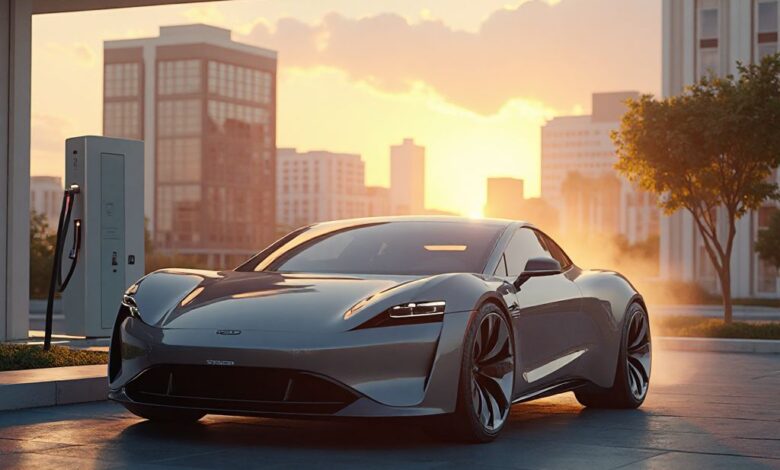
The Hydrogen Horizon: Unpacking the Latest News on Fuel Cell Vehicles and Their Future
Hold onto your steering wheels, because while the electric vehicle revolution charges ahead with gigafactories and software updates, another, often quieter, but equally profound shift is happening beneath the surface of the automotive world. Forget range anxiety and 30-minute charging stops for a moment. Imagine pulling into a station, refuelling your zero-emission vehicle in five minutes flat – just like a gasoline car – and then driving for hundreds of miles with only water vapor as a byproduct. This isn’t science fiction; it’s the promise of hydrogen fuel cell vehicles (FCEVs), and after years of being overshadowed, they’re finally making headlines that demand our attention.
Why Hydrogen Matters Now More Than Ever
For years, the narrative around zero-emission vehicles has been dominated by battery-electric vehicles (BEVs). And for good reason – the progress has been phenomenal. Yet, as we push further into decarbonizing transport, the limitations of a single-solution approach become clearer. This is precisely where hydrogen fuel cell technology steps onto center stage, offering a compelling, complementary pathway to a greener future.
For car buyers and enthusiasts today, understanding FCEVs isn’t just about curiosity; it’s about anticipating the next wave of innovation and making informed decisions in an increasingly diverse automotive landscape. As governments worldwide commit to aggressive emissions targets, and as consumers demand cleaner, more efficient transport, hydrogen provides a crucial alternative, particularly for use cases where BEVs currently face hurdles – think long-haul trucking, heavy-duty applications, and even premium passenger vehicles demanding quick turnaround and extensive range. It’s not a question of ‘if’ hydrogen will play a role, but ‘how big’ and ‘how soon’.
The Latest Buzz: What’s Driving Hydrogen Forward?
A Resurgence in OEM Commitment
While some manufacturers doubled down exclusively on BEVs, key players have steadfastly championed hydrogen, and their efforts are now bearing fruit. Toyota, a long-time advocate, continues to refine its Mirai, offering a sleek, sophisticated sedan that delivers an impressive range and quick refueling. The second-generation Mirai, with its improved design and efficiency, is a testament to Toyota’s unwavering belief in the technology.
Similarly, Hyundai is making significant strides. Its Nexo SUV is a practical, stylish FCEV that showcases the technology in a familiar form factor. Beyond passenger cars, Hyundai’s “HTWO” vision is a comprehensive strategy for hydrogen across mobility, industry, and power generation, with a strong focus on commercial vehicles like trucks and buses. They’re not just building cars; they’re building an ecosystem.
Even premium German brands are getting in on the action. BMW, for instance, has committed to a small series production of the iX5 Hydrogen, a fuel cell version of its popular X5 SUV, slated for pilot use by the end of 2023. This move signals a serious exploration of hydrogen as a viable option for larger, luxury vehicles where battery weight and charging times can be more impactful for the target demographic. Mercedes-Benz, too, is making waves with its GenH2 Truck concept, demonstrating hydrogen’s potential for heavy-duty, long-distance freight – a segment notoriously difficult to electrify with batteries alone.
Infrastructure: The “Chicken and Egg” Solution
The perennial challenge for FCEVs has been the lack of refueling infrastructure. However, significant investments are now being poured into building out hydrogen networks, particularly in regions like California, Japan, South Korea, and parts of Europe. Governments and private entities are collaborating to establish hydrogen hubs and corridors, recognizing that the vehicles cannot thrive without accessible fuel. While still sparse compared to gasoline stations or even BEV chargers, the growth rate is accelerating, especially around key logistical routes for commercial fleets.
Green Hydrogen: The Holy Grail of Sustainability
The environmental benefit of FCEVs hinges entirely on how the hydrogen is produced. “Grey” hydrogen, derived from natural gas, still produces carbon emissions. The real game-changer is “green” hydrogen, produced through electrolysis powered by renewable energy sources like solar and wind. The cost of green hydrogen production is falling rapidly, driven by advancements in electrolyzer technology and the decreasing cost of renewable energy. This shift is critical, as it ensures that the entire lifecycle of the FCEV, from fuel production to tailpipe emissions, is truly zero-carbon.
Expert Analysis: Beyond the Headlines
1. The Complementary, Not Competitive, Future
Many in the industry frame FCEVs and BEVs as rivals. This is a false dichotomy. My insider view is that they are deeply complementary. BEVs are fantastic for urban commuting, shorter trips, and overnight charging. FCEVs excel where rapid refueling, long range, and consistent performance in demanding conditions (like extreme cold or heavy loads) are paramount. This means FCEVs are likely to dominate long-haul trucking, maritime, aviation, and potentially premium, long-distance passenger vehicles, while BEVs continue to lead the mass-market passenger car segment. It’s about horses for courses, not a winner-takes-all scenario.
2. The Geopolitical Hydrogen Play
Beyond environmental benefits, hydrogen offers a powerful geopolitical advantage: energy independence. Nations reliant on imported fossil fuels can leverage domestic renewable energy to produce green hydrogen, reducing their vulnerability to global energy market fluctuations. This aspect, often overlooked by consumers, is a significant driver for government investment and strategic alliances, pushing hydrogen forward at a national and international level.
3. Cost Parity is Closer Than You Think (For Fleets)
While the upfront cost of FCEVs and hydrogen fuel can seem high for individual consumers, the total cost of ownership (TCO) for large commercial fleets is rapidly approaching parity with diesel and even BEV alternatives for certain applications. Factors like quick refueling minimizing downtime, and potential incentives for zero-emission fleets, make hydrogen an increasingly attractive proposition for businesses. The scale of fleet operations allows for dedicated refueling infrastructure and bulk purchasing of hydrogen, driving down per-unit costs.
4. The “Power-to-X” Ecosystem
Hydrogen isn’t just about cars. It’s a versatile energy carrier that can be used to decarbonize industries like steel and cement production, generate electricity, and even store excess renewable energy (power-to-gas). This broader “Power-to-X” ecosystem means that investments in hydrogen infrastructure for vehicles have spillover benefits, creating a more robust and resilient energy system. The automotive sector is often the most visible tip of a much larger hydrogen iceberg.
5. The Safety Perception Gap
A lingering concern for many is the safety of hydrogen, often linked to historical events or misconceptions. Modern FCEVs and hydrogen infrastructure are engineered with multiple layers of safety features, often exceeding those of gasoline vehicles. Hydrogen is lighter than air and disperses quickly, unlike gasoline vapors which pool. OEMs like Toyota and Hyundai have invested heavily in rigorous testing and safety protocols, making current FCEVs remarkably safe, yet public perception needs time to catch up with reality.
Pros and Cons of Hydrogen Fuel Cell Vehicles
Pros:
- Rapid Refueling: Fill up in 3-5 minutes, comparable to gasoline cars.
- Long Range: Offers ranges similar to conventional gasoline vehicles, often exceeding BEVs.
- Zero Tailpipe Emissions: Emits only water vapor, contributing to cleaner air.
- Consistent Performance: Less susceptible to range degradation in cold weather compared to BEVs.
- Lighter Weight: Fuel cell systems and hydrogen tanks are generally lighter than large battery packs for equivalent range, especially in larger vehicles.
- Energy Storage Potential: Hydrogen can store renewable energy, aiding grid stability.
Cons:
- Limited Infrastructure: Refueling stations are still scarce in most regions.
- High Initial Vehicle Cost: FCEVs typically have a higher purchase price than comparable BEVs or ICE vehicles (though decreasing).
- Cost of Hydrogen Fuel: Can be expensive and varies significantly by region.
- “Green” Hydrogen Scalability: While growing, widespread availability of truly green hydrogen is still a challenge.
- Onboard Storage Challenges: Hydrogen is stored under high pressure, requiring robust and specialized tanks.
- Public Perception: Misconceptions about safety and availability persist.
Final Verdict: The Future is Multi-Faceted
The latest news on hydrogen fuel cell vehicles paints a clear picture: this technology is not a fleeting trend, nor is it a wholesale replacement for battery-electric cars. Instead, FCEVs are emerging as a vital, complementary pillar in the grand strategy for global decarbonization. They are carving out their niche, particularly in segments where their unique advantages – rapid refueling, long range, and consistent performance – are most valuable.
For the first-time buyer, an FCEV might still be a niche choice, heavily dependent on your proximity to a refueling station. However, for experienced car owners, fleet managers, or those living in regions with developing hydrogen infrastructure, FCEVs like the Toyota Mirai or Hyundai Nexo offer a compelling, no-compromise zero-emission driving experience. The significant investments from major OEMs like Toyota, Hyundai, and BMW, coupled with global pushes for green hydrogen production, indicate a future where hydrogen plays an increasingly prominent, albeit specialized, role.
My recommendation? Keep a very close eye on hydrogen. It’s not just about what’s in your driveway today, but what will be powering our world tomorrow. Stay informed, consider the options, and be ready for a future where clean mobility comes in more than one powerful package. The automotive world is evolving at an exhilarating pace, and hydrogen is undeniably part of that thrilling journey.