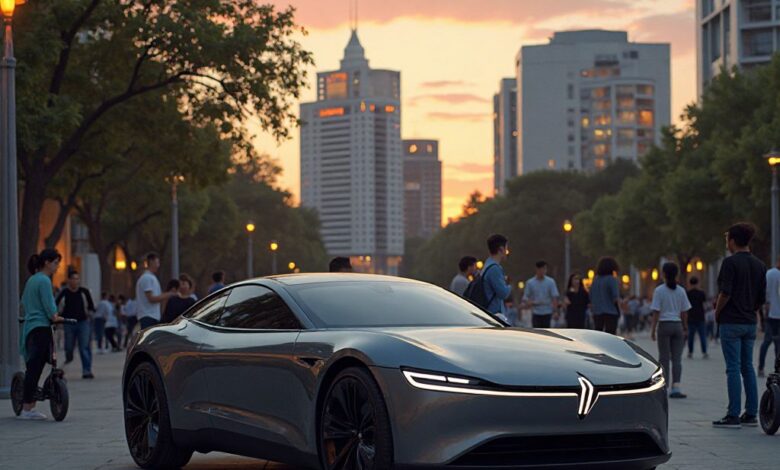
The Great Automotive Shift: How Car Brands Are Responding to Younger Buyers Who Don’t Want to Drive
Here’s a startling truth that’s sending seismic waves through the automotive industry: a significant percentage of younger buyers, particularly Gen Z and younger Millennials, simply don’t aspire to own or even drive a car in the same way previous generations did. Forget the iconic image of a teenager eagerly awaiting their driver’s license; for many, the open road holds less allure than a seamless, connected, and sustainable urban mobility experience. This isn’t just a trend; it’s a fundamental redefinition of personal transportation, and car brands are scrambling to adapt.
Why This Topic Matters: The Evolving Landscape of Mobility
The traditional narrative of car ownership as a rite of passage, a symbol of freedom and independence, is rapidly losing traction. For today’s younger demographics, the cost of vehicle ownership – from purchase price and insurance to maintenance and parking – often outweighs the perceived benefits. Urbanization has also played a massive role; dense cities offer robust public transport, ride-sharing services, and micro-mobility options like e-scooters and bikes, rendering a personal car less of a necessity and more of a burden. Environmental consciousness further fuels this shift, with many young consumers seeking sustainable alternatives to internal combustion engines and even questioning the environmental footprint of private vehicle production itself.
This isn’t just about affordability; it’s a lifestyle choice. Younger buyers prioritize experiences over possessions, flexibility over commitment, and connectivity over horsepower. They see cars less as objects of desire and more as tools for getting from A to B, with a strong preference for convenience, digital integration, and minimal hassle. For car brands, this means a complete reimagining of their product, their services, and even their core identity. Ignoring this demographic shift isn’t an option; it’s a direct path to obsolescence.
The Automotive Industry’s Multi-Pronged Response
The industry’s response to this paradigm shift is multifaceted, encompassing everything from product design and technological innovation to entirely new business models. It’s a fascinating dance between tradition and transformation.
The Rise of Mobility-as-a-Service (MaaS) and Subscription Models
Perhaps the most direct response to the declining desire for ownership is the proliferation of MaaS and subscription models. Brands are moving beyond simply selling cars to offering access to them, often through flexible, all-inclusive packages.
-
Mercedes-Benz Collection: Mercedes-Benz was an early adopter, offering a subscription service allowing members to swap between various models – from a C-Class sedan for daily commutes to a G-Wagen for a weekend adventure – all for a single monthly fee covering insurance, maintenance, and roadside assistance. While the execution has evolved and faced challenges, the underlying concept of flexible access remains potent.
-
Hyundai’s Mocean Lab: Hyundai, through its Mocean Lab initiative, is exploring various mobility solutions, including car-sharing, ride-hailing, and even last-mile delivery services in urban centers. This positions them not just as a car manufacturer, but as a holistic mobility provider.
-
Ford and General Motors: Both American giants have made significant investments in future mobility. Ford, for instance, has explored various ride-sharing and micro-mobility pilot programs, while GM’s Cruise autonomous vehicle division (though facing recent challenges) aims to provide self-driving ride-hailing services, eliminating the need for private vehicle ownership altogether for many urban dwellers.
These services appeal directly to young buyers who prefer the convenience of having a car when they need it, without the long-term commitment, depreciation worries, or maintenance headaches.
Redefining the In-Car Experience: From Driver’s Cockpit to Digital Lounge
If younger buyers aren’t primarily interested in the act of driving, then the focus shifts dramatically to the passenger experience. Interiors are transforming from driver-centric cockpits into connected, comfortable digital lounges.
-
Mercedes-Benz EQS Hyperscreen: A prime example is the stunning, pillar-to-pillar Hyperscreen in the Mercedes-Benz EQS. This massive, integrated display provides unparalleled digital real estate for infotainment, navigation, and passenger entertainment, making the journey as much about the digital experience as the physical one.
-
Tesla’s Minimalist, Software-Driven Interiors: Tesla pioneered the large central touchscreen and minimalist interior design, treating the car like a giant smartphone on wheels. This software-first approach, with frequent over-the-air (OTA) updates, resonates strongly with tech-savvy younger buyers accustomed to constantly evolving digital devices.
-
Lucid Air’s Digital Immersion: Lucid Motors, with its luxurious Air sedan, also emphasizes a sophisticated digital experience, combining high-resolution displays with intuitive controls and seamless connectivity, all wrapped in an ultra-premium, serene cabin environment designed for comfort and productivity (or relaxation).
-
Cadillac InnerSpace Concept: Concepts like the Cadillac InnerSpace envision a fully autonomous, two-passenger electric vehicle where the focus is entirely on relaxation and entertainment, with massive panoramic screens and a luxurious, reclining interior that completely removes the notion of a “driver.”
The emphasis is on connectivity, entertainment, productivity, and comfort, transforming travel time into valuable personal time, whether for work or leisure.
Autonomous Driving: The Ultimate “Don’t Want to Drive” Solution
The holy grail for those who don’t want to drive is, quite simply, a car that drives itself. Autonomous driving technology is not just about safety; it’s about fundamentally changing the utility of a vehicle.
-
Tesla’s Full Self-Driving (FSD) Beta: While controversial and still in development, Tesla’s FSD Beta pushes the boundaries of autonomous capability, aiming to eventually allow occupants to completely disengage from driving tasks.
-
GM’s Cruise and Waymo (backed by Google, partnered with Stellantis/Volvo/JLR): These companies are at the forefront of deploying fully autonomous ride-hailing services in select cities, offering a glimpse into a future where personal cars might be replaced by shared, self-driving fleets. This directly targets the “don’t want to drive, don’t want to own” segment.
-
Audi, BMW, and Mercedes-Benz: European luxury brands are heavily investing in Level 3 and Level 4 autonomous systems, allowing for hands-off driving in specific conditions (e.g., traffic jams). The goal is to provide a “chauffeur mode” that frees up the driver for other activities.
The promise of autonomous vehicles is not just convenience, but the ability to reclaim commuting time for other pursuits, aligning perfectly with the priorities of younger, time-conscious consumers.
Electrification and Sustainability: Appealing to Values
Younger buyers are often highly conscious of environmental impact. Electric Vehicles (EVs) are not just a technological shift but a moral one for many, aligning with a desire for a greener future.
-
Rivian’s Adventure Lifestyle: Rivian has successfully carved out a niche by combining electric power with an adventurous, outdoor-focused brand identity. Their R1T pickup and R1S SUV appeal to younger buyers seeking sustainable options that also enable their lifestyle pursuits, rather than just traditional utility.
-
Hyundai and Kia’s E-GMP Platform: Both brands are aggressively rolling out a diverse range of EVs built on their dedicated E-GMP platform, such as the Hyundai Ioniq 5 and Kia EV6. These vehicles emphasize striking design, cutting-edge technology, and impressive range and charging speeds, all while leveraging sustainable materials in their interiors.
-
Volkswagen ID. Family: VW’s ID. series, including the popular ID.4 and the retro-futuristic ID.Buzz, aims to democratize EVs. The ID.Buzz, in particular, with its nostalgic yet modern appeal, targets a younger, lifestyle-oriented demographic that values unique design and sustainable transport.
Brands are not just selling EVs; they are selling a commitment to sustainability, which resonates deeply with the values of younger generations.
Expert Analysis: Insider Insights You Won’t Find Everywhere
-
The Dealership Dilemma: This shift towards mobility services and online sales models poses an existential threat to the traditional dealership network. Brands are grappling with how to integrate their existing sales infrastructure into a future where fewer people buy cars outright. Expect more “experience centers” and less pressure-cooker sales floors.
-
Data is the New Oil, and Mobility is the Well: Every interaction with a subscription service, every ride in an autonomous vehicle, generates invaluable data. Brands aren’t just selling transport; they’re collecting insights into consumer behavior, preferences, and movement patterns. This data will be crucial for developing future products and personalized services, becoming a massive revenue stream in itself.
-
The Brand Identity Crisis: For decades, brands like BMW (“The Ultimate Driving Machine”) and Porsche (“There Is No Substitute”) built their identities around driving pleasure. How do you maintain that distinct brand appeal when the product is primarily a self-driving pod, or when customers are simply subscribing to “mobility” rather than a specific marque? It requires a profound pivot towards lifestyle, technology, and service excellence, rather than just dynamic performance.
-
The “Experience Economy” Reigns Supreme: Younger buyers are willing to pay for experiences, not just products. Car brands are learning from companies like Apple or Nike, focusing on creating a seamless, delightful user experience throughout the entire customer journey – from booking a ride to customizing in-car entertainment – to foster loyalty in a less ownership-driven world.
-
The Blurring Lines of Competition: Traditional rivals are no longer just other car companies. Brands are now competing with tech giants (Google’s Waymo, Apple’s rumored car project), ride-sharing services (Uber, Lyft), and even public transport providers. This forces them to innovate at an unprecedented pace and collaborate in unexpected ways.
Pros and Cons of the Shift Towards Non-Driving Mobility
Pros:
- Reduced traffic congestion in urban areas.
- Lower carbon emissions and improved air quality through electrification and optimized fleet management.
- Increased accessibility for those unable to drive (elderly, disabled, underage).
- Significant cost savings for individuals who forgo car ownership (insurance, maintenance, depreciation).
- New revenue streams and business opportunities for car manufacturers.
- Enhanced productivity or relaxation during commute times in autonomous vehicles.
- More efficient use of urban space (less parking, more green areas).
Cons:
- Potential loss of the joy and freedom associated with driving for enthusiasts.
- Privacy concerns related to data collection from mobility services.
- Job displacement in traditional automotive sectors (e.g., professional drivers, mechanics focused solely on ICE).
- Infrastructure challenges to support widespread EV charging and autonomous vehicle deployment.
- Increased reliance on technology and potential for system vulnerabilities or failures.
- The potential for a “digital divide” where advanced mobility services are not equally accessible to all socioeconomic groups.
- Maintaining brand identity and emotional connection in a service-oriented, less ownership-driven model.
Final Verdict and Call to Action
The automotive industry stands at a pivotal crossroads. The notion that “everyone wants to drive” is a relic of a bygone era, and car brands are responding with a blend of innovation, adaptation, and reinvention. From sophisticated mobility subscriptions and luxurious autonomous lounges to eco-conscious EVs and software-driven experiences, the focus is shifting from the mechanics of driving to the convenience, connectivity, and sustainability of being transported.
For first-time buyers and experienced car owners alike, this shift presents both challenges and exciting opportunities. It means more choices, more flexibility, and potentially a greener, less stressful way to get around. As consumers, our preferences will continue to shape this evolution. So, I urge you: look beyond the horsepower and torque