

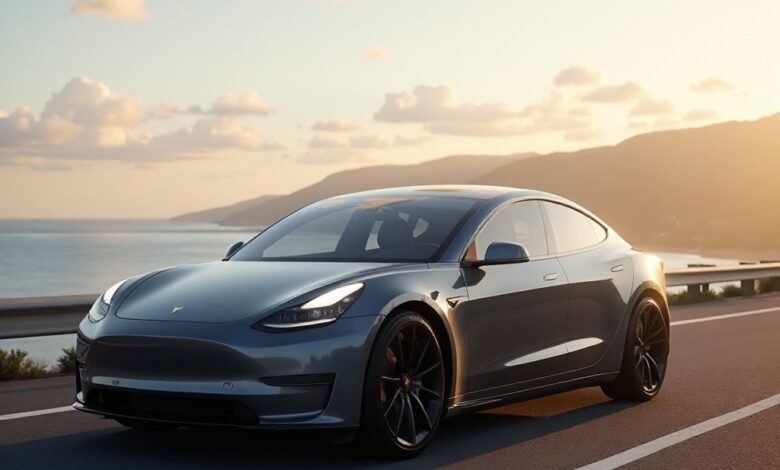
Tesla Model Y Review: Why It’s Still the World’s Best-Selling Electric Car
Introduction
In a world rapidly embracing electric vehicles, one model has quietly, yet decisively, dominated the sales charts, not just among EVs, but often challenging internal combustion engine stalwarts for the top spot globally. That car is the Tesla Model Y. While the automotive landscape is awash with new electric contenders from every major manufacturer, the Model Y consistently outsells them all, cementing its position as the undisputed king of electric vehicle sales. But in an era of rapidly evolving EV technology and increasingly sophisticated rivals, why does this crossover SUV continue to reign supreme? Let’s peel back the layers and discover the enduring appeal of Tesla’s most popular offering.
Background or Context
The automotive industry is undergoing its most profound transformation in over a century. The shift from gasoline to electric is not just about powertrain; it’s about an entirely new ecosystem of charging, software, and user experience. In this high-stakes race, the Tesla Model Y arrived in 2020, riding on the coattails of the wildly successful Model 3 sedan. It wasn’t just another electric car; it was a crossover SUV – the most popular vehicle segment in many markets – built on a proven EV platform. This strategic move, combined with Tesla’s head start in battery technology, software integration, and charging infrastructure, gave the Model Y an insurmountable lead. For car buyers and enthusiasts today, understanding the Model Y’s continued dominance is crucial. It represents a benchmark, a target for every other automaker, and a key indicator of what consumers truly value in an electric vehicle in the real world.
Main Content
Design
Exterior
The Model Y’s exterior design is unmistakably Tesla. It shares a strong resemblance to the Model 3, essentially being a taller, more voluminous version. Its silhouette is smooth, aerodynamic, and devoid of unnecessary flourishes. While some might find it a touch generic compared to the more expressive designs of a Hyundai Ioniq 5 or a Kia EV6, its clean lines and minimalist aesthetic have broad appeal. The sloping roofline, flush door handles, and integrated spoiler contribute to an impressive drag coefficient, aiding efficiency and range. It’s a design that prioritizes function and aerodynamics, resulting in a look that, while not always polarizing, is certainly distinctive and instantly recognizable as a Tesla.
Interior
Step inside the Model Y, and you’re greeted by a minimalist sanctuary dominated by a single, landscape-oriented 15-inch touchscreen display. There are virtually no physical buttons, knobs, or traditional gauges. This design choice is both a blessing and a curse, depending on your preference. For those who appreciate clean lines and digital interaction, it’s revolutionary. For others, it can feel too sparse, requiring interaction with the screen for basic functions like wiper speed or mirror adjustments. The panoramic glass roof, standard on all models, floods the cabin with natural light, enhancing the sense of spaciousness. Material quality has steadily improved over the years, though it still doesn’t quite match the plushness found in some premium European rivals like a BMW iX or a Mercedes EQE SUV.
Performance
Acceleration and Handling
Regardless of the trim, the Model Y delivers exhilarating performance, a hallmark of electric vehicles. Even the base Rear-Wheel Drive (RWD) model offers brisk acceleration, easily outperforming many gasoline-powered SUVs. The Long Range variant shaves off even more time, while the Performance model is genuinely rapid, launching from 0-60 mph in a breathtaking 3.5 seconds. The instant torque delivery is addictive, making highway merges and overtakes effortless. Handling is surprisingly agile for a crossover. The battery pack’s low placement results in a low center of gravity, contributing to stable cornering. The steering is direct and responsive, though some might find the ride quality a bit firm, especially on less-than-perfect roads, a trade-off for its sporty demeanor.
Range and Charging
Range anxiety, once a major deterrent for EV adoption, is largely a non-issue with the Model Y. The Long Range variant boasts an EPA-estimated range of around 330 miles, while the Performance model offers approximately 303 miles. Even the RWD variant provides a respectable 260 miles. These figures are competitive and often exceed what many daily drivers require. Where Tesla truly shines, however, is its Supercharger network. This proprietary charging infrastructure is vast, reliable, and incredibly user-friendly. Simply plug in, and the car handles authentication and payment. Superchargers can add hundreds of miles of range in under 30 minutes, making long-distance travel remarkably convenient. For home charging, the Model Y supports Level 2 AC charging, allowing for overnight full charges, and can also utilize standard 120V outlets for trickle charging.
Interior and Practicality
Space and Comfort
The Model Y is remarkably spacious for its exterior footprint. Both front and rear passengers enjoy ample head and legroom. The flat floor, courtesy of the EV platform, enhances comfort for the middle passenger in the rear. Cargo space is another strong suit, with a generous 30 cubic feet behind the rear seats, expanding to over 76 cubic feet with the seats folded flat. This is complemented by a sizable front trunk (frunk) and additional underfloor storage in the rear. While a seven-seat option is available, the third row is best reserved for small children on short trips, as it significantly compromises cargo space and offers minimal legroom. The seats themselves are generally comfortable, though lacking some of the adjustability and luxurious feel of high-end competitors.
Technology and Infotainment
The 15-inch central touchscreen is the command center for virtually all vehicle functions, from climate control and navigation to media and vehicle settings. Tesla’s infotainment system is renowned for its intuitive interface, crisp graphics, and rapid response times. Over-the-air (OTA) software updates regularly introduce new features, performance enhancements, and bug fixes, ensuring the car constantly improves. Standard technology includes a premium audio system, heated seats (front and rear), and a heated steering wheel. Connectivity is excellent, with built-in Wi-Fi and seamless smartphone integration via the Tesla app, which allows for remote climate control, locking/unlocking, and summoning. The Model Y is truly a computer on wheels.
Safety and Driver-Assist Systems
Safety is paramount for Tesla, and the Model Y consistently earns top marks in crash tests from organizations like NHTSA and IIHS. Its robust structure and comprehensive airbag system provide excellent occupant protection. Standard advanced driver-assist systems (ADAS) include Automatic Emergency Braking, Lane Departure Warning, and Blind Spot Monitoring. Autopilot, Tesla’s advanced cruise control and lane-keeping system, comes standard and offers impressive capabilities for highway driving. Full Self-Driving (FSD) capability, an expensive optional add-on, promises autonomous driving features that are still under development and subject to regulatory scrutiny. While FSD’s full potential is yet to be realized, Autopilot significantly reduces driver fatigue on long journeys.
Value for Money
The Model Y’s pricing strategy has fluctuated, but it generally offers a compelling package for its capabilities. While not inexpensive, its cost of ownership is often lower than comparable gasoline SUVs due to cheaper “fuel” (electricity) and reduced maintenance requirements. Tesla’s direct-to-consumer sales model simplifies the buying process, though the lack of traditional dealerships for service can be a concern for some. Resale values for Teslas have historically been strong, thanks to persistent demand and the brand’s reputation. When factoring in the performance, range, technology, and access to the Supercharger network, the Model Y presents a strong value proposition, even against newer rivals like the Ford Mustang Mach-E or the Volkswagen ID.4.
Expert Analysis
Having driven countless EVs and observed the market for a decade, here are a few insider insights into the Model Y’s sustained success:
- The “Invisible” Supercharger Advantage: While many focus on range figures, the true genius of the Model Y, and indeed all Teslas, lies in the Supercharger network’s sheer reliability and seamless integration. It’s not just about speed; it’s about the peace of mind knowing a charger will work, be available, and provide a consistent experience every single time. This trust factor is something competitors, despite their growing networks, are still struggling to replicate at scale. For many buyers, this network alone is enough to tip the scales.
- The “Software-First” Paradigm: Tesla isn’t just a car company; it’s a software company that builds cars. This vertical integration allows them to rapidly iterate, deploy over-the-air updates, and offer a user experience more akin to a smartphone than a traditional automobile. This continuous improvement model means a Tesla Model Y bought today will likely have new features and improved performance a year from now, something almost unheard of in the traditional auto industry.
- Crossover Appeal Meets EV Performance: The Model Y perfectly hit the sweet spot of consumer demand: a practical, family-friendly crossover SUV combined with the thrilling, instant torque of an EV. It demystified electric performance for the masses, proving that an electric vehicle could be both exhilarating and utilitarian, rather than just a quirky eco-car. It made EVs mainstream by putting them in the most popular form factor.
- The “Love It or Hate It” Minimalism Works: While some critics decry the Model Y’s spartan interior and reliance on the central screen, this very minimalism is a deliberate design choice that resonates with a significant segment of the population. It reduces clutter, offers a panoramic view, and presents a futuristic aesthetic that differentiates it from more traditional interiors. It’s a polarizing choice, but it’s clearly working for millions of buyers.
- The Ecosystem Lock-in: Buying a Tesla is more than just buying a car; it’s buying into an ecosystem. From the app integration and Supercharger network to the FSD beta program and future energy solutions, Tesla creates a cohesive, interconnected experience. Once users are accustomed to this level of integration and convenience, switching to another brand, even a compelling one like a Porsche Taycan or a Lucid Air (though in different segments), feels like a step backward in terms of the holistic user experience.
Brand Comparisons or Mentions
The Tesla Model Y operates in an increasingly crowded and competitive segment. Premium European rivals include the Audi Q4 e-tron, BMW iX3 (not available in all markets) or the upcoming iX1, and the Mercedes-Benz EQB. These offer more traditional luxury interiors and often a smoother ride, but typically fall short on range or charging network convenience compared to the Model Y. Mainstream competitors like the Ford Mustang Mach-E, Hyundai Ioniq 5, and Kia EV6 present compelling alternatives with distinctive designs, competitive ranges, and strong value propositions, often boasting faster charging speeds on compatible networks. The Volkswagen ID.4 offers a more budget-friendly, mass-market approach. For those seeking something larger or more rugged, the Rivian R1S plays in a different league entirely, while the Chevrolet Blazer EV is poised to be a strong domestic contender. Even newcomers like the Toyota bZ4X are attempting to capture market share, but none have yet matched the Model Y’s combination of performance, range, charging infrastructure, and brand recognition.
Pros and Cons
Pros
- Exceptional performance with instant torque and rapid acceleration.
- Class-leading electric range, especially in Long Range trim.
- Unrivaled Supercharger network for reliable and convenient fast charging.
- Spacious and practical interior with excellent cargo capacity and a large frunk.
- Cutting-edge technology with intuitive infotainment and over-the-air updates.
- Top-tier safety ratings and comprehensive standard driver-assist features.
- Strong resale value and generally lower running costs compared to ICE vehicles.
Cons
- Firm ride quality, especially on rougher roads, can compromise comfort.
- Minimalist interior design may feel sparse or lacking in traditional luxury for some.
- Heavy reliance on the central touchscreen for almost all functions can be distracting.
- Build quality, while improved, can still have minor inconsistencies.
- Full Self-Driving (FSD) package is very expensive and still in beta, not truly autonomous.
- Limited physical buttons and controls, requiring a learning curve.
Final Verdict or Conclusion
The Tesla Model Y isn’t just the world’s best-selling electric car; it’s a testament to a holistic approach to EV development that prioritizes performance, range, technology, and


