

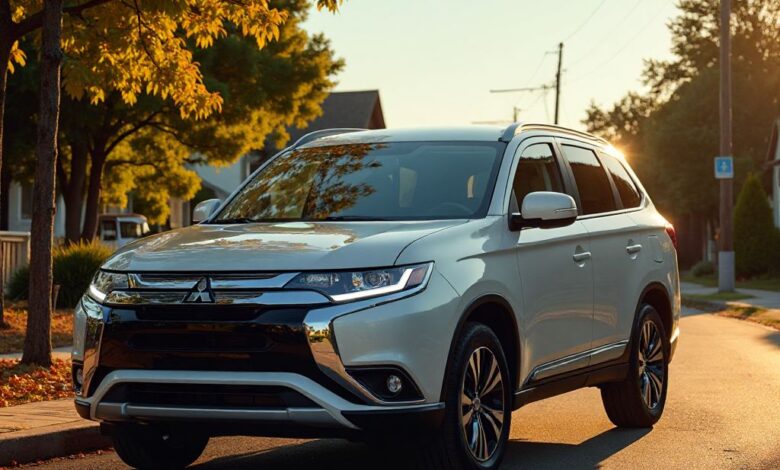
Mitsubishi Outlander PHEV Review: Budget-Friendly Hybrid That Surprises
Forget what you thought you knew about Mitsubishi. While the brand might not always dominate the headlines with flashy concepts or record-breaking performance figures, it has quietly been perfecting a formula that’s more relevant than ever in today’s automotive landscape: the practical, efficient, and surprisingly capable plug-in hybrid electric vehicle (PHEV). The Mitsubishi Outlander PHEV isn’t just a vehicle; it’s a testament to sensible innovation, proving that you don’t need to empty your wallet to embrace a greener, more efficient driving future. In a market saturated with high-priced EVs and gas-guzzling SUVs, this often-underestimated contender emerges as a compelling, budget-friendly hybrid that genuinely surprises.
Background or Context
The automotive world is at a crossroads. Soaring fuel prices, growing environmental consciousness, and the undeniable march towards electrification have made hybrid and electric vehicles more appealing than ever. Yet, the leap to a full EV can still feel daunting for many – concerns about range anxiety, charging infrastructure, and upfront costs are real. This is precisely where the Plug-in Hybrid Electric Vehicle (PHEV) steps in, offering a crucial bridge technology that combines the best of both worlds: pure electric driving for daily commutes and a gasoline engine for extended range without the need to meticulously plan charging stops. Mitsubishi, to its credit, was an early pioneer in this segment, launching the Outlander PHEV globally way back in 2013, long before many of its competitors even considered the technology. This decade of experience has allowed them to refine and perfect their offering, making the latest Outlander PHEV a mature and highly relevant option for today’s car buyers and enthusiasts.
Main Content: A Deep Dive into the Outlander PHEV
Design: Practicality Meets Modernity
From the moment you lay eyes on the latest Outlander PHEV, it’s clear Mitsubishi has made significant strides in its design language. Gone are the days of understated, somewhat anonymous styling. The current generation proudly wears Mitsubishi’s “Dynamic Shield” front fascia, a bold and distinctive face characterized by its prominent grille, sharp LED daytime running lights, and stacked headlight design. It projects an assertive, modern SUV presence that holds its own against more expensive rivals. The strong character lines flow seamlessly along the sides, culminating in a sculpted rear end with distinctive T-shaped taillights. It’s a design that balances robust SUV aesthetics with a touch of elegance, without being overly aggressive or polarizing. While it may not turn heads like a Lamborghini Urus, it certainly commands respect and looks far more premium than its price tag suggests. This isn’t just about curb appeal; the design also speaks to its practical intent, with a substantial road presence that inspires confidence.
Performance: The Smart Hybrid Punch
Underneath that confident exterior lies the heart of the Outlander PHEV’s appeal: a sophisticated plug-in hybrid powertrain. The system typically combines a naturally aspirated 2.4-liter MIVEC four-cylinder engine with two electric motors – one on the front axle and one on the rear. This innovative setup not only provides robust acceleration but also forms the backbone of Mitsubishi’s legendary Super All-Wheel Control (S-AWC) system, offering seamless power delivery and exceptional traction. Total system output often hovers around 248 horsepower and 332 lb-ft of torque, providing ample grunt for daily driving and highway passing. Acceleration isn’t neck-snapping like a Tesla Model Y, but it’s smooth, responsive, and more than adequate for a family SUV. What truly sets it apart is the impressive all-electric range, often exceeding 38 miles on a full charge, allowing most commuters to handle their daily errands and work commutes purely on electricity. Once the battery is depleted, the vehicle seamlessly transitions to hybrid mode, delivering excellent combined fuel economy (typically around 26 MPG combined once the battery is empty, and a stellar 64 MPGe in hybrid mode). The ride quality is composed and comfortable, soaking up road imperfections with ease, making it an ideal companion for long journeys or rough city streets.
Interior: Space, Comfort, and Thoughtful Touches
Step inside the Outlander PHEV, and you’re greeted by an interior that prioritizes practicality, comfort, and intelligent design. While it might not boast the opulent materials of a BMW X5, the cabin feels well-built and thoughtfully laid out. Soft-touch materials are generously applied to key areas, and the fit and finish are commendable. The seating is comfortable, offering good support for longer drives, and the second row provides ample legroom and headroom for adult passengers. Crucially, the Outlander PHEV offers a third row of seating, a rarity in the PHEV segment, making it a genuine 7-seater family hauler. While the third row is best suited for children or short trips for adults, its presence significantly boosts the vehicle’s versatility. Cargo space is generous, even with the third row folded down, and the flat load floor makes it easy to haul bulkier items. Mitsubishi has clearly focused on creating a functional and comfortable environment that stands up to the rigors of family life.
Technology: Smart, Not Overwhelming
Mitsubishi’s approach to technology in the Outlander PHEV is refreshingly pragmatic. You’ll find a clear, intuitive infotainment system, typically featuring a 9-inch touchscreen display with standard Apple CarPlay and Android Auto integration. The interface is responsive, and physical buttons for essential functions like climate control are retained, a welcome feature for those who prefer tactile controls over an all-touch interface. The digital instrument cluster provides customizable information, keeping the driver informed without distraction. Safety is also a strong suit, with a comprehensive suite of advanced driver-assistance systems (ADAS) available, including adaptive cruise control, lane-keeping assist, blind-spot monitoring, rear cross-traffic alert, and forward collision mitigation. These systems work seamlessly to enhance driver confidence and safety, earning the Outlander PHEV strong safety ratings from organizations like the IIHS. While it might not have the bleeding-edge AI of a Lucid Air, the technology present is robust, user-friendly, and genuinely useful for everyday driving.
Value for Money: The Undeniable Selling Point
This is where the Mitsubishi Outlander PHEV truly shines. Starting at a price point that often undercuts its direct PHEV rivals like the Toyota RAV4 Prime and Hyundai Santa Fe PHEV, it represents incredible value. Factor in potential federal tax credits and state incentives for plug-in hybrids, and the effective cost of ownership becomes even more attractive. Mitsubishi also backs its vehicles with one of the industry’s best warranties: a 10-year/100,000-mile powertrain and PHEV component warranty, along with a 5-year/60,000-mile limited warranty. This peace of mind is invaluable for first-time hybrid buyers. The combination of its electric range, the flexibility of a gasoline engine, 7-seat capacity, and comprehensive warranty makes the Outlander PHEV an exceptionally smart financial choice for families and environmentally conscious buyers alike. It offers a premium experience without the premium price tag.
Verdict (Mini-Summary)
The Mitsubishi Outlander PHEV is a remarkably well-rounded package. It blends practical design, a surprisingly capable and efficient powertrain, a comfortable and versatile interior, and a solid suite of technology, all wrapped up in an incredibly appealing value proposition. It’s not about flashy extravagance; it’s about delivering genuine utility and efficiency in a family-friendly format.
Expert Analysis
Having spent countless hours behind the wheel of virtually every PHEV and EV on the market, I can tell you there are a few insider insights about the Outlander PHEV that often get overlooked:
-
The DC Fast Charging Advantage: This is a game-changer that few, if any, other mainstream PHEVs offer. While most PHEVs only support Level 1 and Level 2 AC charging, the Outlander PHEV includes DC fast charging capability. This means you can top up your battery to 80% in about 38 minutes at a public DC fast charger, an incredible convenience for road trips or when you need a quick boost of electric range. It truly bridges the gap between a traditional hybrid and a full EV, reducing range anxiety significantly more than its competitors.
-
S-AWC is More Than Just AWD: Mitsubishi’s Super All-Wheel Control (S-AWC) system isn’t just a fancy name for all-wheel drive; it’s a sophisticated torque vectoring system derived from Mitsubishi’s rally heritage. It intelligently manages power delivery to each wheel, improving handling, stability, and traction in all conditions – from snowy roads to spirited cornering. Many assume it’s just for off-roading, but its benefits are profoundly felt in everyday driving dynamics, making the vehicle feel planted and secure.
-
A True Pioneer’s Refinement: While some brands are just entering the PHEV space, Mitsubishi has a decade of real-world data and refinement behind the Outlander PHEV. This translates into a highly reliable and well-integrated system. The seamless transition between electric and gasoline power, the intelligent battery management, and the overall robustness of the powertrain are reflections of this long-term development, offering peace of mind that newer, less-tested systems might not.
-
The Understated Practicality: In a market obsessed with luxury and digital overkill, the Outlander PHEV champions straightforward practicality. Its interior might not be adorned with acres of chrome or massive curved displays, but every button, every control, and every storage cubby feels intentionally placed and easy to use. This focus on functional ergonomics makes it a less distracting and more intuitive vehicle to live with daily, especially for busy families.
-
An Incentive King: Due to its domestic manufacturing (for some markets) and battery capacity, the Outlander PHEV often qualifies for substantial federal and state tax credits and rebates. This can significantly reduce the effective purchase price, making it an even more compelling proposition against rivals that may not qualify for the same level of incentives. Always check local incentives, as they can dramatically alter the value equation.
Brand Comparisons or Mentions
In the competitive SUV landscape, the Mitsubishi Outlander PHEV carves out a unique niche. Its most direct competitors in the plug-in hybrid segment include the highly popular Toyota RAV4 Prime, the stylish Hyundai Santa Fe PHEV, and the versatile Kia Sorento PHEV. While the RAV4 Prime might boast slightly quicker acceleration and a loyal following, the Outlander PHEV often offers a more attractive starting price, a standard third row, and, crucially, that


