Waymo’s Robotaxi Revolution: America’s Roads Are Changing Faster Than You Think
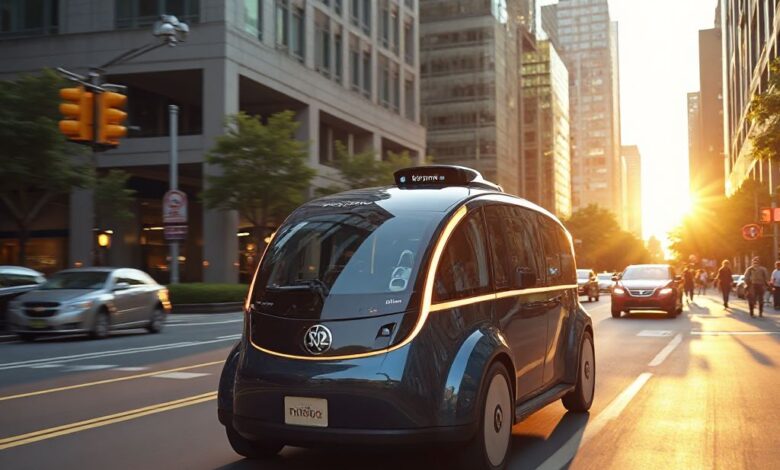
Imagine hailing a ride, stepping into a vehicle with no driver, and being whisked away to your destination by an unseen intelligence. For millions across America, this isn’t a scene from a sci-fi movie; it’s a rapidly expanding daily reality. Waymo, Google’s pioneering autonomous driving subsidiary, is making headlines not just for its technological prowess, but for the sheer speed and ambition of its robotaxi expansion, fundamentally reshaping urban mobility and challenging our very concept of car ownership.
The Shifting Sands of Automotive Ownership: Why Robotaxis Matter Now More Than Ever
For decades, the automobile has been the quintessential symbol of personal freedom and independence. Car buyers and enthusiasts alike have obsessed over horsepower, design, and the latest infotainment systems. But a seismic shift is underway. The rise of ride-sharing, the increasing cost of vehicle ownership in urban centers, and a growing environmental consciousness are all converging to redefine our relationship with cars. This is precisely where Waymo’s expansion becomes critically relevant. Autonomous robotaxi services aren’t just a novelty; they represent a potential paradigm shift from individual ownership to a service-based mobility model. For the first-time buyer considering the financial burden of a car, insurance, and parking, or the experienced owner looking to optimize their daily commute, Waymo offers a glimpse into a future where personal transport is on-demand, potentially safer, and perhaps even more efficient. It’s a future that demands our attention, as it directly impacts traffic congestion, urban planning, and ultimately, how we move through our lives.
Waymo’s Rapid Ascent: Mapping the Robotaxi Takeover
Waymo’s journey from a Google X project to a commercial robotaxi service has been long and deliberate, characterized by billions of miles of real-world and simulated driving. What started as a cautious rollout in a single city is now blossoming into a multi-city network, pushing the boundaries of what autonomous vehicles (AVs) can achieve.
The Phoenix Proving Ground: A Decade of Driverless Dominance
Phoenix, Arizona, has been Waymo’s crucible. For over a decade, the Waymo Driver system has been honed in the sprawling, sun-drenched streets of the Valley of the Sun. Starting with a trusted tester program, Waymo One graduated to a fully public, fully driverless service in 2020. Today, Waymo operates thousands of rides weekly across a significant portion of the Phoenix metro area, serving diverse demographics and proving the robustness of its technology in varying traffic conditions, from suburban commutes to downtown errands. This extensive operational history in Phoenix provides the bedrock of data and experience that underpins its aggressive expansion.
San Francisco’s Steep Hills and Sharper Learning Curve
The expansion into San Francisco presented a far greater challenge. The city’s narrow, winding streets, steep hills, unpredictable weather, aggressive cyclists, and dense pedestrian traffic are a true test of any autonomous system. Waymo began with employee-only rides, gradually introducing public service with safety drivers, and then, in 2022, launching fully driverless rides in a limited service area. The public reception has been mixed, with some praising the convenience and novelty, while others voice concerns about occasional stoppages or unusual maneuvers. However, the sheer fact that Waymo is operating fully driverless in such a complex urban environment is a testament to its advanced perception and prediction capabilities. The regulatory landscape in California, particularly with the California Public Utilities Commission (CPUC), has also been a battleground, with Waymo and competitor Cruise (GM’s AV subsidiary) pushing for wider operational permits amidst public and governmental scrutiny.
Los Angeles: The Next Frontier for Autonomous Mobility
Perhaps the most significant recent development has been Waymo’s expansion into Los Angeles, a city synonymous with car culture and sprawling traffic. Following a period of extensive mapping and testing, Waymo launched its initial public service in parts of LA in late 2023, starting with a trusted tester program and quickly moving towards a public rollout. The sheer scale of the LA market, with its millions of residents and vast network of freeways and surface streets, represents a massive opportunity and an even greater technical challenge. Success here could cement Waymo’s position as a dominant player in the future of urban mobility.
Austin, Texas: Preparing for the Lone Star State
Looking ahead, Waymo has already announced plans for Austin, Texas, marking its fourth major operational city. Initial mapping and testing vehicles have been spotted, signaling the company’s intent to bring its driverless service to the rapidly growing tech hub. Austin’s unique blend of downtown density, suburban sprawl, and vibrant cultural events will provide another distinct environment for the Waymo Driver to adapt and learn.
The Technology Behind the Wheel: Waymo Driver
At the heart of Waymo’s success is the “Waymo Driver,” its proprietary autonomous driving system. It leverages a sophisticated array of sensors—lidar, radar, and cameras—that provide a 360-degree, high-resolution view of the world around the vehicle. This sensor fusion allows the system to accurately perceive other vehicles, pedestrians, cyclists, traffic lights, and road signs, even in challenging conditions like rain or darkness. Coupled with advanced AI algorithms, Waymo Driver predicts the behavior of other road users, plans safe and efficient paths, and executes maneuvers with precision. Unlike some competitors that rely heavily on high-definition maps for localization, Waymo’s system is designed to be highly adaptable, capable of operating effectively even in areas with less detailed prior mapping, though extensive mapping is always a precursor to commercial operations.
Expert Analysis: Beyond the Headlines
- The Profitability Paradox: While Waymo is expanding rapidly, the path to sustained profitability for robotaxi services remains long and complex. The immense R&D costs, operational expenses (maintenance, charging/fueling, customer support, mapping), and regulatory hurdles mean that each ride, while convenient, is still a significant investment for the company. The real game-changer will be achieving economies of scale and driving down per-mile costs to compete effectively with human-driven ride-hail services and personal car ownership.
- The “Last Mile” and Public Transit Integration: Waymo’s expansion isn’t just about replacing personal cars; it’s about potentially augmenting public transit. These services can solve the “last mile” problem, connecting commuters from their homes to transit hubs and vice-versa, especially in areas underserved by traditional public transport. This integration could unlock new efficiencies for urban planning and reduce reliance on private vehicles for short trips.
- Data as the New Oil: Every mile driven by a Waymo vehicle, every decision made, every obstacle encountered generates invaluable data. This continuous feedback loop is crucial for refining the Waymo Driver. This massive data collection, however, also raises important questions about privacy, cybersecurity, and who owns and controls this vast repository of information about our cities and our movements.
- Regulatory Patchwork and Public Trust: The biggest non-technical hurdle is navigating the fragmented regulatory landscape across different states and municipalities. Each city has its own concerns about safety, job displacement, and infrastructure impact. Building public trust, often eroded by sensationalized incidents or technical glitches, is paramount. Waymo’s success hinges not just on its tech, but on its ability to effectively engage with communities, demonstrate safety, and secure the necessary operating permits.
- The Unseen Infrastructure: Beyond the sleek Jaguar I-PACE or Chrysler Pacifica minivans, Waymo’s expansion relies on a vast, unseen infrastructure. This includes dedicated maintenance depots, charging stations, remote assistance centers staffed by human operators for complex edge cases, and massive cloud computing resources for data processing and simulation. This hidden network is as critical as the vehicles themselves for reliable, scalable operations.
Brand Comparisons and the Future of Mobility
Waymo’s aggressive push places it in direct competition with other autonomous vehicle developers and indirectly with established automotive and ride-sharing giants.
- Cruise (GM’s AV Unit): Waymo’s most direct competitor, Cruise, is also expanding its driverless robotaxi services, primarily in San Francisco and Austin. While Cruise has faced its own set of regulatory challenges and public scrutiny, the two companies are locked in a race to scale operations and prove commercial viability.
- Tesla’s Full Self-Driving (FSD): While Tesla touts its FSD system, it’s crucial to distinguish it from Waymo. Tesla’s FSD is a Level 2/3 driver-assist system requiring active human supervision, whereas Waymo operates fully driverless (Level 4/5) commercial robotaxi services. Their approaches to achieving autonomy (camera-centric vs. sensor fusion) are fundamentally different.
- Traditional Automakers: Brands like Ford (which initially partnered with Argo AI before its shutdown), Hyundai, Mercedes-Benz, and BMW are heavily investing in advanced driver-assistance systems (ADAS) and Level 3 conditional autonomy (like Mercedes’ Drive Pilot). However, most are not pursuing Level 4/5 robotaxi services independently with the same intensity as Waymo, often preferring partnerships or focusing on personal vehicle autonomy.
- Ride-Sharing Giants (Uber, Lyft): While Waymo directly competes for ride-hail demand, Uber and Lyft have also explored AV partnerships. Uber sold its ATG unit but has partnered with Waymo in Phoenix, allowing users to hail a Waymo via the Uber app. This signals a potential future where human-driven and autonomous ride-hail services coexist, or even integrate.
Pros and Cons of Waymo’s Robotaxi Expansion
Pros:
- Enhanced Safety: Autonomous vehicles, theoretically, eliminate human error, which is responsible for over 90% of all accidents. Waymo’s safety record, with billions of miles driven, is impressive.
- Increased Accessibility: Offers independent mobility for those unable to drive (elderly, disabled, visually impaired), expanding personal freedom.
- Reduced Traffic Congestion: Optimized routing and platooning could lead to more efficient use of road space, potentially easing traffic.
- Environmental Benefits: Electric robotaxis (like Waymo’s Jaguar I-PACE fleet) reduce tailpipe emissions and noise pollution in urban areas.
- Economic Efficiency: Could lower transportation costs in the long run by eliminating driver wages and optimizing vehicle utilization.
- Productivity Gains: Passengers can use travel time for work, leisure, or relaxation instead of focusing on driving.
Cons:
- Job Displacement: The widespread adoption of robotaxis will inevitably impact jobs for professional drivers (taxi, ride-hail, delivery).
- Public Trust & Acceptance: Overcoming public skepticism and fear of autonomous technology remains a significant hurdle.
- Ethical Dilemmas: Programming AVs for unavoidable accident scenarios (e.g., “trolley problem”) raises complex ethical questions.
- Cybersecurity Risks: AVs are connected computers on wheels, making them potential targets for hacking and malicious attacks.
- Regulatory Complexity: A patchwork of state and local regulations can hinder scalable deployment and create operational inconsistencies.
- Infrastructure Demands: Requires significant investment in charging infrastructure (for EVs) and robust digital mapping.
Final Verdict: The Future is Here, But Not Without Its Bumps
Waymo’s robotaxi expansion is more than just a technological marvel; it’s a social experiment unfolding in real-time across America’s most dynamic cities. The company has proven that driverless technology is not only viable but increasingly reliable, offering a glimpse into a future of mobility that is safer, more efficient, and more accessible. For both first-time car buyers and seasoned owners, Waymo represents a compelling alternative to traditional vehicle ownership, especially in dense urban environments where parking and traffic are constant headaches.
However, the road ahead is not entirely smooth. The challenges of achieving widespread public acceptance, navigating complex regulatory landscapes, ensuring robust cybersecurity, and ultimately, reaching sustainable profitability are substantial. Waymo’s success will depend not just on its technological superiority but on its ability to integrate seamlessly into the fabric of urban life, demonstrating tangible benefits while addressing legitimate societal concerns.
As an automotive journalist, I find Waymo’s journey utterly captivating. It’s a testament to human ingenuity and a bold step into a future that was once confined to the pages of science fiction. My recommendation? If you’re in Phoenix, San Francisco, or Los Angeles, take a ride. Experience the future for yourself. It’s an eye-opening glimpse into how we might all be getting around sooner than you think. Stay tuned to our coverage, because this story, like Waymo’s expansion, is just getting started.