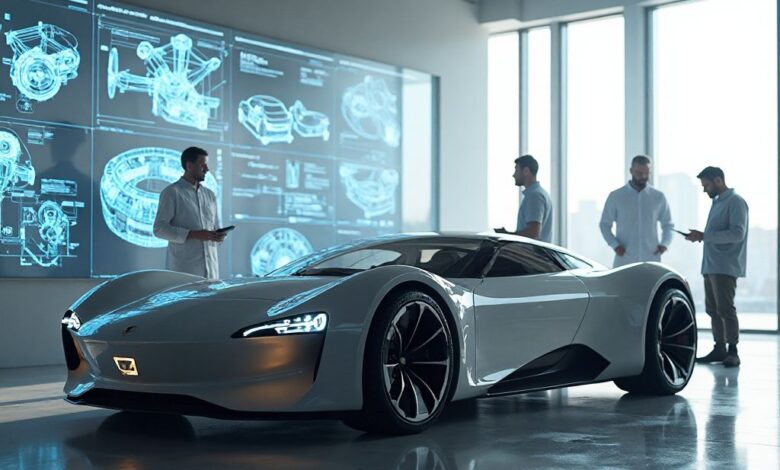
The Great Acceleration: How New Emission Standards Are Forcing Car Makers to Innovate Faster
Picture this: a colossal, multi-trillion-dollar industry, historically built on the roar of internal combustion, is being completely reshaped at breakneck speed. What’s the catalyst for this monumental shift? It’s not just consumer demand for greener cars, nor is it solely about technological breakthroughs. The true, undeniable locomotive driving this unprecedented pace of change is the relentless march of new, increasingly stringent global emission standards. From the bustling streets of Beijing to the autobahns of Germany and the highways of California, regulators are turning up the heat, demanding cleaner vehicles, and in doing so, they’re inadvertently sparking the most intense period of automotive innovation the world has ever witnessed.
Why This Matters to Every Driver and Enthusiast Today
For decades, emissions were an abstract concept for most car buyers, a line item on a spec sheet, or perhaps a warning light on the dashboard. Today, however, these standards are directly impacting everything from the types of vehicles available in showrooms to their performance, their price, and even the very experience of driving. Whether you’re a first-time buyer agonizing over fuel economy, an experienced owner considering your next upgrade, or a gearhead passionate about cutting-edge engineering, the regulatory landscape is dictating the future of mobility. It’s why electric vehicles (EVs) are no longer a niche curiosity but a mainstream reality, why hybrids are more sophisticated than ever, and why even traditional gasoline engines are becoming marvels of efficiency. Understanding these forces isn’t just about being informed; it’s about making smart decisions in a rapidly evolving automotive world.
The Innovation Imperative: From Tailpipes to Teraflops
The pressure from emission standards isn’t a single, monolithic force; it’s a multi-pronged assault demanding innovation across every facet of vehicle design, engineering, and manufacturing. Carmakers are no longer just tweaking engines; they’re reinventing the wheel, quite literally.
The Electric Revolution: The Obvious, Yet Complex, Answer
The most visible response to stricter emissions is, without a doubt, the full-throttle pivot to electric vehicles. Companies like Tesla pioneered the modern EV, but now every major automaker is pouring billions into electrification, driven by regulatory targets that mandate a growing percentage of zero-emission vehicles. For instance, the European Union’s ambitious CO2 targets for 2025 and 2030, coupled with California’s Advanced Clean Cars II regulations, are forcing brands to accelerate their EV roadmaps dramatically.
-
Specs and Range That Redefine Travel:
Early EVs were hampered by limited range and performance. Today, thanks to immense R&D spurred by competition and compliance, we see vehicles like the Lucid Air Grand Touring offering an EPA-estimated 516 miles of range, or the Porsche Taycan delivering supercar-level acceleration. Battery technology, once a bottleneck, is rapidly advancing, with improved energy density, thermal management, and longer lifespans. Automakers are exploring everything from nickel-manganese-cobalt (NMC) to lithium iron phosphate (LFP) chemistries, and the promise of solid-state batteries looms large, offering even greater range and faster charging.
-
Charging Infrastructure and Speed:
Range anxiety is being tackled not just by bigger batteries, but by faster charging. Standards like CCS and the emerging NACS (North American Charging Standard) are pushing for greater interoperability. Vehicles like the Hyundai Ioniq 5 and Kia EV6, built on 800-volt architectures, can replenish 10-80% of their charge in under 18 minutes at a suitable DC fast charger. This speed isn’t just a luxury; it’s becoming a necessity for mass adoption, and carmakers are actively investing in charging networks, often in partnership with energy providers, to ensure their vehicles can be conveniently powered.
-
Costs and Accessibility:
While EVs still command a premium, the relentless push for scale and innovation is driving costs down. Government incentives and tax credits play a crucial role, but economies of scale in battery production (gigafactories from Tesla, Volkswagen, Ford, and GM) are the long-term solution. Brands like Chevrolet are introducing more affordable options like the Equinox EV, while Hyundai and Kia continue to offer compelling value propositions, making EVs accessible to a broader audience.
The Hybrid Renaissance: Bridging the Gap with Ingenuity
For many, a full EV isn’t yet practical, which is why hybrids and plug-in hybrids (PHEVs) are experiencing a renaissance, driven by emission standards that reward their reduced tailpipe output. Toyota, a pioneer in hybrid technology with the Prius, continues to refine its offerings, while brands like Ford are electrifying their most popular vehicles, such as the F-150 PowerBoost hybrid. PHEVs, like the BMW 330e or the Jeep Wrangler 4xe, offer the best of both worlds, providing a significant electric-only range for daily commutes and a gasoline engine for longer trips, effectively reducing emissions and fuel consumption without range anxiety. This segment demands sophisticated powertrain integration, marrying electric motors with highly efficient internal combustion engines to optimize performance and economy.
Advanced Internal Combustion Engines (ICE): The Last Stand of Fossil Fuels
Even as the industry shifts to electric, internal combustion engines aren’t being abandoned entirely—at least not yet. Emission standards are forcing engineers to squeeze every last drop of efficiency and cleanliness out of gasoline and diesel powerplants. Innovations include:
-
Micro-Hybrid and Mild-Hybrid Systems:
Many modern ICE vehicles, from Mercedes-Benz to Audi and Ram, now feature 48-volt mild-hybrid systems that use a small electric motor to assist the engine, recover braking energy, and enable features like engine stop-start, significantly reducing emissions in city driving.
-
Advanced Fuel Injection and Turbocharging:
Direct injection, variable valve timing, and sophisticated turbocharging have become standard, allowing smaller engines to produce more power with less fuel and fewer emissions.
-
Exhaust After-Treatment:
Catalytic converters are more efficient than ever, and technologies like Gasoline Particulate Filters (GPFs) are becoming common to capture ultrafine particulate matter, mirroring diesel particulate filters (DPFs).
-
Alternative Fuels:
While less widespread, some automakers are exploring hydrogen fuel cells (Toyota Mirai, Hyundai Nexo) as a zero-emission alternative, offering quick refueling and long range, though infrastructure remains a challenge.
Software-Defined Vehicles and AI: The Brains Behind the Green
Beyond hardware, the software layer is playing an increasingly critical role. Modern vehicles are essentially computers on wheels, and this computational power is being leveraged for emission reduction:
-
Predictive Powertrain Control:
Using GPS and mapping data, vehicles can anticipate road conditions (uphill, downhill, traffic) and optimize gear changes, engine operation, and battery usage in hybrids/PHEVs for maximum efficiency.
-
Over-the-Air (OTA) Updates:
Like Tesla pioneered, OTA updates allow automakers to continually improve vehicle efficiency and performance, even after purchase, ensuring compliance with evolving standards and optimizing energy consumption.
-
AI for Battery Management:
Sophisticated algorithms manage battery temperature, charging cycles, and discharge rates to maximize range, extend battery life, and ensure optimal performance, all contributing to a more efficient and sustainable EV.
Expert Analysis: Beyond the Headlines
Having navigated this industry for a decade, I can tell you that the pressure from emission standards isn’t just about technical compliance; it’s fundamentally reshaping the automotive ecosystem in ways that aren’t always immediately obvious:
-
The “Compliance Car” Dilemma:
Many legacy automakers initially produced EVs not because they were profitable, but because they *had* to. These “compliance cars” were often sold at a loss to avoid hefty fines for missing emission targets. This strategy is rapidly changing, however, as EV demand grows and economies of scale improve, but it highlights the immense financial pressure regulators exert.
-
The Supply Chain Scramble for Critical Minerals:
The rapid shift to EVs has exposed vulnerabilities in the supply chain for raw materials like lithium, cobalt, and nickel. Automakers are now forced to invest heavily in securing these resources, often directly engaging with mining companies or exploring vertical integration, a strategic pivot from their traditional role as assemblers.
-
Software as the New Horsepower:
The true battleground for competitive advantage is shifting from pure mechanical engineering to software prowess. The ability to develop robust, secure, and upgradable software that controls everything from battery management to advanced driver-assistance systems (ADAS) is now paramount. This means a talent war with Silicon Valley and a fundamental restructuring of R&D departments.
-
Strategic Alliances and Unlikely Partnerships:
To meet the innovation pace and cost demands, we’re seeing unprecedented collaborations. Competitors are sharing EV platforms (e.g., Ford and Volkswagen), pooling resources for charging infrastructure, and forming joint ventures for battery production. The old “go it alone” mentality is becoming unsustainable.
-
The Reskilling of the Workforce:
This rapid innovation mandates a massive reskilling effort. Thousands of jobs tied to internal combustion engine manufacturing are being phased out, while new roles in battery engineering, software development, and EV maintenance are emerging. This societal shift is a significant, often overlooked, consequence of emission regulations.
The Impact: Pros and Cons of a Faster Innovation Cycle
This accelerated innovation brings a mixed bag of consequences:
Pros:
- Cleaner Air and Reduced Carbon Footprint: The most direct benefit is a significant reduction in tailpipe emissions, contributing to better air quality and mitigating climate change.
- More Efficient and Performant Vehicles: Both EVs and advanced ICE vehicles are more efficient than ever, offering better fuel economy (or energy consumption) and often superior performance characteristics (instant torque from EVs).
- Technological Leaps for Consumers: Drivers gain access to cutting-edge technology, from advanced infotainment and driver assistance systems to rapid charging and longer ranges.
- New Economic Opportunities: The EV transition is creating new industries, jobs, and investment opportunities in battery manufacturing, charging infrastructure, and software development.
- Quieter and Smoother Driving Experience: EVs inherently offer a quieter, smoother, and often more refined driving experience compared to their ICE counterparts.
Cons:
- Higher Initial Vehicle Costs: While decreasing, the upfront cost of new, emission-compliant vehicles, especially EVs, can still be higher than traditional gasoline models.
- Infrastructure Challenges: The rollout of public charging infrastructure is struggling to keep pace with EV adoption in many regions, leading to range anxiety for some.
- Raw Material Sourcing and Sustainability Concerns: The increased demand for critical minerals for batteries raises ethical and environmental concerns regarding mining practices.
- Manufacturing Complexity and Cost: Automakers face immense capital expenditure to retool factories for EV production and develop new supply chains.
- Potential for Grid Strain: A massive influx of EVs could strain existing electrical grids, necessitating significant investment in energy generation and distribution.
Final Verdict: Embrace the Electric Current
The automotive industry is at an undeniable inflection point, and new emission standards are the primary force pushing it over the edge into a future defined by electrification and unprecedented innovation. This isn’t just a trend; it’s a fundamental paradigm shift that will redefine what it means to own and drive a car.
For first-time buyers and experienced owners alike, my recommendation is clear: embrace this transition. The vehicles emerging from this crucible of innovation are safer, more efficient, often more performant, and undeniably cleaner. While challenges remain, particularly around infrastructure and initial cost, the benefits for both drivers and the planet are immense. The market is diversifying rapidly, offering compelling options across all segments, from the rugged Rivian R1T to the luxurious Mercedes-Benz EQS, the practical Ford F-150 Lightning, and the value-packed Kia EV6.
Call to Action: Don’t just watch this revolution from the sidelines. The next time you’re considering a new vehicle