

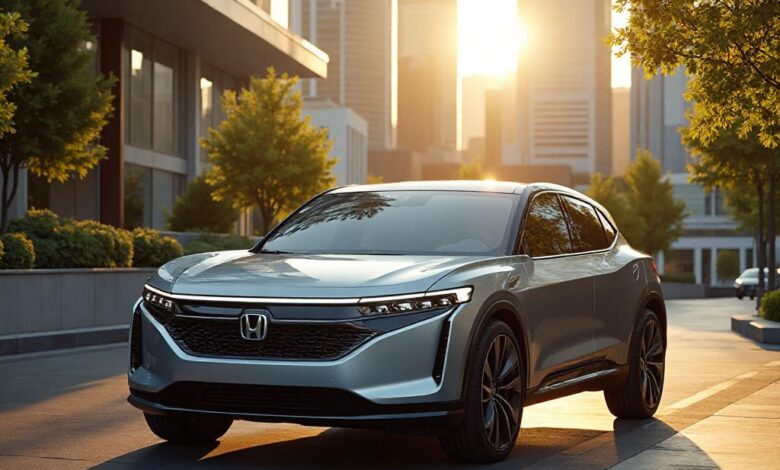
The automotive world is rife with ironies, but few are as striking as Honda’s journey into the electric age. For years, the Japanese giant, renowned for its engineering prowess and efficiency, seemed content to observe the EV revolution from the sidelines, offering only niche or compliance-focused electric vehicles. That era, my friends, is officially over. With the arrival of the 2024 Honda Prologue, Honda isn’t just dipping its toes into the electric pool; it’s executing a cannonball. This isn’t merely a new electric SUV; it’s a bold declaration of intent, signaling that Honda is finally getting serious—and consumers should take notice.
Background: Honda’s Electric Awakening
To truly appreciate the Prologue, one must understand Honda’s somewhat perplexing history with electric vehicles. While competitors like Toyota embraced hybrids early on, and brands like Tesla, Nissan, and Chevrolet pioneered mass-market EVs, Honda’s approach felt hesitant. We saw the quirky Clarity EV, a vehicle with limited range and availability, and before that, the Fit EV. These were admirable efforts, but they never felt like Honda was truly committing to the electric future. This reticence left many Honda loyalists wondering if their beloved brand would be left behind in the seismic shift towards electrification.
The landscape, however, has changed dramatically. Government regulations, increasing consumer demand for sustainable mobility, and fierce competition from every corner of the globe have made an EV-first strategy not just desirable, but essential for survival. Car buyers today are looking for compelling electric alternatives that offer practical range, robust charging infrastructure, and a seamless ownership experience. Honda, recognizing this imperative, has partnered with General Motors, leveraging GM’s advanced Ultium battery and platform technology. This collaboration is not just a shortcut; it’s a strategic pivot, allowing Honda to accelerate its EV development and bring a competitive product to market much faster than developing one from scratch. The Prologue is the tangible fruit of this alliance, a crucial first step in Honda’s ambitious plan to introduce 30 new EVs globally by 2030.
Main Content: A Deep Dive into the Honda Prologue
Design: Neo-Rugged Meets Modern Honda
From the moment you lay eyes on the Prologue, it’s clear this isn’t your average Honda CR-V or Pilot. Honda designers have opted for a “neo-rugged” aesthetic, a departure from the brand’s typically safe and conservative styling. The Prologue boasts clean lines, a long wheelbase, and short overhangs, giving it a substantial and confident stance. Its proportions are more akin to a modern EV, prioritizing interior space and aerodynamic efficiency. The front fascia features slim LED headlights connected by a sleek black grille-like element (though there’s no actual grille needed for an EV), giving it a futuristic yet approachable face. The rear sports a distinctive “HONDA” script rather than the traditional H-mark badge, a subtle nod to its pioneering role for the brand. While some might see hints of the Chevrolet Blazer EV (its platform sibling) in its profile, Honda has done a commendable job injecting its own design language, particularly in the lighting signatures and interior layout. It’s a handsome SUV, one that stands out without being overtly flashy, striking a balance that should appeal to a broad audience.
Performance: Smooth, Capable, and Quiet
Underneath that fresh Honda skin lies GM’s Ultium platform, a modular architecture designed for various vehicle types. The Prologue offers two powertrain configurations: a single-motor, front-wheel-drive (FWD) setup producing 212 horsepower and 236 lb-ft of torque, and a more potent dual-motor, all-wheel-drive (AWD) variant delivering a healthy 288 horsepower and 333 lb-ft of torque. While not designed to compete with the blistering acceleration of a Tesla Model Y Performance or a Rivian R1S, the AWD Prologue is impressively brisk, hitting 0-60 mph in roughly 6.5 seconds. This is more than adequate for daily driving and highway passing. The ride quality is typically Honda—composed, comfortable, and well-damped, soaking up road imperfections with ease. Steering is light but precise, making it maneuverable in urban environments. The silent operation inherent in EVs, combined with Honda’s attention to sound deadening, makes for a remarkably serene cabin experience, a stark contrast to many internal combustion engine (ICE) SUVs in its class.
Range & Charging: Practicality for the Long Haul
Equipped with an 85 kWh (usable capacity) battery pack, the Prologue aims for practicality. EPA estimated range figures are competitive: up to 296 miles for the FWD model and between 273-281 miles for the AWD variants, depending on the trim. These numbers place it squarely against rivals like the Hyundai Ioniq 5, Kia EV6, and Ford Mustang Mach-E, offering enough range for most daily commutes and even longer road trips with careful planning. When it comes to charging, the Prologue supports DC fast charging at speeds up to 150 kW. This translates to adding approximately 65 miles of range in just 10 minutes under ideal conditions, taking the battery from 20% to 80% in about 35 minutes. Level 2 (240V) home charging will fully replenish the battery overnight, making it convenient for most owners. Honda is also offering charging incentives, including credits for public charging networks or installation of a home charger, easing the transition for first-time EV buyers.
Interior & Technology: Honda’s Digital Evolution
Step inside the Prologue, and you’ll find a familiar Honda ethos blended with modern EV necessities. The cabin is spacious, minimalist, and logically laid out. High-quality materials are used throughout, giving it a premium feel without being ostentatious. Physical buttons for climate control and essential functions are a welcome touch, proving that Honda still values tactile feedback over an all-touchscreen interface. Dominating the dashboard are two vibrant screens: an 11-inch digital instrument cluster and an 11.3-inch touchscreen infotainment system running Google Built-in. This means Google Maps, Google Assistant, and access to the Google Play Store are seamlessly integrated, offering a user-friendly and highly functional experience. Apple CarPlay and Android Auto are, of course, standard. The Prologue also comes packed with the Honda Sensing suite of safety and driver-assist technologies, including adaptive cruise control, lane-keeping assist, and blind-spot monitoring, providing peace of mind on every journey. Cargo space is generous, with 25.2 cubic feet behind the rear seats, expanding to 57.7 cubic feet with the seats folded flat, making it a highly practical family hauler.
Value for Money & Costs: A Competitive Entry
The 2024 Honda Prologue starts at an MSRP of around $47,400 (before destination and any potential federal tax credits or state incentives) for the base FWD EX trim. The AWD models climb into the low to mid-$50,000s for the Touring and Elite trims. This pricing positions it competitively against the likes of the Volkswagen ID.4, Ford Mustang Mach-E, and even entry-level Tesla Model Y variants. Given its substantial range, robust technology package, and the peace of mind that comes with Honda’s reputation for reliability, the Prologue represents strong value. Running costs will also be lower than comparable gasoline SUVs, with electricity generally being cheaper per mile than gasoline, especially when charging at home. Honda’s inclusion of charging incentives further sweetens the deal for early adopters.
Expert Analysis: Beyond the Specs
1. The Ultium Advantage (and Challenge): While the GM partnership allowed Honda to leapfrog years of R&D, it also presents a unique branding challenge. How does Honda inject its distinct DNA – its driving dynamics, its intuitive ergonomics, its “Man-Maximum, Machine-Minimum” philosophy – into a platform shared with the Chevrolet Blazer EV? The Prologue largely succeeds in feeling like a Honda, but the underlying architecture is undeniably GM. This is a critical test case for Honda’s ability to differentiate its products even with shared foundations.
2. A Bridge to Pure Honda EVs: The Prologue isn’t just an end in itself; it’s a vital bridge. Honda has confirmed that its next wave of EVs, starting with models like the “0 Series” Saloon and Space-Hub concepts, will be built on its proprietary e:Architecture. The Prologue serves as a crucial learning experience for Honda in mass-market EV sales, charging infrastructure, and customer expectations, paving the way for truly in-house electric vehicles that will define Honda’s future.
3. Targeting the Mainstream: Unlike some brands that started with high-performance or luxury EVs, Honda is wisely targeting the heart of the SUV market. The Prologue is designed for existing Honda owners who are considering their first EV, offering familiar comforts and reliability with an electric powertrain. Its practical range, sensible pricing, and spacious interior make it a compelling alternative to gasoline-powered CR-Vs and Pilots, aiming to convert a loyal customer base rather than solely chasing new buyers.
4. The Charging Ecosystem Play: Honda is keenly aware that charging anxiety is a major hurdle for EV adoption. Their partnerships with public charging networks and incentives for home charger installation are smart moves. This holistic approach to the ownership experience, beyond just the vehicle itself, is crucial for winning over first-time EV buyers who might be intimidated by the transition from gas pumps to charging stations.
5. The “Honda-ness” Factor: Despite the GM underpinnings, the Prologue manages to feel unmistakably Honda. The interior layout, while modern, retains a sense of logical order and ease of use. The driving dynamics, while not sporty, are refined and predictable – qualities long associated with the brand. This ability to infuse its brand identity into a shared platform is a testament to Honda’s design and engineering teams, ensuring that loyalists will still find the essence of Honda in this new electric package.
Pros and Cons
- Pros:
- Handsome, modern “neo-rugged” design.
- Comfortable and refined ride quality.
- Practical range for daily use and road trips.
- Spacious and well-appointed interior with intuitive tech (Google Built-in).
- Competitive pricing and strong value proposition.
- Honda’s renowned reliability reputation.
- Generous cargo space.
- Cons:
- DC fast charging speed (150 kW) is good, but not class-leading compared to Hyundai/Kia (350 kW).
- Performance, while adequate, won’t thrill enthusiasts.
- Some might find the design too similar to its GM platform sibling.
- No frunk (front trunk) storage.
- Initial availability might be limited in some regions.
Final Verdict: A Serious Contender, Finally
The 2024 Honda Prologue is far more than just Honda’s first mainstream electric SUV; it’s a confident stride into a future the brand can no longer afford to ignore. It’s a well-rounded, practical, and stylish electric vehicle that leverages proven technology while still retaining that quintessential Honda feel. For years, the question lingered: “When will Honda truly get serious about EVs?” With the Prologue, the answer is unequivocally: “Now.”
This SUV is an excellent choice for first-time EV buyers seeking a reliable, spacious, and technologically advanced electric vehicle without venturing into unfamiliar territory. It’s also a compelling option for experienced car owners looking to transition from gasoline to electric power while staying within the trusted Honda ecosystem. While it doesn’t redefine any specific segment, it delivers a thoroughly competent and enjoyable EV experience that should put Honda back on the EV map. If you’ve been waiting for Honda to offer a legitimate electric option, your wait is over. The Prologue is here, and it’s ready to electrify your drive.
Recommendation: If you’re in the market for a practical, well-equipped, and reliable electric SUV, the Honda Prologue absolutely deserves a spot on your test-drive list. Go experience it for yourself—you might just find that Honda’s electric future is brighter than ever.


