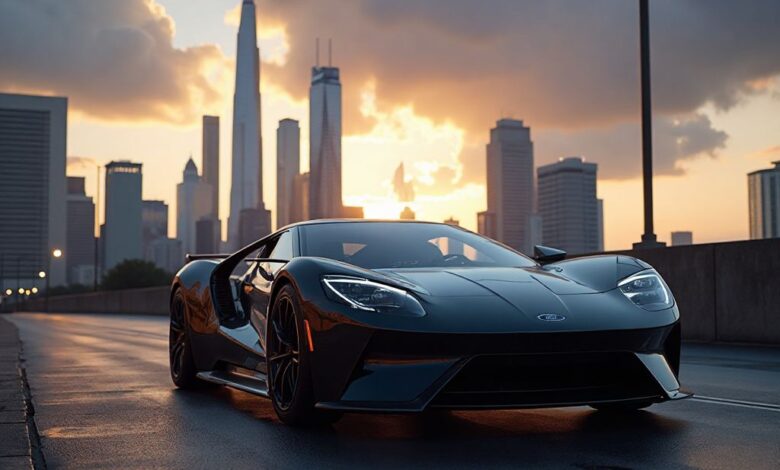
Why Ford Just Made a Decision That Surprised the Entire Car Industry
In a move that sent ripples through boardrooms from Stuttgart to Silicon Valley, Ford Motor Company recently announced a significant recalibration of its electric vehicle (EV) strategy. After years of bold pronouncements and aggressive investments aimed at challenging Tesla’s dominance, the Blue Oval has hit the brakes – or, more accurately, shifted gears – on its ambitious EV rollout, opting instead for a more measured approach that heavily emphasizes hybrid technology. This isn’t just a minor course correction; it’s a fundamental pivot that has left competitors, investors, and even some loyal customers scratching their heads, wondering: what exactly is going on at Ford?
Background: The Electrification Gold Rush and Its Realities
For the better part of the last decade, the automotive industry has been in an all-out sprint towards electrification. Fueled by tightening emissions regulations, government incentives, and a genuine desire to innovate, nearly every major automaker declared its intention to go “all-in” on EVs. Ford was no exception. With Jim Farley at the helm, the company launched the highly anticipated Mustang Mach-E, followed by the groundbreaking F-150 Lightning pickup and the E-Transit commercial van. They poured billions into new battery plants, dedicated EV architectures, and a massive restructuring to separate their EV (Model e) from their traditional ICE (Ford Blue) businesses.
The messaging was clear: EVs were the future, and Ford intended to be a leader. For car buyers and enthusiasts, this meant a dizzying array of new models, impressive performance figures, and the promise of a cleaner, quieter driving experience. Yet, beneath the surface of this electrifying optimism, a complex reality was brewing. While early adopters embraced EVs with fervor, mainstream consumers faced concerns about charging infrastructure, range anxiety, higher upfront costs, and the practicality of owning an EV in diverse climates. The market, it turns out, wasn’t quite ready for a full-scale, immediate transition, and the profitability of EVs remained stubbornly elusive for many legacy automakers.
Main Content: Ford’s Strategic Retreat and the Hybrid Re-Emphasis
What Happened: A Pivot to Pragmatism
In recent earnings calls and investor presentations, Ford executives began to signal a shift. The company announced delays for several key EV programs, including the postponement of some new battery production facilities. More significantly, Ford declared its intention to significantly expand its hybrid vehicle offerings across its lineup, aiming to offer hybrid powertrains for every major model in North America by the end of the decade. This isn’t just about adding a hybrid option here or there; it’s a strategic embrace of a technology that, for years, was seen by some as a mere stopgap on the road to full electrification.
The reasoning is multi-faceted. Ford acknowledged that the pace of EV adoption isn’t as rapid as initially projected, particularly outside of early adopter segments. They also cited the intense price competition in the EV market, largely driven by Tesla’s aggressive price cuts and the influx of affordable Chinese EVs. This competition has severely impacted the profitability of Ford’s EV division, Model e, which continues to bleed billions of dollars. By scaling back some EV investments and leaning into hybrids, Ford aims to improve its financial health, meet current consumer demand more effectively, and ensure a more sustainable transition to an electrified future.
Why It Matters: A Bellwether for the Industry
Ford’s decision is far more than just an internal corporate adjustment; it’s a potential bellwether for the entire automotive industry. For years, automakers have been locked in a “chicken race” to announce the most ambitious EV targets. Ford’s pivot signals a crucial realization: the market dictates the pace, not just corporate ambition or government mandates. This could embolden other manufacturers like General Motors, Volkswagen, and Stellantis, who are also facing EV profitability challenges, to re-evaluate their own aggressive timelines and investment strategies.
For consumers, this means a likely broader availability of hybrid models, offering a compelling bridge between traditional internal combustion engines (ICE) and full battery electric vehicles. It acknowledges that many buyers aren’t ready for the full EV leap but are open to better fuel efficiency and reduced emissions. It also highlights the growing importance of the “value proposition” in the EV market, where high prices and charging concerns continue to deter a significant portion of potential buyers.
What Comes Next: A Hybrid Resurgence and Realigned Goals
Looking ahead, we can expect Ford to rapidly introduce hybrid options across its popular models, from the Escape and Explorer to the Maverick and even potentially the F-150. This strategy allows Ford to leverage existing platforms and production lines, reducing the capital expenditure required for new EV-specific architectures. It also provides a critical revenue stream to fund future EV development when the market is more mature and profitable.
Ford’s Model e division will continue to develop and refine its EV offerings, but likely with a more focused approach on specific, high-demand segments. The company isn’t abandoning EVs; it’s simply adopting a more flexible, demand-driven strategy. This could also lead to greater collaboration or resource sharing with other automakers on EV components or platforms, as the industry seeks to mitigate the enormous costs of electrification.
Expert Analysis: Insider Insights You Won’t Find Everywhere
From my decade traversing assembly lines and executive suites, here are a few deeper cuts into Ford’s surprising move:
- The “Profitability Wall” is Real: While EV sales are growing, the margins for legacy automakers are razor-thin, or even negative, on many EV models. Tesla benefits from scale, vertical integration, and a premium brand perception that allows for higher pricing (though they’ve also resorted to price cuts). Ford, like GM and Volkswagen, is grappling with the immense cost of retooling factories, developing new battery tech, and building charging infrastructure, all while competing with established ICE profits. This pivot is a stark admission of the EV profitability challenge.
- Consumer Readiness vs. Manufacturer Ambition: Automakers got ahead of the curve. While environmental concerns are real, the average car buyer prioritizes affordability, convenience, and reliability. The charging infrastructure isn’t robust enough in many areas, and the “EV premium” is still too high for many family budgets. Ford’s move acknowledges that the industry pushed too hard, too fast, for a significant portion of the market.
- The Hybrid Bridge is Stronger Than Ever: For years, hybrids were seen as a temporary solution. Now, they’re being re-evaluated as a vital, long-term component of the transition. Toyota, often criticized for its slower EV adoption, suddenly looks prescient with its unwavering commitment to hybrids. Ford is essentially adopting a page from Toyota’s playbook, recognizing the immense value these vehicles offer in terms of fuel savings without the range anxiety.
- Ford’s Pragmatism vs. “All-In” Bets: Unlike some brands like Lucid or Rivian, which are pure-play EV companies and face existential threats if EV adoption falters, Ford has a robust ICE and commercial vehicle business (Ford Pro) that generates substantial cash flow. This allows them the flexibility to adjust their EV strategy without risking the entire enterprise. It’s a pragmatic, financially responsible move, even if it sacrifices some “first-mover” bragging rights.
- Impact on Charging Infrastructure: A slower, more staggered EV rollout from major players like Ford could inadvertently slow the expansion of public charging infrastructure. The business case for new charging stations relies on a growing fleet of EVs. If adoption slows, so too might the pace of charger deployment, creating a potential feedback loop that further complicates EV expansion.
Brand Comparisons and Mentions
Ford’s strategic shift doesn’t happen in a vacuum. It reverberates across the industry. Tesla, the undisputed EV leader, continues to dominate headlines with its cutting-edge technology and price adjustments, but even Elon Musk has hinted at potential economic headwinds impacting EV demand. General Motors, with its ambitious Ultium platform, faces similar profitability pressures and has also signaled a more cautious approach to EV production targets. Chevrolet’s Silverado EV, while impressive, needs to find its footing in a market that’s less EV-ready than anticipated.
Meanwhile, brands like Hyundai and Kia, with their strong hybrid and diverse EV lineups (e.g., Ioniq 5, EV6), seem well-positioned to capitalize on both segments. Mercedes-Benz, BMW, and Audi continue to balance their luxury ICE offerings with a growing portfolio of premium EVs, but they too are watching market trends closely. Perhaps the biggest ‘winner’ in this narrative is Toyota, whose long-standing commitment to hybrid technology, often derided by EV purists, now looks like a stroke of genius. Their RAV4 Hybrid and Highlander Hybrid have consistently been top sellers, proving the enduring appeal of the technology Ford is now embracing.
Pros and Cons of Ford’s New Strategy
Pros:
- Improved Financial Stability: By reducing EV investment burn and focusing on profitable hybrid sales, Ford can strengthen its balance sheet and fund future innovation more sustainably.
- Meeting Diverse Consumer Demand: A robust hybrid lineup caters to a broader audience, including those not yet ready for full EVs due to cost, range anxiety, or charging concerns.
- Leveraging Existing Platforms: Hybrids often share platforms with ICE vehicles, reducing development costs and allowing for quicker market entry.
- Reduced Risk: Spreading bets across ICE, hybrid, and EV technologies mitigates the financial risk associated with an all-or-nothing EV strategy.
- Competitive Edge Against Pure-Play EVs: Ford can offer a more complete product portfolio than startups like Rivian or Lucid, which are solely reliant on EV sales.
Cons:
- Perceived Loss of Leadership: The shift could be interpreted as Ford ceding ground in the EV race, potentially impacting its brand image as an innovator.
- Potential for Future Catch-Up: While prudent now, a slower EV ramp-up could leave Ford playing catch-up if EV adoption suddenly accelerates in the future.
- Confusing Messaging: The pivot might confuse some customers and investors who were accustomed to Ford’s aggressive “EV-first” rhetoric.
- Impact on Supply Chain Partners: Suppliers who geared up for Ford’s initial EV targets may face disruptions and uncertainty.
- Reduced Environmental Impact in the Short Term: While hybrids are greener than pure ICE, a slower EV transition means a slower reduction in overall tailpipe emissions.
Final Verdict: A Pragmatic Path Forward
Ford’s decision to recalibrate its EV strategy and embrace hybrids isn’t a retreat from the future; it’s a pragmatic acknowledgment of present-day market realities. It demonstrates a willingness to adapt, to listen to the consumer, and to prioritize financial health over aspirational targets that might not be sustainable. While it may have surprised the industry, it’s a shrewd move that could ultimately position Ford for more stable growth in the long run.
For first-time car buyers and experienced owners alike, this means more choices. If you’re considering an electrified vehicle, don’t dismiss hybrids. They offer a compelling blend of efficiency, practicality, and lower upfront costs without the full commitment to EV infrastructure. Ford’s pivot validates the hybrid as a crucial, viable, and smart option for millions of drivers.
What do you think of Ford’s new direction? Will it pay off, or is it a sign of wavering commitment to an all-electric future? Share your thoughts and join the conversation!