

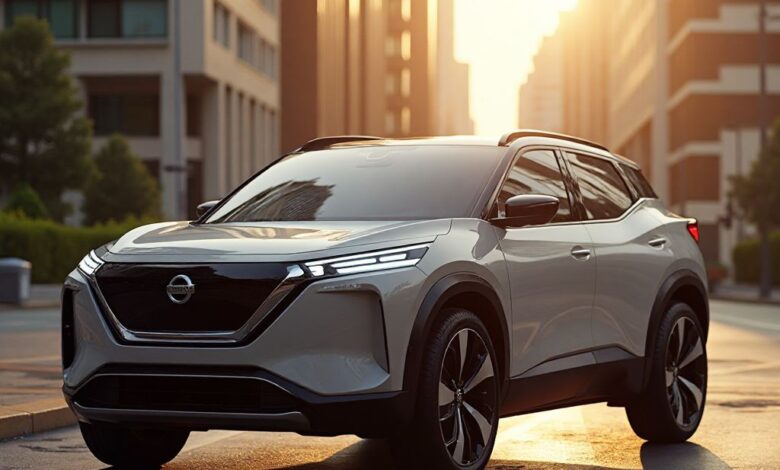
Welcome, fellow automotive aficionados and future-forward drivers! If you, like me, have been charting the electric vehicle landscape for the past decade, you’ll remember a time when the Nissan Leaf was virtually synonymous with “mainstream EV.” It was a pioneer, a brave new world on wheels, but let’s be honest: it quickly became a relic as technology sprinted ahead. Fast forward to today, and Nissan is ready to rewrite its EV narrative with a startlingly different protagonist. Forget everything you thought you knew about Nissan electric vehicles. The 2023 Nissan Ariya isn’t just a new model; it’s a defiant declaration, a technological leap that positions Nissan firmly back in the EV race, making the original Leaf feel like a charming, albeit rudimentary, science experiment from a bygone era. This isn’t just an improvement; it’s a complete paradigm shift.
Why does this matter right now? Because the electric vehicle market has exploded into a hyper-competitive arena where innovation is paramount and stagnation is fatal. Car buyers today are savvier than ever, demanding not just emission-free driving, but also cutting-edge technology, striking design, robust range, and a premium driving experience. Brands like Tesla, Hyundai, Kia, Ford, and Volkswagen have been aggressively carving out significant market share with compelling EVs that push boundaries. Nissan, despite being an early mover with the Leaf, found itself playing catch-up. The original Leaf, while a monumental step for its time, suffered from limited range, a polarizing design, and eventually, outdated charging technology. It left a void, a question mark over Nissan’s long-term EV commitment. The Ariya, therefore, isn’t just another crossover; it’s Nissan’s unequivocal answer, a statement that they’ve learned, evolved, and are now ready to contend for the crown in the electric age, offering a truly modern and desirable package for both first-time EV curious buyers and seasoned electric enthusiasts.
Nissan Ariya Review: A Massive Improvement Over the Original Leaf
Design: From Quirky to Contemporary Elegance
Stepping up to the Nissan Ariya, the first thing that strikes you is its sheer visual sophistication. Gone are the quirky, somewhat apologetic lines of the original Leaf. In its place is a sleek, aerodynamic, and undeniably premium crossover aesthetic that wouldn’t look out of place next to a Tesla Model Y or a Hyundai Ioniq 5. Nissan’s “Timeless Japanese Futurism” design language truly shines here. The Ariya features a striking V-motion grille (now a “shield” housing sensors, rather than an air intake), slim LED headlights, and a coupe-like roofline that tapers gracefully to the rear. The two-tone paint options further enhance its contemporary appeal, giving it a floating roof effect. It’s a design that exudes confidence and maturity, a stark contrast to the Leaf’s more utilitarian, and often debated, appearance. Inside, the transformation is even more dramatic. Nissan has crafted an interior that feels less like a car cabin and more like a minimalist, high-tech lounge. The flat floor, courtesy of the dedicated EV platform, creates an incredibly spacious and airy atmosphere. Materials are a significant step up, with soft-touch surfaces, subtle ambient lighting, and elegant woodgrain or copper accents depending on the trim. The motorized center console, which can slide back and forth with the touch of a button, is a stroke of genius, allowing for customizable space and ergonomics – a feature you’d expect in a more luxury-oriented vehicle like a BMW iX.
Performance: Smooth, Potent, and Electronically Agile
Underneath that stylish skin, the Ariya delivers a driving experience that is light-years ahead of its predecessor. The original Leaf was adequate for city driving but lacked the punch for spirited excursions. The Ariya, built on the CMF-EV platform, offers a range of powertrains to suit different needs. Starting with the front-wheel-drive (FWD) models, equipped with either a 63 kWh (usable) or 87 kWh (usable) battery, you get 214 hp and 221 lb-ft of torque. This setup provides brisk acceleration and a smooth, refined ride perfect for daily commutes. However, the real star is Nissan’s innovative e-4ORCE all-wheel-drive system. Available with the 87 kWh battery, this dual-motor setup churns out a potent 389 hp and 442 lb-ft of torque in its most powerful iteration. The e-4ORCE system isn’t just about raw power; it’s a sophisticated all-wheel-drive system that precisely controls torque delivery to each wheel, enhancing grip, stability, and handling. It mitigates pitch and dive during acceleration and braking, resulting in an incredibly smooth and composed ride, even over varied road surfaces. While it won’t out-drag a Tesla Model Y Performance, the Ariya e-4ORCE offers a refined, confident, and surprisingly engaging drive that feels far more premium than its price tag suggests.
Range and Charging: Competitive and Convenient
One of the biggest criticisms of the original Leaf was its limited range, which quickly became a non-starter for many buyers. The Ariya comprehensively addresses this. With the standard 63 kWh battery, FWD models offer an EPA-estimated range of around 216 miles. Opt for the larger 87 kWh battery, and the FWD Venture+ trim achieves an impressive 304 miles, putting it squarely in contention with long-range offerings from Kia EV6 and Hyundai Ioniq 5. Even the powerful e-4ORCE models offer respectable ranges, hovering between 265 and 289 miles depending on the trim. This extended range significantly reduces range anxiety and makes the Ariya a viable option for longer journeys. Charging capabilities have also seen a crucial upgrade. The Ariya finally adopts the CCS combo port for DC fast charging, a welcome departure from the Leaf’s CHAdeMO standard. While its peak DC fast charging rate of up to 130 kW isn’t class-leading (some rivals like the Ioniq 5 and EV6 can hit 230 kW+), it’s perfectly adequate for most public chargers, allowing a 10-80% charge in about 35-40 minutes for the larger battery. For home charging, the Ariya supports 7.2 kW AC charging, which will fully replenish the battery overnight.
Interior and Technology: A Digital Sanctuary
The interior of the Ariya is where its “massive improvement” truly shines. It’s a masterclass in modern automotive design and technology integration. The dashboard is dominated by two seamless 12.3-inch displays – one for the digital instrument cluster and another for the infotainment system – creating a wide, horizontal information hub. The graphics are crisp, and the interface is intuitive, supporting Apple CarPlay and Android Auto (wireless for CarPlay). Below the central screen, haptic feedback buttons are elegantly integrated into a woodgrain-like panel, providing a clean, uncluttered look while still offering tactile feedback. Nissan’s ProPILOT Assist 2.0 advanced driver-assistance system is available, offering hands-free driving on certain divided highways, a feature that rivals systems from Tesla and Ford’s BlueCruise. It’s sophisticated, smooth, and genuinely enhances long-distance comfort. Other tech highlights include over-the-air (OTA) updates, a head-up display, and a 360-degree Around View Monitor. The flat floor, mentioned earlier, not only aids in spaciousness but also allows for unique storage solutions, including a power-sliding center console and a large glove compartment, making the cabin feel exceptionally versatile and user-friendly. It’s a serene, tech-forward environment that prioritizes comfort and connectivity.
Value for Money: Premium Feel, Competitive Pricing
The Nissan Ariya enters a crowded and competitive segment, but its pricing structure, starting in the mid-$40,000s and climbing to the mid-$60,000s for top-tier e-4ORCE models, positions it quite well. When you consider the premium design, sophisticated technology, respectable range, and refined driving dynamics, the Ariya offers compelling value. It feels more upscale than a Volkswagen ID.4 and offers a distinct personality compared to the more angular Hyundai Ioniq 5 or Kia EV6. While it can’t quite match the raw performance or extensive Supercharger network of a Tesla Model Y, it offers a more traditional, luxurious, and tactile interior experience. For those seeking a blend of style, comfort, and advanced features without venturing into the territory of a Porsche Taycan or Lucid Air, the Ariya presents a very attractive proposition. It’s a car that punches above its weight, delivering a near-luxury experience at a mainstream price point, making it an excellent investment for discerning buyers.
Expert Analysis: Beyond the Specs Sheet
1. The “Rebirth” of Nissan EV: The Ariya isn’t just a new model; it’s a statement of intent. Nissan, having pioneered the mass-market EV with the Leaf, almost squandered its lead. The Ariya signifies a complete strategic overhaul, demonstrating that Nissan has listened to the market, invested heavily, and is now ready to reclaim its position as a serious contender in the EV space. It’s a testament to resilience and adaptation.
2. e-4ORCE: A Game Changer for All-Wheel Drive: While many EVs offer dual-motor AWD, Nissan’s e-4ORCE system is genuinely innovative. Its ability to precisely control torque at all four wheels, not just for traction but also for ride comfort and stability, sets it apart. It’s a sophisticated piece of engineering that elevates the driving experience beyond simple acceleration, offering a level of refinement usually found in more expensive luxury SUVs.
3. The “Japanese Future-Luxury” Interior: Nissan hasn’t just made a modern interior; they’ve created an experience. The focus on a minimalist, lounge-like cabin with premium materials, haptic controls, and the motorized center console reflects a distinctly Japanese approach to luxury – understated, functional, and deeply comfortable. It’s a refreshing alternative to the often spartan or overly busy interiors of some competitors.
4. Overcoming the Leaf’s Shadow: The biggest challenge for the Ariya isn’t its competitors; it’s the lingering perception from the original Leaf. Nissan needs to aggressively market the Ariya as a completely different animal, emphasizing its ground-up design and technological superiority to shed any outdated associations. Its success will dictate Nissan’s EV trajectory for the next decade.
5. A Bridge to Mainstream Premium: The Ariya effectively bridges the gap between mainstream EVs like the VW ID.4 and premium offerings from brands like Audi (Q4 e-tron) or even entry-level Mercedes-Benz EQ models. It offers a taste of luxury and advanced tech without the associated price premium, making it a compelling option for buyers looking to step up their EV game without breaking the bank.
Brand Comparisons
The Nissan Ariya finds itself in the thick of the electric crossover battleground. It directly competes with the immensely popular Tesla Model Y, offering a more tactile and perhaps more conventionally luxurious interior, though it can’t match Tesla’s acceleration or charging network ubiquity. Against the Hyundai Ioniq 5 and Kia EV6, the Ariya offers a slightly more subdued, elegant design and a similarly advanced tech suite, though the Korean twins often boast faster DC charging speeds. The Ford Mustang Mach-E provides a sportier, more aggressive driving dynamic, while the Ariya leans into comfort and refinement. The Volkswagen ID.4 is a solid competitor, but the Ariya generally feels more premium and offers a more sophisticated AWD system. Even compared to entry-level luxury EVs like the BMW iX1 (Europe) or Mercedes-Benz EQB, the Ariya holds its own in terms of interior quality and technology, often at a more accessible price point. It’s a strong alternative that carves out its own niche with its unique blend of Japanese design, refined performance, and advanced features.


