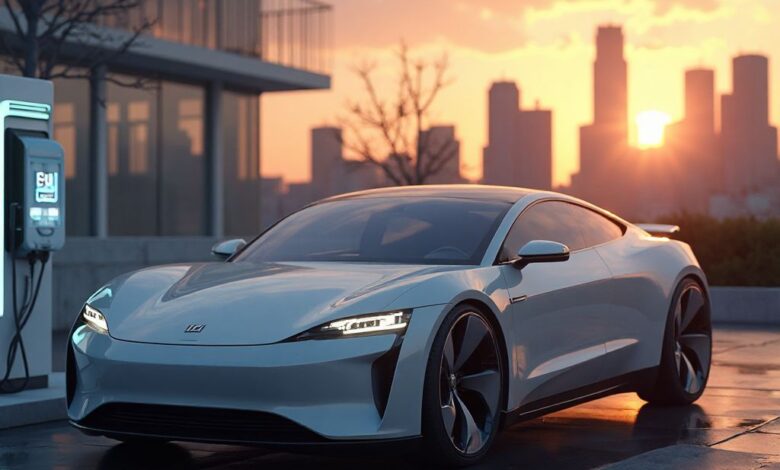
Why GM Is Betting Everything on an All-Electric Future by 2030
Imagine a world where the roar of a V8 is replaced by the silent, instantaneous surge of electric power, not just in luxury sedans, but in work trucks, family SUVs, and even iconic performance vehicles. That future, once a distant dream, is rapidly becoming a reality, spearheaded by none other than General Motors. In a move that sent seismic waves through the automotive industry, GM declared its audacious goal: an all-electric future for its light-duty vehicle lineup by 2035, with an aggressive push towards significant electrification by 2030. This isn’t just a pivot; it’s a full-throttle, no-holds-barred gamble on the very soul of the company, and it’s a bet they believe they simply cannot afford to lose.
The Electrifying Urgency: Why This Matters to Every Driver
For decades, General Motors was synonymous with internal combustion engines, from the Chevy small block to the Cadillac V-series. Their legacy is built on gasoline. So, why this radical transformation? The answer lies at the intersection of technological advancement, environmental imperative, and evolving consumer demand. As car buyers, we’re witnessing a generational shift. Concerns about climate change are becoming paramount, driving demand for cleaner transportation. Simultaneously, electric vehicle technology has matured, offering compelling advantages in performance, efficiency, and even driving dynamics that were unthinkable just a few years ago. Range anxiety is diminishing, charging infrastructure is expanding, and the cost of ownership is becoming increasingly attractive.
This isn’t just about saving the planet; it’s about staying relevant in a rapidly changing market. Brands like Tesla have proven the viability and desirability of EVs, while traditional rivals such as Ford, Hyundai, Kia, and the Volkswagen Group are pouring billions into their own electrification strategies. GM’s aggressive stance isn’t merely a response; it’s an attempt to redefine leadership in this new era, ensuring that their iconic brands – Chevrolet, GMC, Cadillac – remain at the forefront of automotive innovation for decades to come.
The Ultium Platform: GM’s Electric Backbone and Game Changer
At the heart of GM’s all-electric ambition is the revolutionary Ultium battery and propulsion system. This isn’t just a single battery pack; it’s a highly modular, scalable architecture designed to underpin everything from compact crossovers to heavy-duty trucks. Think of it as a LEGO set for electric vehicles, allowing GM to build a vast array of models with common components, driving down costs and accelerating development.
Ultium batteries utilize large-format, pouch-style cells that can be stacked vertically or horizontally, optimizing energy density and packaging efficiency. This flexibility translates directly into impressive range figures and diverse vehicle designs. GM projects Ultium-powered vehicles will offer ranges of up to 450 miles on a full charge, a crucial factor in alleviating range anxiety for many potential buyers. Furthermore, the 800-volt architecture (on some models, like the Hummer EV and Silverado EV) allows for ultra-fast DC charging, capable of adding up to 100 miles of range in just 10 minutes, rivaling some of the fastest charging available from competitors like Porsche and Hyundai/Kia.
The Ultium Drive units, which integrate the motor, gearbox, and power electronics, are equally adaptable, allowing for front-wheel drive, rear-wheel drive, or all-wheel drive configurations. This commonality across a diverse product portfolio is key to GM’s ability to scale production quickly and efficiently, a lesson learned from the challenges faced by early EV pioneers. By controlling core technology, GM aims to achieve cost parity with gasoline vehicles, making EVs accessible to a much broader segment of the population.
A Diverse Electric Portfolio for Every Buyer
GM isn’t putting all its eggs in one basket; they’re electrifying every segment. The strategy is clear: offer compelling EV alternatives across all their major brands, catering to different needs and budgets.
- Chevrolet: The People’s EV Brand: Chevrolet is leading the charge with mainstream, high-volume EVs. The Silverado EV aims to electrify the lucrative full-size truck market, directly challenging Ford’s F-150 Lightning. The Blazer EV and Equinox EV promise affordable, stylish, and practical electric SUVs, targeting the heart of the crossover market that has made brands like Tesla Model Y and Hyundai Ioniq 5 so popular.
- GMC: Power and Off-Road Prowess: The GMC Hummer EV, a “supertruck” reborn as an all-electric behemoth, showcases Ultium’s extreme capabilities, from its CrabWalk feature to its mind-bending acceleration. It’s a halo product that screams innovation and capability, appealing to buyers who value ruggedness and cutting-edge tech.
- Cadillac: Luxury Electrified: Cadillac is transforming into an all-electric luxury brand. The Lyriq, a sleek and sophisticated SUV, is already on the road, setting the tone for future models like the ultra-luxury Celestiq and the Escalade IQ. Cadillac’s EV strategy directly targets premium competitors like Mercedes-Benz, BMW, and Audi, while also aiming to carve out a niche against pure-EV luxury brands such as Lucid and Rivian.
- BrightDrop: Commercial Electrification: GM’s commitment extends beyond passenger vehicles. BrightDrop, their commercial delivery and logistics brand, offers electric vans like the Zevo 600, demonstrating a practical application of Ultium for businesses, tackling the “last-mile” delivery challenge and opening up new revenue streams.
Manufacturing and Supply Chain Revolution
To support this ambitious plan, GM is making colossal investments in manufacturing. They are building multiple Ultium battery cell plants across North America in joint ventures with LG Energy Solution, aiming for 140 GWh of annual capacity by mid-decade. This vertical integration is critical for securing a stable supply of batteries, reducing reliance on external suppliers, and ultimately controlling costs – a major pain point for many EV manufacturers.
Furthermore, GM is actively pursuing strategies to secure raw materials like lithium, nickel, and cobalt through direct partnerships and investments in mining companies. This proactive approach aims to mitigate supply chain bottlenecks and geopolitical risks, ensuring that their production lines can keep pace with demand.
Charging Infrastructure and Ecosystem: Beyond the Car
GM understands that the EV experience extends beyond the vehicle itself. They’re investing heavily in an ecosystem to support their electric future. The Ultium Charge 360 initiative provides a comprehensive approach to charging, offering solutions for home, workplace, and public charging. GM is partnering with major charging networks like EVgo, ChargePoint, and Electrify America to expand access to fast chargers. They’re also developing smart charging solutions that integrate with home energy management systems, optimizing charging times and costs for consumers.
This holistic approach is crucial for winning over first-time EV buyers, many of whom are still navigating the complexities of charging. By making charging as seamless and ubiquitous as possible, GM aims to remove a significant barrier to EV adoption.
Expert Analysis: Insider Insights You Won’t Find Everywhere
GM’s all-in bet is monumental, and while the ambition is clear, the path is fraught with challenges and unique opportunities:
- The Dealer Network Dilemma: A significant hurdle for GM is its vast, established dealer network. Many dealers are hesitant to invest in the expensive charging infrastructure, specialized EV tools, and technician training required for an electric future, especially when traditional ICE sales remain profitable. GM must convince and incentivize its dealers to fully embrace the transition, or risk a disjointed customer experience that could undermine their efforts. This is a challenge Tesla, with its direct-sales model, never had to face.
- Software-Defined Vehicles and New Revenue Streams: The shift to EVs isn’t just about hardware; it’s about software. GM is positioning itself to capitalize on over-the-air updates, subscription services, and advanced driver-assistance features (like Ultra Cruise), which can unlock significant recurring revenue streams. This transforms the car from a one-time purchase into a continuous revenue generator, a model pioneered by Tesla and increasingly adopted by Ford and Mercedes-Benz.
- Catching Up to Lead: While GM is making massive strides, they are still playing catch-up in terms of market perception and mindshare against Tesla, the undisputed EV leader. Their strategy relies on leveraging their manufacturing prowess, dealer network (if successfully transitioned), and brand loyalty to scale faster and offer more diverse options than smaller EV startups like Rivian or Lucid. It’s a race not just to build EVs, but to build trust and desirability in a new era.
- The Global Electrification Race: GM’s strategy isn’t just North American-centric. Their investments in China, the world’s largest EV market, and their global partnerships (like with Honda for affordable EVs) demonstrate a worldwide electrification vision. Success or failure in key international markets will significantly impact their overall profitability and ability to fund future innovations.
- The Grid and Policy Headwinds: While governments push for electrification, the existing electrical grid in many regions isn’t fully prepared for a massive influx of EVs. GM, along with other automakers, needs to actively engage with policymakers and utility companies to ensure infrastructure upgrades keep pace. Furthermore, shifting political landscapes and changes in EV incentives could either accelerate or hinder adoption, adding an element of unpredictability to their aggressive timeline.
Pros and Cons of GM’s All-Electric Bet
Pros:
- Future-Proofing: Positions GM at the forefront of the automotive industry’s inevitable transition, ensuring long-term relevance and competitiveness.
- Environmental Leadership: Contributes significantly to reducing carbon emissions and improving air quality, aligning with global climate goals.
- Performance Advantages: EVs offer instant torque, smooth acceleration, and a quiet, refined driving experience that can appeal to a broad range of consumers.
- Lower Operating Costs: Electricity is generally cheaper per mile than gasoline, and EVs have fewer moving parts, leading to lower maintenance costs.
- Technological Innovation: The Ultium platform is a robust, scalable foundation for future advancements in battery technology, software, and autonomous driving.
- New Revenue Streams: Opens doors for software subscriptions, charging services, and energy management solutions.
Cons:
- Massive Capital Investment: Billions of dollars are being poured into R&D, manufacturing plants, and supply chains, carrying significant financial risk.
- Execution Risk: Successfully transitioning a century-old company and its vast ecosystem (dealers, suppliers, workforce) is an immense logistical challenge.
- Consumer Adoption Pace: While growing, EV adoption is not uniform. GM needs to convince a broad swath of traditional buyers to switch, which may be slower than anticipated.
- Charging Infrastructure Gaps: Despite improvements, public charging availability and reliability remain concerns for many, especially in rural areas.
- Supply Chain Volatility: Securing critical raw materials for batteries can be subject to geopolitical tensions and price fluctuations.
- Competition Intensity: Facing fierce competition from established players (Ford, Volkswagen) and nimble EV specialists (Tesla, Rivian, Lucid).
Final Verdict: A Bold Vision for a New Era
General Motors’ decision to go all-in on an electric future by 2030 is arguably the most significant strategic shift in the company’s long and storied history. It’s a move born out of necessity, driven by innovation, and fueled by an unwavering belief in the power of electric propulsion. With the versatile Ultium platform, a diverse portfolio of upcoming EVs spanning all segments, and substantial investments in manufacturing and charging infrastructure, GM is building a formidable electric ecosystem.
While the road ahead is undoubtedly challenging, fraught with the complexities of transforming a global automotive giant, the potential rewards are immense. If GM can successfully navigate the dealer transition, scale production efficiently, and continue to innovate at a rapid pace, they have the opportunity to reclaim their position as a dominant force in the global automotive landscape. For car buyers, this means an exciting future filled with compelling, high-performance, and increasingly affordable electric vehicles from brands they know and trust.
Recommendation and Call to Action:
For first-time EV buyers or those considering the switch, GM’s commitment offers a reassuring sign of mainstream adoption and robust support. Keep a close eye on models like the Chevrolet Equinox EV and Blazer EV for accessible entry points, or the Silverado EV if you need truck capabilities. For experienced car owners, the Cadillac Lyriq or GMC Hummer EV represent a fascinating blend of luxury, performance, and cutting-edge technology worth exploring.
The electric revolution is here, and GM is not just participating; they’re attempting to lead it. Are you ready to plug into the future? Visit your local Chevrolet, GMC, or Cadillac dealer to experience their latest electric offerings and see if GM’s vision aligns with your driving future.