Why the 2026 Paris Motor Show Revealed a Surprising Shift in Car Design
For years, the automotive industry seemed locked in an arms race of digital minimalism and aggressive, angular EV aesthetics. We saw screens grow, buttons vanish, and exteriors become increasingly aerodynamic and, at times, indistinguishable. But the 2026 Paris Motor Show, often a bellwether for European design trends, delivered a seismic shock that few predicted: a profound and surprising pivot back towards warmth, tactility, and a refreshingly human-centric approach to automotive design. The era of the “cold machine” might just be over.
The Road Less Traveled: Why Design Matters More Than Ever
In an age where electric powertrains are rapidly becoming standardized, and autonomous driving features are increasingly common, design has re-emerged as the ultimate differentiator. For car buyers and enthusiasts alike, the visual and tactile experience of a vehicle is paramount. It’s no longer just about range or horsepower; it’s about emotional connection, brand identity, and how a car integrates into our lives beyond mere transportation. With EVs reaching maturity, consumers are now looking beyond the initial novelty and demanding more from their vehicles – a demand the industry, as evidenced in Paris, is finally beginning to answer.
The Great Unveiling: A Return to Form and Feel
The 2026 Paris Motor Show wasn’t just another showcase of new models; it was a philosophical statement. What unfolded on the stands was a deliberate departure from the prevailing design dogma, signaling a future where cars are once again designed to be experienced with all senses, not just sight and touch on a touchscreen.
Exterior Design: Organic Forms and Intentional Proportions
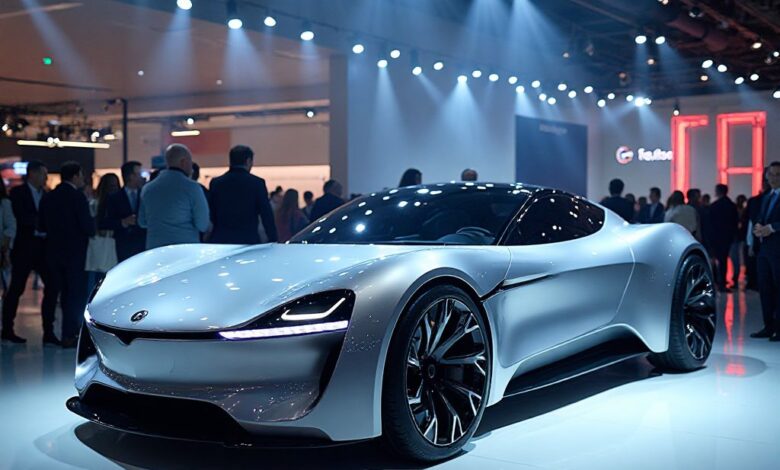
Gone were many of the overly aggressive lines and monolithic slabs that characterized much of the mid-2020s. Instead, designers embraced more organic, flowing forms reminiscent of classic automotive elegance but reinterpreted through a modern lens. The new Audi A7 e-tron concept, for instance, showcased a beautifully sculpted body with subtle curves that flowed seamlessly from front to rear, eschewing the sharp creases often seen on its predecessors. Its lighting signatures, too, moved away from complex matrices towards simpler, more integrated strips that enhanced the car’s overall silhouette rather than dominating it.
Similarly, the Mercedes-Benz CLA Vision, while still futuristic, presented a softer, more approachable face. Its grille, traditionally a bold statement piece, was reimagined as a series of subtle, illuminated micro-stars that blended into the bodywork, creating a sense of understated luxury. Even performance brands like Porsche, with their new 911 E-Hybrid concept, showed a refined aesthetic. While unmistakably a 911, its lines were subtly smoothed, and its proportions felt even more finely tuned, suggesting that even high-performance vehicles could benefit from a less confrontational design language.
Interior Design: Tactility, Warmth, and Digital Integration Done Right
Perhaps the most striking shift occurred inside the cabin. For years, the trend was towards giant, dominating screens and a complete eradication of physical buttons. Paris 2026 showed a clear rejection of this extreme. Manufacturers are finally realizing that while digital interfaces are crucial, they shouldn’t come at the expense of haptic feedback and ergonomic comfort.
Hyundai’s Ioniq 8, for example, surprised many with an interior that integrated sustainable textiles, reclaimed wood accents, and beautifully milled aluminum switchgear. The central screen was still present, but it was thoughtfully integrated into the dashboard rather than appearing as an afterthought. Crucially, essential functions like climate control and audio volume were handled by satisfyingly weighted physical dials and buttons, a welcome return to intuitive usability.
BMW’s “Neue Klasse” production concept, the iX3, also demonstrated this shift. Its interior was a masterclass in combining minimalist aesthetics with practical functionality. The iconic iDrive controller, once threatened by touchscreen dominance, made a triumphant return, albeit in a more refined, haptic-feedback-enabled form. Materials were chosen not just for sustainability but for their tactile pleasure – recycled wool, cork, and innovative bio-plastics that felt genuinely premium and inviting.
Technology: Seamless Integration Over Overwhelm
The technology on display also reflected this human-centric shift. Instead of overwhelming drivers with endless menus and sub-menus, the focus was on seamless, intuitive integration. Augmented reality head-up displays (AR-HUDs) became more sophisticated, projecting navigation and safety warnings directly onto the road ahead, reducing driver distraction. Voice assistants, like the updated “Hey Mercedes” or “Ok Google” integrations in Ford and Chevrolet models, were demonstrably more natural and capable, allowing drivers to keep their eyes on the road and hands on the wheel.
Charging infrastructure discussions also moved beyond raw speed to user experience. Several brands, including Volkswagen and Kia, showcased concepts for inductive charging parks and “battery swap” stations designed for maximum convenience and minimal downtime, addressing range anxiety not just through larger batteries but through smarter, more accessible energy solutions.
Expert Analysis: Beyond the Sheet Metal
This design shift isn’t accidental; it’s a calculated response to several converging forces:
- Consumer Fatigue with Digital Overload: After years of being bombarded by screens in every aspect of life, consumers are craving simpler, more tactile experiences. The car, for many, is a sanctuary, and designers are finally recognizing that a warm, inviting interior can be just as important as a long range.
- The Maturation of EV Platforms: With dedicated EV architectures now common, designers have more freedom to sculpt bodies and interiors without the constraints of internal combustion engines. This liberation allows for more radical, yet still practical, forms.
- Sustainability as a Design Element: Beyond just materials, the very aesthetic of sustainability is evolving. It’s no longer just about “eco-friendly” plastics; it’s about designs that feel timeless, durable, and inherently less disposable, promoting a longer product lifecycle. Rivian, for example, continued to push its rugged, yet refined aesthetic, proving that utility and thoughtful design can coexist.
- The Chinese Market’s Influence: Emerging brands and consumer preferences in China, a massive and increasingly sophisticated market, have shown a strong demand for luxurious, technologically advanced, yet aesthetically pleasing and comfortable interiors. This market pressure is undoubtedly influencing global design trends.
- The Search for Brand Identity in a Homogenized EV World: As electric powertrains become universal, distinct design language is crucial for brands to stand out. Tesla, once the undisputed leader in minimalist EV design, is now facing a wave of competitors embracing diverse aesthetics. Brands like Lucid, with its sleek, aerodynamic forms, and Volvo (not explicitly mentioned but relevant for this point), with its Scandinavian minimalism, are refining their unique visual identities in this new landscape.
The New Aesthetic: Pros and Cons
Pros:
- Enhanced User Experience: More tactile controls and warmer interiors lead to a more intuitive and enjoyable driving experience.
- Stronger Emotional Connection: Human-centric design fosters a greater sense of connection and comfort with the vehicle.
- Improved Brand Differentiation: Distinct design languages help brands stand out in an increasingly crowded EV market.
- Greater Sustainability Focus: Emphasis on durable, timeless design and innovative recycled materials promotes environmental responsibility.
- Timeless Appeal: Organic forms and refined proportions often age better than fleeting, aggressive trends.
Cons:
- Potential for Cost Increase: High-quality, sustainable, and tactile materials can sometimes be more expensive to source and integrate.
- Design Language Risk: Brands that fail to adapt their design language may be perceived as outdated or out of touch.
- Balancing Act: Integrating physical controls while retaining cutting-edge digital features requires careful engineering and design.
- Subjectivity of Taste: While many will welcome the shift, some may still prefer the stark minimalism of earlier EV designs.
Final Verdict: A Breath of Fresh Air for the Automotive World
The 2026 Paris Motor Show wasn’t just about new cars; it was about a renewed philosophy. It signaled that the industry has listened to its customers, moving beyond the race for raw specs to embrace the art and craft of automotive design once more. This shift towards warmth, tactility, and human-centric aesthetics is a refreshing development that promises a future where cars are not just efficient machines, but beloved companions.
For first-time buyers and seasoned enthusiasts alike, this means a wider, more appealing array of choices. We’re entering an exciting era where design isn’t just skin deep; it’s integral to the entire driving and ownership experience. Keep a close eye on brands like Audi, Mercedes-Benz, Hyundai, and BMW – they’re clearly leading this charge. What do you think of this shift? Are you ready for a more tactile, human-focused future in automotive design? Share your thoughts in the comments below!